


 Crypto.
 Σχετικά
 Passport
 Conference call
 send money
 Όρους
Όρους
 Ιδιωτικότητα
 Sierra market
How is an Ophthalmic Modular Operation Theatre different from a conventional operation theatre?
INTRODUCTION
An Ophthalmic Modular Operation Theatre is a purpose-built surgical environment specifically designed for eye surgeries, offering superior infection control, advanced environmental management, and highly efficient workflows compared to a conventional operation theatre. Unlike traditional operating rooms that are built using standard construction methods, an Ophthalmic Modular Operation Theatre integrates modular wall panels, seamless ceilings, medical-grade flooring, laminar airflow systems, HEPA filtration, advanced HVAC engineering, positive air pressure, and ergonomic equipment layouts to create a sterile and controlled environment. These features are essential for delicate ophthalmic procedures, where even minor contamination or environmental fluctuations can affect surgical outcomes. By combining cleanroom engineering with modern medical technology, an Ophthalmic Modular Operation Theatre enhances patient safety, surgical precision, operational efficiency, and long-term performance.
As hospitals and eye care centers continue to adopt advanced healthcare infrastructure, modular operation theatres have become the preferred choice for delivering consistent, high-quality ophthalmic care. This blog explains the major differences between an Ophthalmic Modular Operation Theatre and a conventional operation theatre.
Understanding Conventional Operation Theatres
A conventional operation theatre is generally constructed using traditional building materials and standard construction techniques.
Typical characteristics include:
- Brick or concrete walls
- Conventional plaster finishes
- Standard flooring
- Basic ventilation systems
- Limited environmental controls
- Conventional lighting systems
Although conventional operation theatres can support many surgical procedures, they often lack the specialized infrastructure required for highly sensitive ophthalmic surgeries.
What Makes an Ophthalmic Modular Operation Theatre Different?
An Ophthalmic Modular Operation Theatre is engineered specifically for precision eye surgeries.
It combines:
- Modular construction
- Cleanroom engineering
- Advanced HVAC systems
- Laminar airflow technology
- HEPA filtration
- Hygienic finishes
- Integrated medical utilities
- Optimized surgical workflow
These features create an environment that supports safer and more efficient ophthalmic procedures.
Superior Infection Control
One of the biggest differences is infection prevention.
An Ophthalmic Modular Operation Theatre includes:
- Laminar airflow systems
- HEPA filtration
- Positive pressure ventilation
- Controlled air circulation
- Cleanroom principles
A conventional operation theatre may rely on standard ventilation systems that provide lower levels of contamination control.
Advanced HVAC Systems
Environmental stability is critical during eye surgery.
An Ophthalmic Modular Operation Theatre uses specialized HVAC systems to regulate:
- Temperature
- Humidity
- Air pressure
- Air changes per hour
- Fresh air circulation
Conventional operation theatres often have more basic environmental control systems.
Laminar Airflow Technology
Laminar airflow creates uniform, low-turbulence airflow across the operating field.
Benefits include:
- Reduced airborne particles
- Improved sterility
- Cleaner surgical environment
- Better contamination control
Conventional theatres may not include dedicated laminar airflow systems.
HEPA Filtration
High-Efficiency Particulate Air (HEPA) filters improve air quality by removing microscopic airborne particles.
Advantages include:
- Cleaner air
- Reduced microbial contamination
- Improved patient safety
- Enhanced surgical conditions
Many conventional operation theatres use standard air filtration rather than advanced HEPA filtration.
Modular Construction
Construction methods differ significantly.
An Ophthalmic Modular Operation Theatre uses:
- Prefabricated modular wall panels
- Modular ceilings
- Factory-finished components
- Precision installation
Conventional operation theatres rely on traditional construction techniques that may require longer installation times.
Seamless Hygienic Surfaces
Modular operation theatres feature smooth, seamless finishes.
These include:
- Hygienic wall panels
- Seamless flooring
- Easy-to-clean ceilings
Traditional operation theatres often have joints, cracks, and uneven surfaces where dust and microorganisms can accumulate.
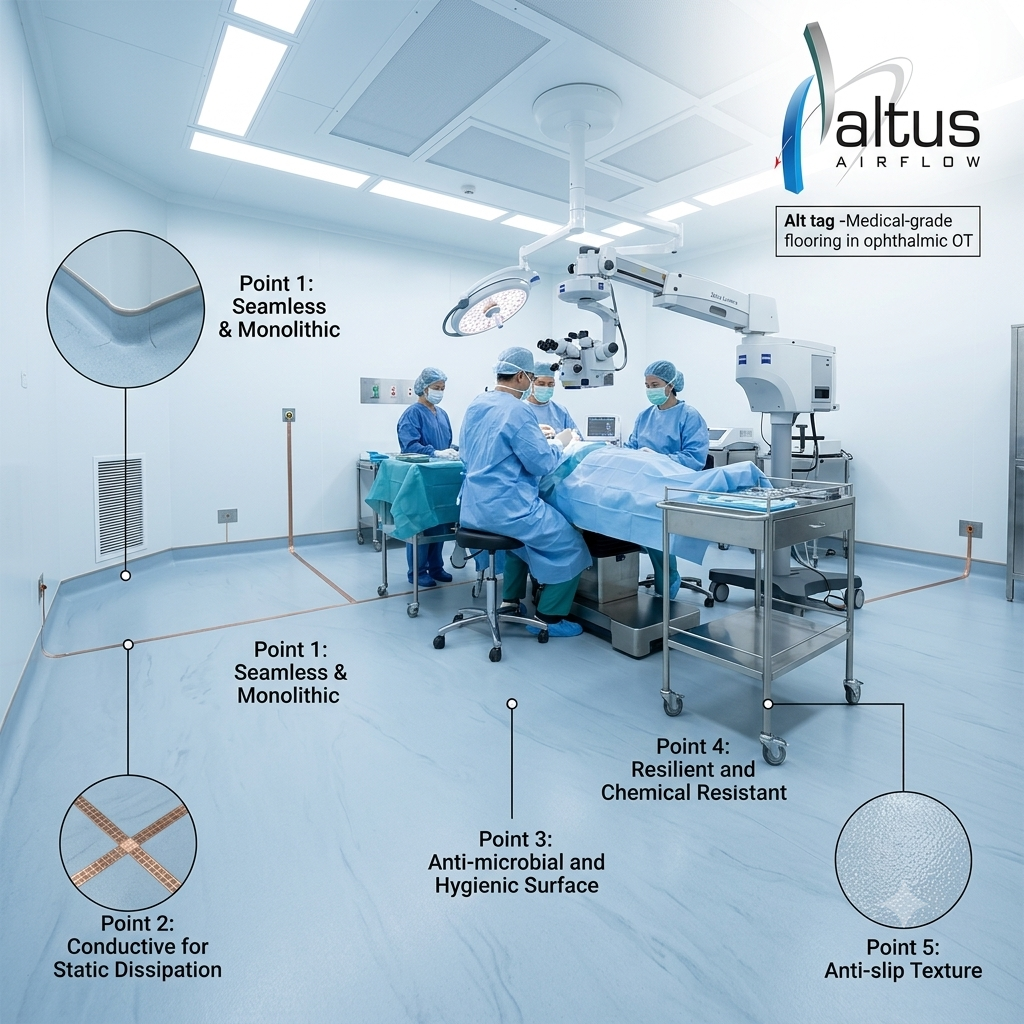
Medical-Grade Flooring
Flooring in modular operation theatres is designed for healthcare environments.
Benefits include:
- Seamless installation
- Chemical resistance
- Moisture resistance
- Easy maintenance
- Long service life
Conventional flooring may require more frequent maintenance.
Hermetically Sealed Doors
Specialized doors help maintain sterile conditions.
Features include:
- Airtight sealing
- Pressure retention
- Controlled airflow
- Reduced contamination
Conventional operation theatres may use standard swing doors without airtight sealing.
Optimized Surgical Workflow
A modular design improves efficiency.
Layouts are planned to optimize:
- Equipment positioning
- Staff movement
- Patient transfer
- Sterile supply access
Traditional operation theatres often have less efficient layouts.
Integrated Medical Utilities
An Ophthalmic Modular Operation Theatre incorporates medical utilities into the overall design.
Integrated systems include:
- Medical gas outlets
- Electrical panels
- Communication systems
- Surgical lighting
- Equipment mounting systems
Conventional operation theatres may require separate installations.
Improved Equipment Integration
Modern ophthalmic equipment requires specialized infrastructure.
Modular operation theatres support:
- Operating microscopes
- Phacoemulsification systems
- Vitrectomy equipment
- Microsurgical workstations
- Digital imaging systems
Integration improves workflow and reduces cable clutter.
Environmental Monitoring
Continuous monitoring maintains stable conditions.
Parameters monitored include:
- Temperature
- Humidity
- Air pressure
- Air quality
Conventional operation theatres may have limited environmental monitoring capabilities.
Faster Construction
Modular construction reduces installation time.
Advantages include:
- Faster project completion
- Reduced site disruption
- Improved quality control
- Predictable installation schedules
Traditional construction generally takes longer.
Easier Maintenance
Modular components simplify maintenance.
Benefits include:
- Replaceable panels
- Easy cleaning
- Accessible utilities
- Reduced downtime
Traditional structures may require extensive repair work.
Better Energy Efficiency
Modern modular systems prioritize energy conservation.
Features include:
- Energy-efficient HVAC
- LED lighting
- Smart environmental controls
- Variable Frequency Drives (VFDs)
Conventional systems may consume more energy.
Regulatory Compliance
Modular operation theatres are designed to support healthcare and cleanroom standards.
Compliance focuses on:
- Environmental control
- Infection prevention
- Air quality
- Electrical safety
- Healthcare engineering practices
Meeting these standards helps hospitals maintain quality and operational reliability.
Long-Term Cost Benefits
Although modular theatres may require a higher initial investment, they provide significant long-term value.
Benefits include:
- Lower maintenance costs
- Reduced downtime
- Improved durability
- Better energy efficiency
- Longer equipment lifespan
These advantages reduce overall operating costs.
Enhanced Patient Safety
The controlled environment of an Ophthalmic Modular Operation Theatre directly improves patient care.
Benefits include:
- Reduced infection risk
- Better surgical precision
- Stable operating conditions
- Faster recovery support
- Higher patient confidence
These improvements contribute to better clinical outcomes.
Future-Ready Infrastructure
Modern modular operation theatres are designed for future technological advancements.
They can accommodate:
- Smart monitoring systems
- Digital integration
- AI-assisted surgical technologies
- Automated environmental controls
- Advanced imaging systems
Future-ready infrastructure protects long-term investments.
Key Benefits of an Ophthalmic Modular Operation Theatre
Compared with conventional operation theatres, an Ophthalmic Modular Operation Theatre offers:
- Superior infection control
- Advanced HVAC systems
- Laminar airflow technology
- HEPA filtration
- Cleanroom engineering
- Modular construction
- Improved workflow
- Faster installation
- Easier maintenance
- Better energy efficiency
- Regulatory compliance
- Enhanced patient safety
These advantages make modular operation theatres the preferred solution for modern ophthalmic surgery.
Conclusion
An Ophthalmic Modular Operation Theatre differs significantly from a conventional operation theatre by offering advanced cleanroom engineering, modular construction, laminar airflow systems, HEPA filtration, specialized HVAC engineering, positive pressure ventilation, seamless hygienic surfaces, and optimized surgical workflows. These features create a highly controlled environment that minimizes contamination, enhances surgical precision, improves operational efficiency, and supports better patient outcomes. While conventional operation theatres can accommodate general surgical procedures, modular ophthalmic operation theatres are specifically engineered to meet the demanding requirements of delicate eye surgeries. For customized modular ophthalmic operation theatre design, engineering, installation, validation, and turnkey healthcare infrastructure solutions, Altus Airflow provides comprehensive expertise tailored to modern ophthalmic facilities.
Frequently Asked Questions
1. What makes an Ophthalmic Modular Operation Theatre different from a conventional operation theatre?
An Ophthalmic Modular Operation Theatre differs by incorporating modular construction, HEPA filtration, laminar airflow systems, advanced HVAC engineering, seamless hygienic surfaces, and optimized surgical workflows specifically designed for ophthalmic procedures.
2. Why is laminar airflow important in an Ophthalmic Modular Operation Theatre?
Laminar airflow in an Ophthalmic Modular Operation Theatre provides uniform airflow that reduces airborne contaminants, helping maintain a sterile surgical environment and minimizing infection risks.
3. Does an Ophthalmic Modular Operation Theatre improve infection control?
Yes. An Ophthalmic Modular Operation Theatre significantly improves infection control through HEPA filtration, positive pressure ventilation, cleanroom engineering, seamless surfaces, and controlled environmental conditions.
4. Is an Ophthalmic Modular Operation Theatre more energy-efficient than a conventional operation theatre?
Yes. Modern Ophthalmic Modular Operation Theatre designs often include energy-efficient HVAC systems, LED lighting, smart controls, and optimized airflow management that reduce energy consumption.
5. Why should hospitals invest in an Ophthalmic Modular Operation Theatre?
Hospitals benefit from an Ophthalmic Modular Operation Theatre because it offers enhanced patient safety, improved surgical precision, better contamination control, faster construction, easier maintenance, long-term reliability, and compliance with healthcare standards.
Read Our Previous Blog------>How does a Modular Ophthalmic Operation Theatre help prevent infections?
Bub
Do?

Κατηγορίες
Διαβάζω περισσότερα
Introduction Employee Dog Bite Safety is an essential part of workplace risk management for employees who interact with the public. From delivery drivers to maintenance staff, workers often encounter dogs in unfamiliar environments. Understanding how to stay safe can prevent injuries and ensure smoother daily operations. Recognizing Dog Warning Signs Improving Employee Dog Bite Safety starts...

Introduction to the FUTBIN Podcast Episode 7 The FUTBIN Podcast returns for its seventh episode, bringing listeners the initial reveal of FC 26 player ratings. Hosts Richard Buckley and MattFUTTrading are joined by Plute for an in-depth conversation covering the latest updates in FC 26. The episode also features a segment dedicated to Leeds United, offering fans insights and opinions on the...

The cell line characterization market is a vital segment of the biotechnology and pharmaceutical industry, providing essential tools and services for characterizing cell lines used in drug development, biotechnology research, cancer research, regenerative medicine, and toxicology testing. Cell line characterization ensures the reliability, reproducibility, and safety of cell-based products,...
Die Wahl zum Spieler des Monats wirft Fragen auf. Im März dominierte der FC Bayern die Liga, doch in der Auswahl fehlt jeder Münchner. Ein ungewöhnlicher Vorgang in dieser Saison und für die FC 26-Wertung. Yan Diomande und Deniz Undav gehören zu den sechs Nominierten für die Wahl zum Player of the Month (POTM) im März, obwohl kein Spieler des FC Bayern...
The absurd and celebrated sketch show 'I Think You Should Leave' is coming back for more. Tim Robinson and Zach Kanin will return to explore life's strangest social pitfalls. Another round of global laughs is scheduled for 2020. "We are thrilled to collaborate again with Netflix, The Lonely Island, and Irony Point," said the creators. The debut season turned mundane moments into comedic...
