


 Crypto.
 About
About
 Passport
 Conference call
 send money
 Términos
 Privacidad
 Sierra market
The New Rules for Styling Hoodies in Everyday Outfits
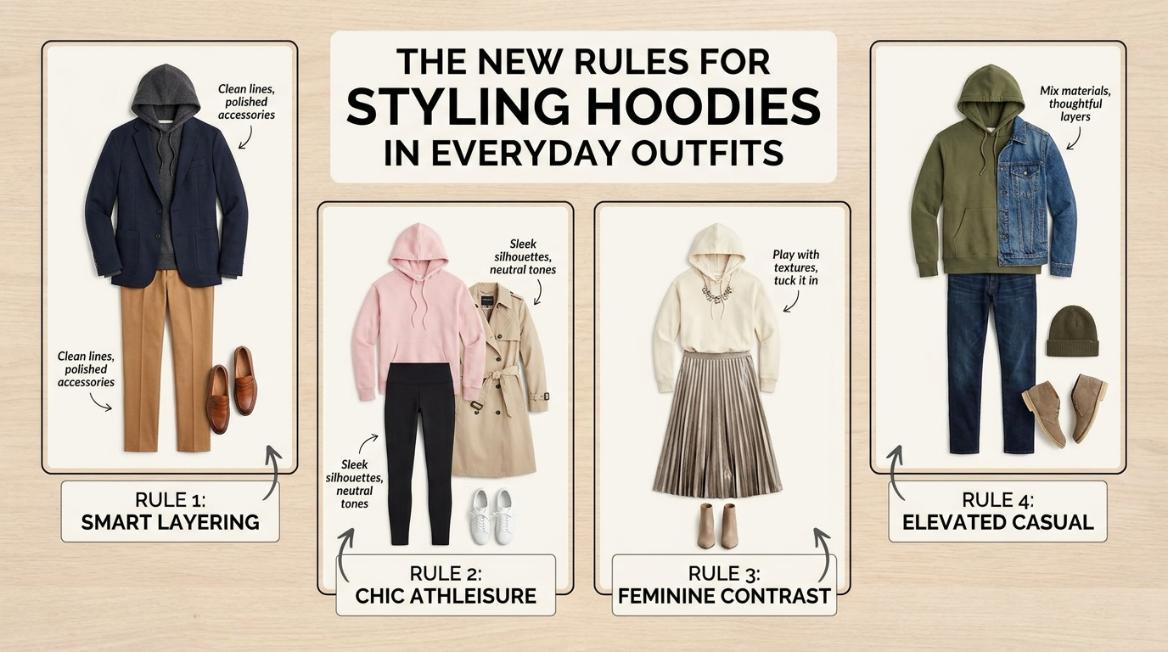
Hoodies have moved far beyond their traditional role as gym layers or lazy-day essentials. Today, they sit comfortably alongside tailored trousers, premium sneakers, structured outerwear, denim, and even polished accessories. The shift is less about making hoodies look formal and more about understanding how to make casual pieces feel intentional.
The modern approach to hoodie styling is built around balance. A relaxed sweatshirt can look sharp when it is paired with the right proportions, textures, colors, and footwear. Conversely, even an expensive hoodie can appear sloppy when every element of an outfit is oversized, mismatched, or lacking structure.
That makes everyday hoodie dressing less about following rigid fashion rules and more about creating visual contrast. The best outfits combine comfort with definition, relaxed silhouettes with cleaner pieces, and familiar streetwear details with personal style.
Why Hoodies Have Become Everyday Style Essentials
The appeal of the hoodie is straightforward: few garments combine comfort, versatility, and personality so effectively. A well-designed hoodie can work for commuting, weekend errands, casual meetings, travel days, concerts, coffee runs, and relaxed evenings.
Its versatility also comes from the enormous range of available designs. Minimal heavyweight hoodies can create a refined, understated appearance, while graphic and character-inspired designs bring more personality to an outfit. Athletic versions lean into performance styling, whereas premium fleece pieces can become the foundation of a sophisticated casual wardrobe.
The key is to stop treating the hoodie as the entire outfit. Instead, consider it one component of a complete visual composition. What surrounds it, the pants, jacket, shoes, bag, jewelry, and even the way the sleeves sit, determines whether the final look feels effortless or unfinished.
The First New Rule: Pay Attention to Proportions
Proportion is arguably the most important principle in modern hoodie styling. Since hoodies naturally add volume around the upper body, the rest of the outfit should provide enough structure to keep the silhouette visually balanced.
If you choose an oversized hoodie, consider pairing it with straight-leg, relaxed-tapered, or moderately slim trousers. This creates a clear relationship between the loose upper half and the cleaner lower half. You do not necessarily need skinny jeans; the goal is simply to avoid excessive volume everywhere.
On the other hand, a fitted or traditionally cut hoodie gives you more freedom to experiment with wider trousers. Wide-leg denim, cargo pants, pleated trousers, and relaxed chinos can all work when the hoodie itself does not dominate the silhouette.
| Hoodie Silhouette | Best Bottom Pairings | Overall Effect |
|---|---|---|
| Oversized | Straight-leg denim, tapered pants, structured cargos | Relaxed and contemporary |
| Regular fit | Jeans, chinos, relaxed trousers | Versatile and balanced |
| Fitted | Wide-leg trousers, loose denim, utility pants | Clean with modern contrast |
| Cropped | High-rise jeans, cargos, tailored trousers | Fashion-forward and defined |
Build Outfits Around a Focal Point
Not every item in an outfit needs to compete for attention. One of the easiest ways to make a hoodie look more sophisticated is to decide which piece should command attention before adding anything else.
A graphic hoodie, for example, can serve as the focal point. In that case, neutral trousers and simple footwear help keep the outfit cohesive. If the hoodie is plain, you can shift the focus toward statement sneakers, a textured jacket, a distinctive watch, or another accessory.
This approach is particularly useful when wearing expressive streetwear. A bold hoodie does not need to be surrounded by several other loud pieces. Let its color, artwork, logo, or construction provide the personality, then support it with quieter garments.
Rule Two: Layer Hoodies With Structure
Layering transforms a hoodie from a basic standalone garment into a much more deliberate part of an outfit. The trick is to choose outer layers that provide structure without creating unnecessary bulk.
Denim jackets remain an easy option because their firm construction contrasts with the soft texture of fleece. Bomber jackets create a sportier profile, while leather jackets introduce a tougher edge. For a more contemporary city look, try an oversized trench, technical shell, or minimalist wool coat over a neutral hoodie.
When layering, pay attention to the hood itself. A hood that bunches awkwardly beneath a jacket collar can make an otherwise strong outfit appear uncomfortable. Thinner hoodies are generally easier to layer underneath structured coats, while heavyweight hoodies work best with roomier outerwear.
Another effective technique is to allow small portions of the hoodie to remain visible. A slightly exposed hem or hood establishes clear layering without making the outfit feel overly complicated.
Rule Three: Use Color With Intention
Hoodies are available in almost every color imaginable, but everyday styling does not require an elaborate color palette. In fact, some of the strongest combinations use only two or three dominant tones.
Neutral colors such as black, charcoal, cream, navy, olive, beige, and gray are particularly versatile. They can serve as the foundation for outfits built around brighter sneakers, graphic accessories, or statement outerwear.
When wearing a colorful hoodie, look for one secondary color within the design and repeat it elsewhere in a subtle way. A small color connection between the hoodie graphic and your sneakers can make the entire outfit feel more coordinated.
- Black and gray: Clean, understated, and easy to layer.
- Cream and brown: Warm, relaxed, and especially effective for fall styling.
- Navy and white: Classic with a polished casual feel.
- Olive and black: Functional, masculine, and streetwear-friendly.
- Bold hoodie with neutrals: Lets the hoodie become the visual centerpiece.
Rule Four: Let Personal Interests Shape the Look
Everyday fashion works best when it reflects something about the person wearing it. Hoodies are especially useful for this because graphics, references, colors, and designs can communicate interests without requiring a complicated outfit.
A personality-driven hoodie can become a conversation piece while still functioning as an easy everyday layer. The styling objective is not to hide the design but to give it enough visual space to stand out.
For example, a statement piece such as a sincerely yours hoodie can be balanced with understated jeans and clean sneakers. This lets the central graphic or concept remain prominent without making the outfit feel overloaded.
This principle also applies to music-inspired designs, motorsport graphics, gaming references, sports influences, and contemporary pop-culture pieces. Personal style becomes stronger when the outfit looks like an authentic reflection of the wearer rather than a collection of unrelated trends.
Rule Five: Choose Footwear That Matches the Hoodie’s Energy
Shoes can completely change the message of a hoodie outfit. The same sweatshirt can look sporty, streetwear-oriented, minimalist, or elevated depending on what you put underneath it.
Classic low-top sneakers create an uncomplicated everyday look. Chunkier sneakers increase the streetwear influence, while retro runners introduce a nostalgic athletic feel. Boots can make a hoodie appear more rugged, particularly when paired with denim or utility trousers.
Do not overlook clean, minimal footwear either. A neutral sneaker with a simple upper can provide enough contrast to make a graphic hoodie feel more mature. The less complicated the shoe, the more freedom you have to experiment with the hoodie itself.
Rule Six: Mix Textures Instead of Adding More Graphics
One common mistake in casual dressing is trying to create interest through too many visual elements. If the hoodie already has a strong graphic, adding another graphic jacket, patterned trousers, and loud footwear can make the outfit visually chaotic.
Texture offers a better way to create depth. Pair soft fleece with rigid denim, smooth leather with brushed cotton, nylon with knitwear, or heavyweight jersey with structured wool. These combinations add sophistication without requiring additional logos or patterns.
Texture is especially valuable during colder seasons. A hoodie under a wool coat, for instance, combines the comfort of sportswear with the visual authority of traditional outerwear. Similarly, a fleece hoodie beneath a technical jacket creates an outfit that feels practical without sacrificing style.
Rule Seven: Know When a Hoodie Should Look Sporty
There is nothing wrong with fully embracing athletic styling. The important distinction is making the sporty aesthetic intentional rather than accidentally looking as though you just left the gym.
Matching or coordinated pieces can work particularly well when the hoodie has a performance-inspired design. Track pants, technical sneakers, baseball caps, and lightweight jackets can reinforce the athletic direction.
A coordinated set can also provide a surprisingly polished appearance. A contemporary tracksuit, for example, creates a unified silhouette because the colors and fabrics are already designed to work together. The key is choosing footwear and accessories that reinforce the same aesthetic rather than introducing an unrelated style.
For a statement athletic look, a monster energy hoodie can become the central piece. Pairing it with neutral joggers, understated sneakers, and minimal accessories keeps the overall outfit energetic without crossing into visual overload.
Rule Eight: Use Tailored Pieces to Elevate Casual Hoodies
One of the most useful developments in contemporary menswear and unisex fashion is the combination of relaxed sportswear with tailoring. A hoodie does not have to be paired exclusively with jeans or sweatpants.
Try wearing a clean hoodie underneath an unstructured blazer with straight trousers and minimalist sneakers. The result retains the comfort of casualwear while borrowing the proportions and polish of tailoring.
Another option is combining a hoodie with pleated trousers. The contrast between the casual neckline and the structured trouser silhouette immediately creates more visual interest. Keep the hoodie relatively clean and avoid excessive layering if you want the look to remain refined.
Even technical tracksuits can be styled thoughtfully. A piece such as maduro nike tech can fit into a modern casual wardrobe when styled around a consistent color palette and supported by clean footwear. The broader lesson is that athletic clothing can coexist with fashion-forward styling when proportion and coordination are deliberate.
Rule Nine: Accessories Should Support, Not Compete
Accessories can give a hoodie outfit a finished quality, but restraint matters. A simple watch, baseball cap, crossbody bag, backpack, sunglasses, or understated chain can provide enough detail to make the outfit feel complete.
Think about accessories in terms of function as well as appearance. A practical bag works particularly well with everyday hoodie outfits because it reinforces the relaxed nature of the clothing while adding structure.
Jewelry can also create contrast. A silver chain against a dark hoodie, for instance, introduces a small reflective element without changing the overall casual character of the outfit. The best accessories often look as though they naturally belong with the clothes rather than being added simply to follow a trend.
A Practical Formula for Everyday Hoodie Outfits
If you regularly find yourself standing in front of your wardrobe wondering how to style a hoodie, use a simple formula. Start with the hoodie, identify its strongest characteristic, and build outward from there.
- Choose the hoodie: Decide whether its fit, color, graphic, or fabric will be the main focal point.
- Balance the silhouette: Pair oversized tops with cleaner bottoms or fitted tops with more relaxed trousers.
- Select one outer layer: Add denim, leather, technical fabric, wool, or another structured layer when appropriate.
- Coordinate the footwear: Match the shoes to the overall direction rather than automatically choosing the same sneaker every time.
- Add useful accessories: Finish with one or two functional or visual details instead of stacking multiple statement pieces.
- Remove one unnecessary element: If the outfit feels too busy, take something away before adding anything else.
Common Hoodie Styling Mistakes to Avoid
Knowing what not to do can be just as useful as knowing what works. The most frequent hoodie styling mistakes usually involve proportion, over-accessorizing, or a lack of visual consistency.
- Going oversized everywhere: Extremely loose hoodies combined with extremely wide pants can overwhelm the silhouette.
- Ignoring garment condition: Pilling, stretched cuffs, stains, and worn-out fleece can undermine an otherwise strong outfit.
- Overloading graphics: Multiple bold logos and prints can compete instead of complementing one another.
- Forgetting the footwear: Shoes often determine whether a hoodie outfit feels finished.
- Ignoring the setting: A relaxed hoodie may be perfect for weekend plans but inappropriate for formal professional environments.
- Adding layers without checking bulk: Too many thick pieces can make movement uncomfortable and create an unflattering silhouette.
How to Make a Hoodie Look More Premium
Price alone does not determine whether a hoodie looks expensive. Fabric weight, fit, construction, color, and styling all contribute to the impression of quality.
Start with fit. Shoulder seams should sit where intended, cuffs should retain their shape, and the body should drape rather than collapse. A heavyweight cotton or premium fleece hoodie can naturally create a stronger silhouette, particularly when the fabric holds its shape after washing.
Next, consider the rest of the outfit. Premium-looking casualwear usually relies on simplicity. Clean trousers, well-maintained shoes, and a structured outer layer can elevate a basic sweatshirt considerably.
Finally, take care of the garment. Washing according to the care instructions, avoiding unnecessary high heat, and storing heavyweight hoodies properly can help preserve their shape, color, and surface texture over time.
The Modern Hoodie Wardrobe
A useful hoodie collection does not need to contain dozens of pieces. A small, carefully selected rotation can cover most everyday situations.
| Hoodie Type | Best Use | Styling Direction |
|---|---|---|
| Neutral heavyweight | Everyday wear and layering | Minimal, premium casual |
| Graphic hoodie | Weekend and streetwear outfits | Expressive and relaxed |
| Performance hoodie | Travel, active days, casual errands | Sporty and functional |
| Zip-up hoodie | Layering across seasons | Flexible and practical |
| Statement color hoodie | Making a simple outfit distinctive | Bold and contemporary |
Frequently Asked Questions (FAQs)
Can hoodies be worn with jeans?
Absolutely. Jeans remain one of the easiest hoodie pairings. Straight-leg, relaxed, and tapered denim can all work depending on the hoodie’s silhouette. Use the proportions of the complete outfit rather than focusing on a single garment.
Should an oversized hoodie be paired with oversized pants?
It can be, but the combination requires more attention to proportion. If both pieces are extremely loose, use footwear, layering, or a defined hemline to prevent the outfit from appearing shapeless.
How can I make a graphic hoodie look more stylish?
Keep the rest of the outfit relatively simple. Neutral trousers, clean sneakers, and restrained accessories allow the graphic to act as the focal point while maintaining a cohesive appearance.
Can hoodies be worn under jackets?
Yes. Denim jackets, bomber jackets, leather jackets, technical shells, and roomy coats can all work over hoodies. Make sure the outer layer provides enough space for the hoodie without creating excessive bulk around the shoulders and neck.
Are hoodies appropriate for smart-casual outfits?
A clean, well-fitting hoodie can work in some smart-casual settings when combined with tailored trousers, polished footwear, and structured outerwear. However, the appropriateness depends on the workplace, event, and dress expectations.
Make Everyday Hoodie Styling More Intentional
The new rules for hoodie styling are ultimately about balance rather than restriction. Choose silhouettes that complement one another, use color strategically, create contrast through texture, and let personal taste guide your focal points. A hoodie can be relaxed without looking careless and expressive without making an outfit feel chaotic.
Start with the hoodies already in your wardrobe and experiment with different trousers, jackets, shoes, and accessories. Small changes in proportion or layering can completely transform a familiar piece. When comfort and intentional styling work together, the hoodie becomes more than a casual staple, it becomes one of the most adaptable pieces in a modern everyday wardrobe.
Bub
Do?

Categorías
Read More
Top Documentaries on Netflix Looking for a dose of reality in your streaming diet? Netflix boasts an impressive collection of documentaries that bring true stories to life. From heart-wrenching human experiences to breathtaking glimpses of our natural world, there's something for every curious mind. Netflix's documentary library stands as one of its greatest strengths, offering viewers a...

What Are PVC Wall Panels and Why Are They a Popular Choice for Modern Interiors? PVC wall panels have become one of the most popular choices for modern interior design. Whether you are renovating your home or designing a commercial space, these panels offer a stylish, durable, and cost-effective solution. From bathrooms to living rooms, PVC panels for walls provide versatility and...

Personal watercraft (PWC) are revolutionizing recreational boating by offering speed, agility, and a thrilling water experience for enthusiasts worldwide. As per MRFR analysis, the recreational boats market, including personal watercraft, is witnessing substantial growth due to rising consumer interest in leisure water activities and innovative marine technologies. With advancements in...

Netflix has announced a significant multi-year agreement with renowned Emmy-nominated creator Marti Noxon, marking a strategic move to bolster its original programming slate. Under this deal, Noxon will develop and produce new series exclusively for the streaming giant, expanding her partnership with Netflix's content team. Additionally, the platform secures a first-look option on...
Introduction: Micheal Owen Meets FC 26 Recently, we caught up with Ballon d'Or recipient Michael Owen for an exclusive conversation about FC 26. He shared his thoughts on the latest edition and gave us his honest reaction to his virtual player stats. Owen discussed the attributes assigned to his in-game icon and reflected on how accurately they represent his style and achievements. The...
