Crypto.
 About
About
 Passport
 Conference call
 send money
 Terms
Terms
 Privacy
 Sierra market
How Custom Vape Packaging Supports Safer, More Responsible Retail Presentation
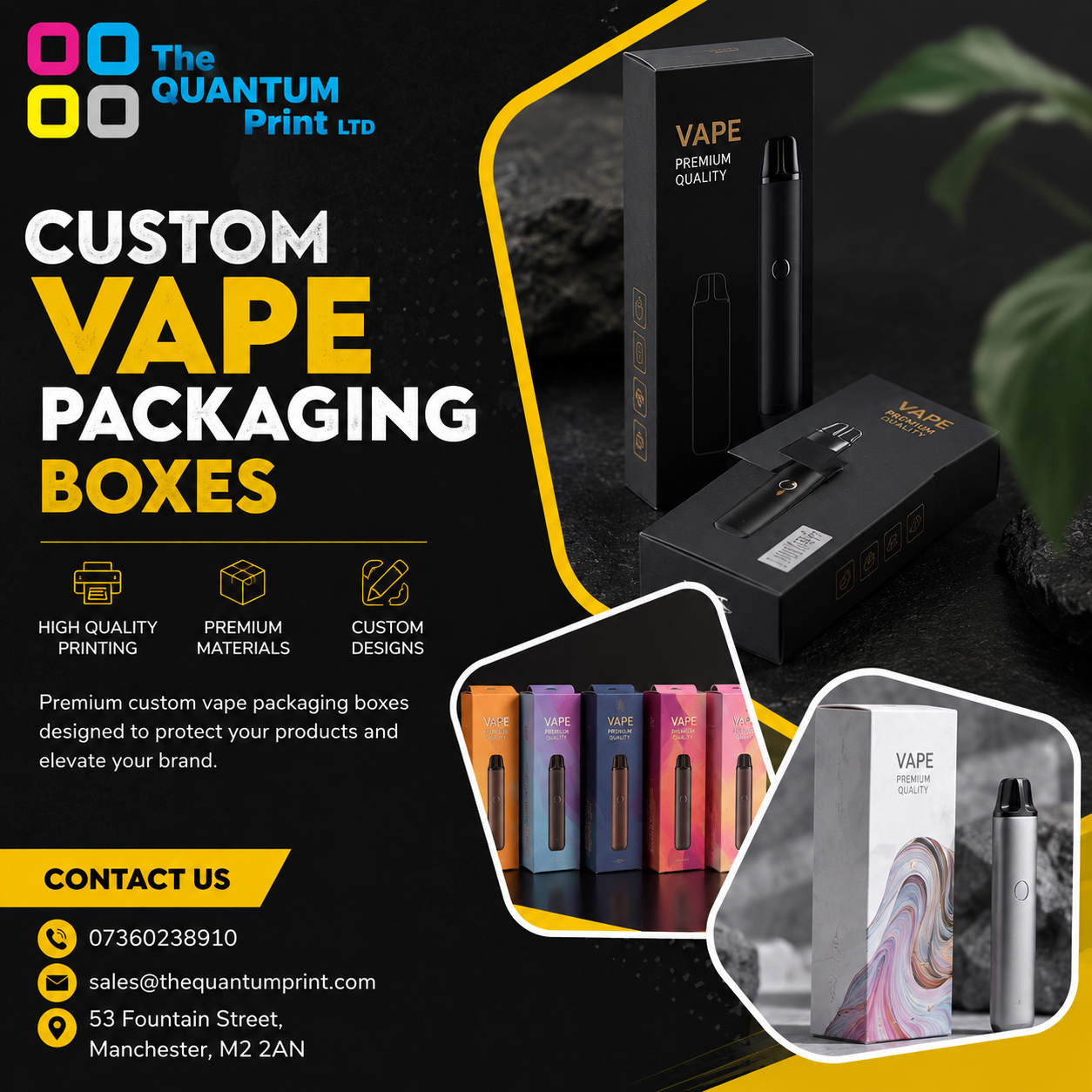
Packaging plays an important role in how regulated products are presented, protected, stored, and transported. In the vaping sector, packaging needs to do more than create a recognisable appearance. It must also accommodate practical requirements such as product protection, information presentation, durability, and responsible retail handling.
Custom vape packaging boxes allow businesses to develop packaging around the dimensions and characteristics of their products rather than relying entirely on generic formats. A well-planned box can help protect individual items during storage and distribution while providing an organised surface for legally required information, product details, and brand identification. For businesses operating in the UK, packaging decisions also need to take account of applicable product, labelling, consumer-protection, and environmental requirements.

Why Packaging Design Matters in the Vape Industry
Vape products can include devices, refill containers, cartridges, accessories, and other components that vary considerably in size and shape. Using unsuitable packaging may result in unnecessary movement inside the box, damaged surfaces, or inefficient use of storage space.
Purpose-designed packaging can address these issues by considering the complete product presentation from the beginning.
Important factors include:
- Product dimensions and weight
- Internal protection and support
- Material strength
- Closure and opening method
- Storage and transportation requirements
- Printed product information
- Batch or identification details where applicable
- Responsible disposal and recycling considerations
- Retail presentation
The objective is not simply to create an attractive box. Effective packaging balances protection, practicality, communication, and compliance.
For example, a compact product may benefit from a rigid or folding carton with an appropriately sized internal fit. A larger device may require stronger board construction or additional internal support. The packaging format should therefore be determined by the product rather than by appearance alone.

Choosing Materials for Vape Packaging Boxes
Material selection is one of the most important decisions when developing packaging. Different grades of paperboard and other packaging materials provide different levels of rigidity, print quality, durability, and environmental performance.
Common considerations include:
Folding Cartons
Folding cartons are widely used across retail packaging because they can be produced in numerous shapes and sizes. They can also provide a large printable surface for information and visual identification.
Rigid Boxes
Rigid packaging offers greater structural strength and can be appropriate where additional protection or a more substantial presentation is required. However, businesses should consider whether the additional material is genuinely necessary for the product.
Recyclable Paper-Based Materials
Growing environmental awareness has increased interest in recyclable and responsibly sourced packaging materials. Paper-based packaging can often be incorporated into recycling systems when it is appropriately designed and does not contain unsuitable combinations of materials or coatings.
Material decisions should therefore consider the complete packaging lifecycle, including manufacturing, transportation, storage, consumer use, and disposal.

The Role of Customisation in Product Protection
One of the practical advantages of custom vape packaging boxes London is the ability to develop dimensions around a specific product.
Generic packaging may leave excessive empty space around an item. That space can allow movement during transportation, increasing the possibility of scuffing or impact damage. Oversized packaging can also require more void-fill material and increase the overall storage footprint.
A properly sized package can help address these problems.
Businesses should assess:
- The exact external dimensions of the product.
- Whether the product contains fragile components.
- How the item will be transported.
- Whether additional protective inserts are required.
- How the packaging will be displayed or stored.
- Whether multiple products will use the same packaging format.
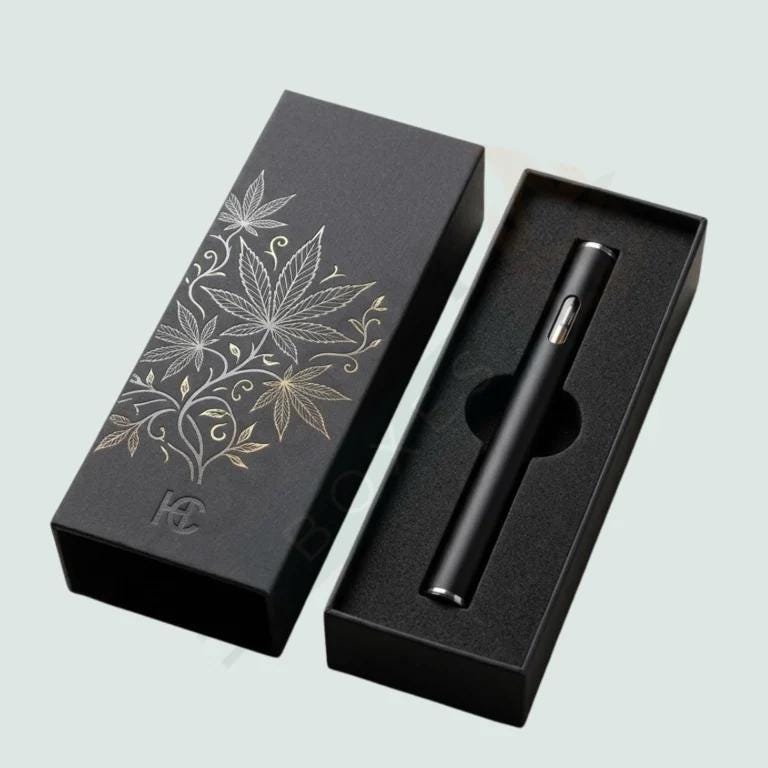
Internal inserts can be particularly useful when a product contains several components. They can keep items separated and create a more organised presentation when the package is opened.
Designing Packaging for UK Retail Requirements
Businesses looking at Vape packaging boxes UK solutions need to consider more than printing and aesthetics. The regulatory environment surrounding vaping products means packaging and product information must be approached carefully.

Requirements can vary according to the product type, nicotine content, intended market, and applicable UK regulations. Businesses should obtain current professional or regulatory advice rather than assuming that a packaging template meets every requirement.
Packaging may need to accommodate information such as:
- Product identification
- Relevant warnings
- Ingredient or content information where required
- Manufacturer or responsible business details where applicable
- Batch or traceability information
- Required regulatory markings
- Disposal or recycling information where appropriate
The available print area should therefore be considered during the design stage. Trying to add essential information after the artwork has already been finalised can create avoidable layout problems.
Making Packaging More Cost-Efficient
Affordability does not necessarily mean selecting the cheapest material available. A more useful approach is to consider the total packaging cost throughout the supply chain.

Businesses can review several areas:
Packaging dimensions: Smaller, efficiently sized boxes can reduce material use and storage requirements.
Material specification: Using a board grade that is appropriate for the product can prevent unnecessary over-engineering.
Print configuration: Artwork can be planned to work efficiently with the selected production method.
Standardisation: Where several products can share a packaging structure, standardising certain elements may simplify purchasing and inventory management.
Transportation: Lightweight and space-efficient packaging may contribute to more efficient distribution.
This is where affordable Vape packaging boxes can be approached as a design and operational challenge rather than simply a price comparison. The cheapest box is not always the most economical option if it creates higher damage rates, excessive storage requirements, or unnecessary material consumption.
Common Packaging Challenges and Practical Solutions
Challenge 1: Products Moving Inside the Box
Excess internal space can allow products to shift during transportation.
Solution: Consider a closer-fitting box or an appropriately designed insert.
Challenge 2: Limited Space for Information
Small products may require substantial information on their packaging.
Solution: Plan the artwork and structural dimensions together from the beginning rather than treating printing as a final step.
Challenge 3: Excessive Packaging Material
Overly large boxes can increase material consumption.
Solution: Measure the product carefully and select packaging dimensions based on actual requirements.
Challenge 4: Inconsistent Presentation
Using different generic packaging formats can create an inconsistent appearance across a product range.
Solution: Develop a consistent structural and visual packaging system while allowing individual products to retain their necessary information.

Challenge 5: Environmental Considerations
Consumers and retailers are increasingly aware of packaging waste.
Solution: Review whether unnecessary layers, oversized formats, or difficult-to-separate materials can be reduced without compromising protection or regulatory requirements.
Where Custom Vape Packaging Can Be Used
Custom packaging can be relevant across several stages of the vaping supply chain.
Manufacturers may use product-specific boxes for individual devices or components. Retailers can use consistent packaging structures across product ranges, while distributors may prioritise durable formats that withstand handling and transportation.
Packaging can also be designed for different product categories, provided the structure and information requirements are appropriate for the particular item.

For UK businesses researching Custom vape packaging, providers such as The Quantum Print can be considered when exploring packaging formats and printing requirements. The important step is to establish the product dimensions, material requirements, artwork, quantity, and applicable information before selecting a final production specification.
Current Packaging Trends to Watch
Several wider packaging trends are influencing product development across retail industries.
Minimal material use is becoming increasingly important as businesses look for ways to reduce unnecessary packaging.
Smarter structural design is also receiving attention. Rather than adding protective materials after production begins, designers are increasingly considering protection as part of the box structure itself.
Consistent brand systems remain useful for businesses with multiple products. A unified packaging approach can make product ranges easier to organise while reducing unnecessary variation.
Another significant trend is information clarity. Packaging has limited space, so designers need to organise essential information in a way that remains readable without overwhelming the customer.
These trends are not exclusive to vaping products. They reflect a broader movement within packaging toward efficiency, responsible material use, clear communication, and practical product protection.

Final Thoughts
Effective vape packaging requires a balance between product protection, structural design, information requirements, material selection, cost management, and responsible packaging practices. Customisation can be particularly useful when standard boxes do not provide the right fit or sufficient space for the information associated with a product.
Rather than choosing packaging based solely on appearance or unit price, businesses should consider the complete lifecycle of the package. Measuring products accurately, selecting suitable materials, planning artwork early, and reviewing applicable UK requirements can help create a packaging solution that is practical and consistent.
For retailers, manufacturers, and distributors, the central lesson is simple: good packaging should serve a clear purpose. It should protect the product, communicate necessary information, use materials responsibly, and fit naturally into the wider supply chain.
Read More:
- https://wikinewsportal.com/https-www-thequantumprint-com-box-packaging-print-box-packaging-uk/
https://ulvixo.com/how-to-choose-chocolate-box-packaging-for-uk-brands/https://www.ganjingworld.com/s/NRyM3poDNX
https://darenn.bluxeblog.com/75577934/how-modern-packaging-design-is-evolving-for-e-liquid-and-vape-product
https://www.thequantumprint.com/is-the-quantum-print-a-reliable-printing-company/
https://www.thequantumprint.com/how-to-create-packaging-for-a-product/
Bub
Do?

Categories
Read More
Mark Millar's creative universe is now being fully realized on Netflix, with a dynamic initial slate of projects announced. This development follows the streaming giant's acquisition of Millarworld in 2017. The first wave includes both series and films, showcasing the breadth of Millar's storytelling. Leading the series roster is Jupiter's Legacy, a multi-generational superhero saga. Steven S....

Ozempic injection has become a widely discussed treatment option for people managing type 2 diabetes and, in some settings, weight-related health concerns. As interest in Ozempic Injection in Muscat continues to grow, many patients have questions about how the medication fits into everyday routines, particularly fasting. Fasting may be part of a person’s religious...
Still stuck on menu freezes and unexpected disconnections that cost you your hard-earned rewards and valuable FC 26 Coins? EA's emergency 1.6.4 patch fixes all those annoying bugs and comes with tons of compensation, making it possible to get a 95-rated Nusa with zero effort. Challenge 3 Compensation Maxed Out: Football Festival Progress Players Guaranteed 95 Nusa! The daily...

We pay for our attractive and beautiful escorts in Islamabad. We pride ourselves on the fact that all our models are hospitable, friendly, elegant, and sophisticated. Their profiles are completely authentic, and their personalities are refined and distinctive. We provide you with the best College Escorts in Islamabad. Our girls are professional and experienced in their field, offering you the...

Students who appeared in the BISE Lahore HSSC Part-II Annual Examination 2026 are eagerly waiting for their final result. According to the latest available information, the BISE Lahore 12th Class Result 2026 is scheduled to be announced on 23 September 2026 at 10:00 AM. After the official announcement, students will be able to check their 12th Class Result through different methods. These...