


 Crypto.
 About
About
 Passport
 Conference call
 send money
 Términos
 Privacidad
 Sierra market
How Reviews and Ratings Affect App Store Visibility and Downloads
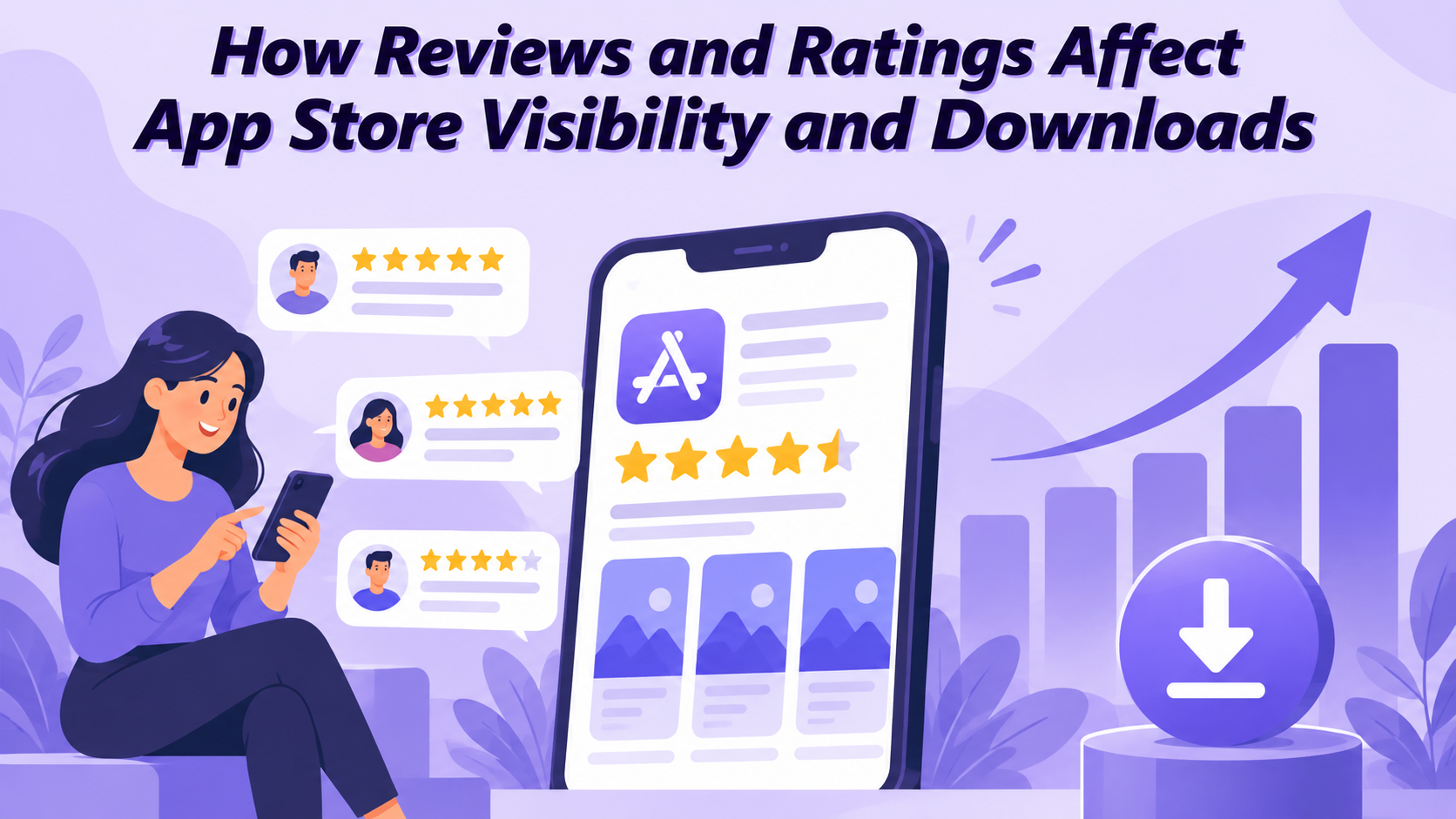
You spend months building an app. You launch it. Downloads trickle in, then stall.
Often, the problem isn't your app's features or design. It's your reviews and ratings.
App Store Optimization isn't just about keywords and screenshots. Ratings and reviews are one of the strongest ranking and conversion signals both Apple and Google use to decide who sees your app first.
Why Ratings Matter More Than You Think
App store algorithms treat ratings as a trust signal. A higher average rating tells the algorithm your app delivers on its promise.
Both the App Store and Google Play use ratings as part of their ranking formulas. Apps with strong ratings tend to rank higher for relevant search terms, which means more organic visibility without extra ad spend.
Ratings also affect the "Similar Apps" and "You Might Also Like" sections. Well-rated apps get featured there more often, creating a compounding visibility effect.
How Reviews Influence Downloads Directly
Rankings aside, reviews shape user decisions the moment someone lands on your app page.
Most users check ratings before downloading. A 3-star app next to a 4.5-star competitor loses the click almost every time, even if the app itself is better.
Here's what reviews actually do for conversion:
- They build instant credibility before a user reads a single feature.
- They answer unspoken questions, like whether the app has bugs or hidden costs.
- They reduce perceived risk, especially for paid apps or apps requesting sensitive permissions.
- They provide social proof, since people trust other users more than marketing copy.
A single detailed negative review at the top of your list can undo weeks of ad spend.
Request Your Free Consultation: https://www.imarcamplify.com/contact-us
What Counts as a "Good" Rating for ASO
There's no universal magic number, but patterns exist across categories.
Apps averaging 4.0 stars or higher generally see better conversion rates and stronger keyword rankings. Below 3.5, most users hesitate to download, regardless of category.
Review volume matters too. An app with 4.8 stars from 12 reviews looks less trustworthy than one with 4.3 stars from 8,000 reviews. Volume signals authenticity.
Common Mistakes That Hurt Your App Store Visibility
Many teams unintentionally damage their ranking through avoidable habits.
Ignoring negative reviews. Unanswered complaints suggest a team that doesn't care, which discourages new users and search algorithms alike.
Asking for reviews at the wrong moment. Prompting right after a crash or error invites frustrated feedback instead of genuine praise.
Buying fake reviews. Both Apple and Google actively detect and penalize manipulated ratings, sometimes with app removal.
Never updating based on feedback. Reviews often repeat the same bugs or missing features. Ignoring that pattern keeps ratings low indefinitely.
Practical Ways to Improve Your App's Reviews and Ratings
Small, consistent actions tend to outperform one-time campaigns.
- Time your review prompts well. Ask after a positive action, like completing a task or reaching a milestone, not during onboarding.
- Respond to every review, especially negative ones. A thoughtful public reply shows future users you take feedback seriously.
- Fix recurring bugs fast. Address the issues mentioned most often in reviews before chasing new features.
- Make in-app feedback easy. Give unhappy users a direct channel before they turn to public reviews.
- Update your app regularly. Frequent updates signal active maintenance, which both users and app store algorithms favor.
- Segment your prompts. Only ask happy, engaged users for public ratings; route others to private support.
Do Reviews Affect AI-Driven App Discovery Too?
Increasingly, yes. AI-powered search tools and app recommendation engines pull from public sentiment, including reviews, when suggesting apps to users.
An app with consistently positive, detailed reviews is more likely to be described favorably by AI assistants answering "best app for X" style questions. This makes review quality part of a broader visibility strategy, not just a store-specific metric.
Why This Needs an Ongoing Strategy, Not a One-Time Fix
Ratings shift constantly as new users download and review your app. A strong 4.6-star average can drop within weeks if a buggy update ships without warning.
This is where structured, ongoing app store optimization services help. Instead of reacting to rating drops after they hurt visibility, a dedicated strategy monitors sentiment, times review requests, and feeds feedback back into product decisions.
IMARC Amplify works with app teams to build exactly this kind of ongoing ASO approach, combining review management with keyword and conversion optimization so visibility gains actually stick.
Conclusion
Reviews and ratings aren't a side metric. They directly shape whether users find your app and whether they trust it enough to download.
Treat them as part of your core App Store Optimization strategy. Respond quickly, fix what users flag, and time your requests thoughtfully. The apps that do this consistently outrank and outconvert the ones that don't.
Bub
Do?

Categorías
Read More
Our cloud transition at Netflix was sparked by a critical database failure in August 2008, which halted DVD shipments for three days and highlighted the risks of centralized, vulnerable systems. This incident propelled our shift toward resilient, distributed cloud infrastructures, selecting AWS for its extensive scalability and diverse service offerings. By 2015, we had relocated most of our...

Hair colour has become an important part of personal grooming for many men. Some choose to colour their hair to cover grey strands, while others experiment with different shades to refresh their appearance. Modern hair colouring products offer a variety of options that suit different hair types, lifestyles, and preferences. Understanding how these products work can help individuals make...

The evolution of mRNA technology has introduced a transformative era in oncology, offering patients personalized cancer care solutions that were previously unimaginable. The Mrna Cancer Vaccines And Therapeutics Market has emerged as a significant innovation hub as researchers work to develop targeted treatments that activate the body’s natural immune response. Unlike conventional...

The Confectionery Coatings Market is poised for significant transformation and strategic expansion between 2025 and 2031, driven by evolving consumer tastes, technical advancements, and robust industry innovation. The Confectionery coatings Market size is projected to reach US$ 6.47 billion by 2034 from US$ 4.39 billion in 2025. The market is anticipated to register a CAGR...

Découvrez les chemins menant aux succès secrets de Nod-Krai. Parcourez les terres pour accomplir ces défis uniques. Les quêtes mondiales renferment des récompenses cachées pour les explorateurs assidus. Voici les sentiers à suivre pour chaque accomplissement. Les Couleurs du Vide vous appellent près des frontières de Snezhnaya. Le...
