Crypto.
 Sobre
Sobre
 Passport
 Conference call
 send money
 Termos
 Privacidade
 Sierra market
The Rhythm of Repetition in Papa’s Pizzeria
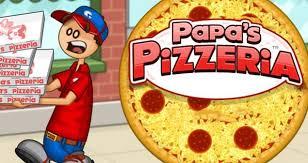
At some point while playing Papa’s Pizzeria, the experience stops feeling like a series of tasks and starts feeling like a rhythm.
Not music in the literal sense. Nothing audible changes. But internally, there’s a cadence that begins to form: order, preparation, baking, serving, repeat.
It’s subtle at first. Then it becomes the main thing you notice.
The interesting part is that nothing in the game explicitly tells you to find rhythm. There’s no instruction about pacing or flow. It emerges naturally from repetition.
And once it appears, the game feels completely different.
Repetition That Never Fully Repeats
On the surface, every shift looks the same.
Customers arrive. Orders vary slightly. Pizzas are built using the same ingredients. The oven behaves consistently.
But repetition here is not identical repetition.
Each cycle contains small variations:
A different number of customers.
A slightly more complex order.
A timing overlap that didn’t happen before.
These differences are small enough to feel familiar, but large enough to prevent automation from becoming boring.
That balance is what keeps attention active.
You are repeating actions, but never in exactly the same way.
And that small unpredictability is what allows the rhythm to stay alive.
The Emergence of Internal Timing
After enough play, players begin to develop something the game never teaches directly: internal timing.
You stop relying only on the oven timer. You start estimating when something will be ready. You begin to “feel” when a pizza is close to burning, even before checking.
This is not magic or intuition in a mystical sense. It’s pattern recognition built through repetition.
The brain records:
How long tasks usually take
How orders overlap
How quickly customers begin to wait
Over time, these patterns compress into instinct.
You don’t think in seconds anymore. You think in sequences.
“What needs attention next?”
That becomes more important than exact timing.
When Actions Become Flow Instead of Steps
Early gameplay feels like instruction-following.
Take order → add toppings → bake → serve.
Each step is separate, deliberate, and slightly stressful.
But later, something changes.
The steps stop feeling isolated.
They merge into a continuous flow of activity.
You are no longer “doing tasks.”
You are maintaining motion.
The kitchen becomes less like a checklist and more like a moving system that you are gently steering.
This is where the game becomes unexpectedly absorbing.
Not because anything new is introduced, but because your relationship with the same actions changes.
The Quiet Satisfaction of Smooth Transitions
One of the most satisfying parts of gameplay isn’t completing orders—it’s transitioning between them without friction.
Taking an order while a pizza is baking.
Starting a new pizza immediately after serving another.
Moving between stations without hesitation or confusion.
These transitions are where rhythm becomes visible.
There is no pause where the system feels broken or disjointed. Instead, everything flows into the next action.
A good session often isn’t remembered for individual pizzas, but for how smooth everything felt overall.
It’s a feeling of continuity rather than achievement.
When Rhythm Breaks
The rhythm only becomes noticeable when it breaks.
A forgotten pizza in the oven.
A backlog of orders building up.
A sudden rush of customers arriving at the same time.
In those moments, the flow collapses into fragmentation.
Attention splits unevenly. Tasks feel disconnected. The sense of timing disappears.
What was once smooth becomes reactive.
This contrast is important.
Without disruption, rhythm would be invisible. It is only when things fall apart that players realize how structured their attention had become.
And the goal naturally becomes restoring that rhythm again.
Not finishing orders.
Not maximizing scores.
But returning to flow.
The Game as a Loop of Attention
At its core, Papa’s Pizzeria is less about cooking and more about attention management.
Where is attention right now?
Where should it go next?
What can wait for a few seconds?
What cannot wait at all?
These questions are constantly being answered, often without conscious thought.
Over time, attention itself becomes structured.
Instead of jumping randomly between tasks, it begins to move in predictable loops:
Oven → Orders → Toppings → Oven again
That loop is the foundation of the entire experience.
Once it stabilizes, everything else becomes secondary.
Why Simplicity Strengthens the Rhythm
Complex systems often break rhythm because they introduce too many competing layers.
Papa’s Pizzeria avoids that problem by staying simple.
There are only a few actions.
Only a few systems.
Only a few sources of pressure.
This limitation is not a weakness. It is what allows rhythm to form cleanly.
Because nothing is overwhelming, attention can cycle smoothly between tasks without fragmentation.
The game never asks the player to manage too many concepts at once. It only asks them to repeat a small set of actions under shifting conditions.
That restriction is what makes flow possible.
The Comfort Hidden Inside Pressure
At first glance, the game feels stressful.
Timers are always running. Orders are always pending. Something is always waiting.
But that pressure is structured, not chaotic.
There is always a clear next step.
There is always a visible system guiding action.
This creates a strange combination:
Pressure without confusion.
Urgency without panic.
The result is a state where focus becomes easier, not harder.
Instead of scattering attention, pressure consolidates it.
Everything narrows into the current moment.
How Mastery Changes the Experience
As skill improves, something subtle happens to perception.
The same tasks that once felt demanding begin to feel automatic.
You no longer consciously think about topping placement or oven timing. You just execute.
This frees mental space.
And that freed attention is what allows rhythm to become even more pronounced.
You are no longer reacting to each step individually. You are observing the system as a whole while it runs.
That shift turns gameplay into something closer to observation than effort.
You are still active, but less mentally strained.
More aware of the flow than the friction.
The Invisible Structure Behind Every Shift
Every session follows a structure that becomes more visible over time:
Opening pace (few customers, low pressure)
Build-up phase (increasing orders, rising attention demand)
Peak rhythm (full multitasking, stable flow)
Disruption moments (mistakes, rushes, timing conflicts)
Recovery phase (system stabilizing again)
This structure isn’t explicitly shown anywhere in the game. It emerges naturally from repetition.
And once noticed, it becomes hard to unsee.
Each shift is not random. It is a cycle of rising and falling attention intensity.
Understanding that cycle makes the experience feel more predictable, even when individual moments are not.
Why the Rhythm Stays in Memory
Long after stopping play, what remains is not specific orders or scores.
It is the sense of rhythm itself.
The feeling of moving between tasks in a steady loop.
The memory of controlled urgency.
The sense of flow under pressure.
These sensations are difficult to describe but easy to recognize when revisiting the game.
They are not tied to content, but to pacing.
And pacing is what gives the game its lasting impression.
A Final Loop That Never Fully Ends
Papa’s Pizzeria doesn’t end in a traditional sense.
There is no final mastery screen that concludes everything.
No ultimate state where rhythm is permanently achieved.
Instead, every session resets the cycle.
Order returns.
Pressure returns.
Flow returns.
And each time, the rhythm must be rebuilt again.
That repetition is not a flaw.
It is the structure itself.
Because the experience was never about finishing anything.
It was about finding rhythm again and again, within the same simple system.
And maybe that is why it stays interesting far longer than expected.
When you think about your own focus during repetitive tasks, do you notice rhythm forming naturally—or does it only appear when something breaks it?
Bub
Do?

Categorias
Leia Mais
In your advanced handheld age group, over the internet activities has grown into further reachable in the past. Families are able to have fun with adventures, athletic articles and other content, exist things, not to mention interactive stands precisely to use portable computers not to mention mobile phones. แทงหวยลาว One of the many manufacturers affiliated with over the internet gambling den...

Streaming The Flash Final Season Facing geo-blocks while traveling? Streaming The Flash's final season internationally requires a VPN solution. Official platforms exclusively host Season 9 broadcasts, making unlicensed streams unnecessary and unreliable due to frequent shutdowns and inferior quality. VPN services simplify global access by masking your location. Connect through a server in your...
The global construction sector, one of the world's largest and most vital industries, is in the midst of a profound digital awakening. For decades, it has been characterized by manual processes, fragmented communication, and lagging productivity. The global Construction Software industry is the primary catalyst for this long-overdue transformation, offering a powerful suite of digital...
At a FYSee event held in Los Angeles this evening, comedian Hannah Gadsby revealed that Netflix will premiere her upcoming stand-up special titled Douglas—a tribute to her cherished canine companion—sometime in 2020, reaching audiences worldwide. Gadsby expressed her enthusiasm about the announcement: "I'm thrilled to share that Douglas is coming to Netflix next year. While I'm...
White label SEO services Nashville are commonly used by agencies that require outsourced search engine optimization fulfillment. In this model, SEO reseller services Nashville allow firms to offer SEO solutions without managing execution internally. A Nashville white label SEO agency typically provides technical SEO, content optimization, and link building support under private...