Crypto.

 Passport
 Conference call
 send money
 الشروط
 الخصوصية
 Sierra market
A Complete Guide to Custom Shoe Boxes: Sizing, Materials, and Styles
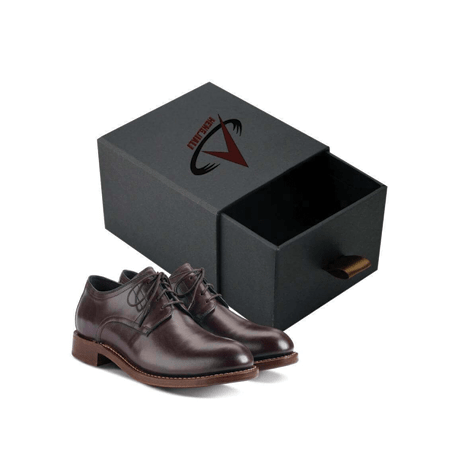
Footwear deserves packaging that protects it through manufacturing, shipping, and retail handling while still creating a strong first impression the moment a customer opens it. Custom shoe boxes need to balance all of these demands at once, which makes choosing the right combination of size, material, and structure more involved than many first-time buyers expect.
Standard Sizing as a Starting Point
Before considering customization, it helps to understand standard shoe box dimensions as a baseline. Typical women's shoe boxes measure around 13 inches by 7.5 inches by 4 inches, men's boxes run closer to 13.25 inches by 10 inches by 5 inches, and children's shoe boxes are generally smaller, around 8.5 inches by 6 inches by 3 inches.
These standard measurements give buyers a useful reference point, but custom shoe boxes are typically built around a brand's actual product dimensions rather than forcing every silhouette — sneakers, boots, heels, and flats — into the same generic size.
Why Fit Matters More Than It Seems
A shoe box that's too large allows the shoe to shift during shipping, increasing the risk of scuffing or deformation. One that's too small can crush or distort delicate materials. Properly fitted custom shoe boxes account for toe room, heel height, and any accessory space needed, built around real product dimensions rather than generic assumptions.
For brands selling multiple shoe styles — sneakers, dress shoes, sandals — this often means working through several different box sizes rather than assuming one dimension will work across an entire product line.
Material Choices and What They Communicate
The material selected for custom shoe boxes affects both protection and brand perception. Kraft material offers a lightweight, recyclable, and biodegradable option that works particularly well for athletic shoes and casual sneakers, where a more rustic, eco-conscious aesthetic fits the brand positioning.
Cardboard, generally thicker than standard paper, provides a solid, dependable structure suited to a wide range of footwear categories. For premium or luxury footwear lines, rigid chipboard delivers a noticeably more substantial feel that reinforces a higher price point, while corrugated material remains the standard choice for shipping protection, particularly for boots and heavier footwear styles.
Hinged Lid vs. Traditional Two-Piece Designs
One meaningful structural decision involves choosing between a traditional two-piece shoebox design, with a separate base and lid, versus a hinged-lid style that keeps the lid attached to the box. Hinged designs tend to offer a more efficient and economical solution compared to traditional shoebox construction, while still providing strong brand presentation and an improved unboxing experience.
This choice often comes down to a brand's specific priorities — traditional two-piece boxes feel more premium and classic, while hinged designs can reduce material costs and simplify the unboxing process for e-commerce fulfillment.
Finishing Options That Elevate Footwear Packaging
Beyond basic structure, custom shoe boxes support a wide range of finishing techniques. Gloss and matte lamination affect the overall visual impression, while spot UV coating can highlight specific logo elements or design details. Foil stamping and embossing add a tactile, premium quality particularly suited to higher-end footwear lines looking to reinforce a luxury price point.
For brands wanting a distinctive unboxing moment, some suppliers offer kraft-lined interiors paired with bright, full-color exteriors, creating a visual contrast between the outside presentation and the surprise of the interior the moment the box is opened.
Window Cutouts and Display Considerations
For retail environments where shelf presentation matters, window cutouts allow customers to see the actual shoe without opening the box, which can support faster purchasing decisions in a physical store setting. This style works particularly well for casual footwear and sneakers, where the visual design of the shoe itself is a primary selling point.
Eco-Friendly Considerations for Footwear Brands
Sustainability has become an increasingly important factor in footwear packaging specifically, since shoe boxes tend to be larger and more material-intensive than many other product categories. Recyclable and biodegradable materials for custom shoe boxes allow footwear brands to reduce their environmental footprint while still maintaining strong branding and structural protection.
Planning for Bulk and Wholesale Orders
Footwear brands ordering at scale should confirm minimum order quantities and bulk pricing structures early in the process, since wholesale shoe box pricing often improves significantly at higher volumes. Many suppliers also offer low minimum order quantities specifically for newer brands still establishing their product line, which is worth confirming if you're not yet ready to commit to a large production run.
Conclusion
Custom shoe boxes need to do more than simply hold a pair of shoes — they need to protect footwear through real-world handling while creating a presentation that reflects the brand's positioning, whether that's an everyday sneaker or a premium leather dress shoe. Understanding standard sizing as a starting point, choosing the right material for your specific footwear category, and selecting finishing options that match your price point all contribute to packaging that performs well functionally and commercially.
Article 5
Wholesale Cufflink Boxes: A Guide to Small Accessory Packaging
Cufflinks are small, often expensive, and easy to lose track of, which makes their packaging considerably more important than the item's size might suggest. Wholesale cufflink boxes need to protect a tiny, valuable accessory while still presenting it with the kind of premium feel that matches its price point — a balance that requires more careful thought than packaging larger products.
This article covers the materials, sizing considerations, and finishing options that go into well-designed cufflink packaging at wholesale volume.
Why Small Accessories Need Specialized Packaging
Cufflinks present a unique packaging challenge precisely because of their size. A box that's too large allows the cufflinks to shift and rattle, increasing the risk of scratches or lost components. Wholesale cufflink boxes need to be compact enough to hold the accessory securely while still leaving enough surface area for branding and a satisfying unboxing experience.
This compact, premium presentation matters particularly for retailers and brands selling cufflinks as gifts, where the packaging itself communicates a significant portion of the perceived value before the recipient ever sees the actual product.
Common Materials Used for Cufflink Packaging
Most wholesale cufflink boxes use rigid board or sturdy cardstock as their base material, chosen specifically for the structural stability needed to protect a small, often metal accessory during shipping and handling. Rigid construction holds its shape well and supports a wide range of premium finishing techniques that lighter materials cannot accommodate as effectively.
Velvet or fabric-wrapped interiors are common additions, providing a soft, protective lining that prevents scratching while reinforcing the premium feel that cufflinks, as a category, are generally expected to deliver.
Sizing Considerations for Wholesale Orders
Because cufflinks are sold both individually and as part of larger accessory sets, wholesale cufflink boxes often need to accommodate slight size variations across a single product line. Compact, single-pair boxes work well for individual retail sales, while slightly larger formats may be needed for gift sets that pair cufflinks with a tie clip or pocket square.
Ordering at wholesale volume typically allows for more cost-effective customization across multiple box sizes, since the per-unit cost of tooling and setup gets distributed across a larger total order quantity.
Finishing Options for a Premium Feel
Given that cufflinks are frequently positioned as a higher-end accessory, wholesale cufflink boxes commonly feature finishing techniques that reinforce that perception. Foil stamping in gold or silver adds a metallic accent often used for logos or brand names. Embossing and debossing create tactile detail that customers notice the moment they pick up the box, while matte or soft-touch lamination contributes to an overall premium hand-feel.
These finishing choices matter more for cufflink packaging than for many other accessory categories, since the box itself is often part of the gifting experience and needs to communicate quality before the recipient even opens it.
Branding Opportunities Within a Small Format
Despite their compact size, wholesale cufflink boxes still offer meaningful branding real estate. Interior lid printing, branded ribbon pulls, or a small embossed logo on the exterior all contribute to brand recognition without requiring a large surface area to work with.
For brands selling across multiple accessory categories — ties, watches, sunglasses — maintaining consistent branding across all of these smaller packaging formats helps reinforce a cohesive, professional product line rather than treating each accessory type as a separate, disconnected packaging decision.
Why Wholesale Pricing Matters for This Category
Because cufflink boxes are relatively small and use less raw material than larger packaging categories, wholesale ordering tends to deliver particularly strong cost efficiency. Ordering wholesale cufflink boxes in bulk allows brands to access premium finishing options like foil stamping or embossing at a more accessible per-unit cost than would be feasible for smaller production runs.
This cost advantage matters especially for retailers stocking multiple cufflink designs or seasonal collections, where consistent, premium packaging across an entire product range needs to remain financially sustainable at scale.
Choosing a Supplier With Small-Accessory Experience
Not every packaging manufacturer has equal experience with the specific challenges of small accessory packaging. When sourcing wholesale cufflink boxes, it's worth confirming that a supplier has direct experience with similarly sized products — watches, rings, or other small jewelry items — since the precision required for tight-fitting inserts differs meaningfully from larger box categories like shoes or cosmetics.
Conclusion
Wholesale cufflink boxes require a level of precision that larger packaging categories don't always demand, balancing compact sizing with premium presentation in a way that reflects the value of the accessory inside. From rigid materials and protective interior linings to foil stamping and consistent cross-category branding, the right wholesale cufflink packaging turns a small, easily overlooked accessory into a presentation-worthy product.
Bub
Do?

الأقسام
إقرأ المزيد
The wait is almost over, with less than a day remaining until the launch of Black Myth: Wukong. Excitement is building as the release draws near. This highly anticipated action RPG will be available on PC, PlayStation, and Xbox platforms. However, Xbox fans will need to hold on a bit longer, as the developers at Game Science have postponed the port to ensure it meets their high-quality...

The modern medical field is witnessing a significant shift toward minimally invasive interventions, particularly in the management of cardiovascular and peripheral arterial diseases.As global populations age and sedentary lifestyles lead to a higher incidence of atherosclerosis, the reliance on high-performance vascular implants has never been greater. The Coronary and Peripheral...
Market Overview The global ocular implants market size was valued at USD 15.72 billion in 2024 and is projected to grow from USD 16.31 billion in 2025 to reach USD 21.93 billion in 2033, growing at a CAGR of 3.77% during the forecast period (2025–2033). The global Ocular Implants market continues to evolve rapidly, driven by shifting consumer trends,...

Industrial Safety Glove Market is redefining workplace safety by providing essential protection for employees exposed to mechanical, chemical, and thermal hazards. In modern industries, workers face a range of risks, and protective gloves have become a critical component of occupational safety. By combining durability, comfort, and dexterity, these gloves ensure that employees can perform...
The Cottonseed Oil Market is witnessing steady growth, driven by increasing demand for edible oils across food processing, household cooking, and industrial applications. The Cottonseed Oil Market size is projected to reach US$ 5.57 billion by 2034 from US$ 4.64 billion in 2025. The market is anticipated to register a CAGR of 2.30% during the forecast period 2026 to...