Crypto.
 About
About
 Passport
 Conference call
 send money
 Terms
Terms
 Privacy
 Sierra market
Addressing Mobility Restrictions with Modern Quarterback Football Pads
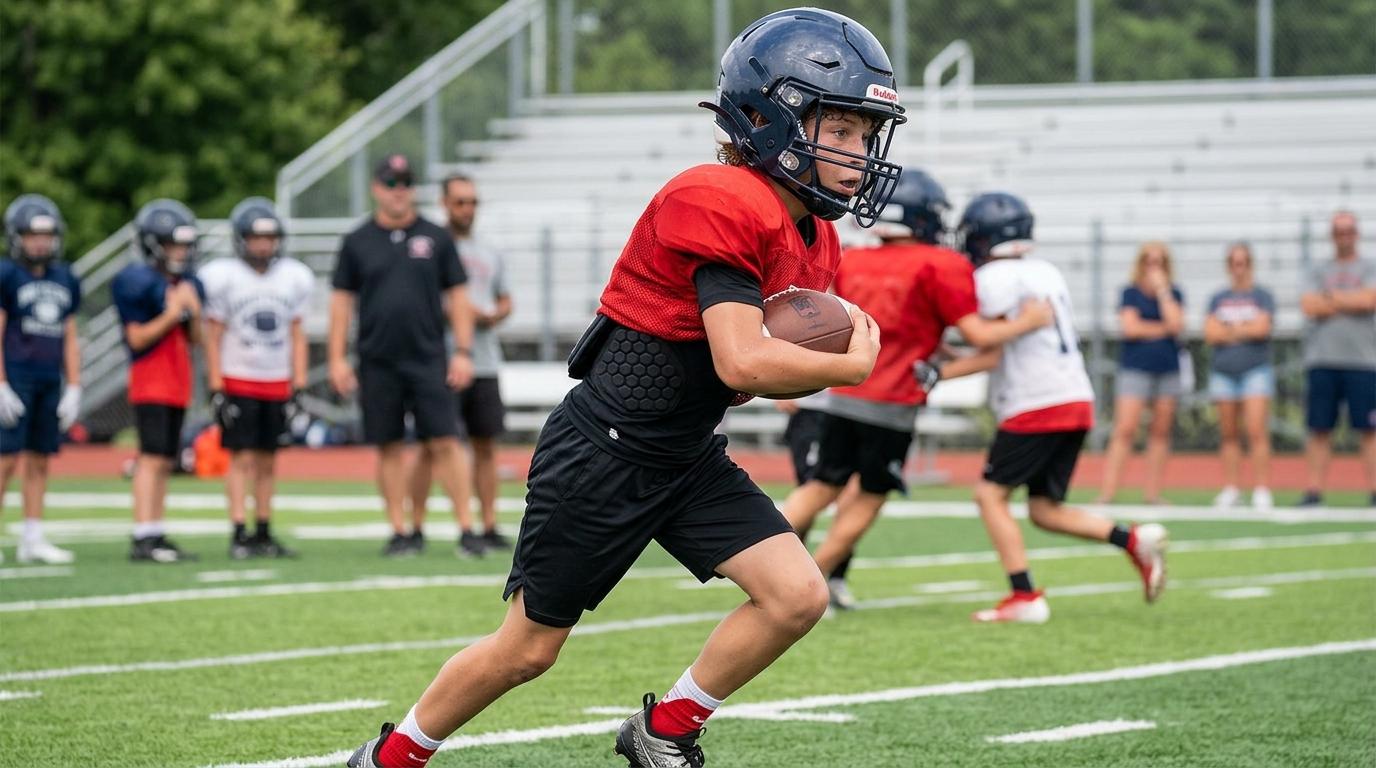
The evolution of the quarterback position in 2026 has transformed the requirements for on-field equipment. Gone are the days when a signal-caller could thrive behind a static pocket with bulky, restrictive armor. Today’s dual-threat era demands a "zero-friction" environment where gear acts as a second skin rather than a barrier. Choosing the right quarterback football pads is no longer just about safety; it is about ensuring that every degree of scapular rotation and every millisecond of the release remains unhindered.
For many athletes, the primary frustration with traditional padding is the physical "clash" between the shoulder arch and the helmet during the follow-through of a throw. Modern innovations, particularly those seen in the Tag Sports Gear ALT3 series, focus on eliminating this performance friction through advanced materials and biomechanically conscious designs. By understanding how gear interacts with the body's natural kinetics, players can unlock higher velocity and better accuracy while maintaining elite-level protection.
The Biomechanics of the Throw: Scapular Freedom
The most critical movement for a passer is the upward rotation of the scapula, or shoulder blade. When a quarterback enters the cocking phase of a throw, the shoulder blade must glide freely to allow the humerus to reach its full range of motion. Traditional, high-profile pads often act as a mechanical stop, hitting the neck or the base of the helmet before the arm reaches its peak height. This restriction forces the athlete to compensate by altering their arm slot, which can lead to decreased accuracy and long-term rotator cuff strain.
Modern quarterback football pads are designed with "cut-away" arches and lowered profiles specifically to address this. By reducing the height of the epaulets and streamlining the shoulder caps, manufacturers ensure that the arm can move through the full overhead arc without meeting resistance. This allows for a more natural "high-release" point, which is essential for throwing over the outstretched arms of defensive linemen.
Key Biomechanical Benefits of Unrestricted Padding:
-
Maximum External Rotation: Allows the arm to "lay back" further during the loading phase, increasing potential energy and ball velocity.
-
Natural Follow-Through: Prevents the pad from riding up into the chin strap or neck, allowing for a smooth completion of the throwing motion.
-
Reduced Compensatory Strain: Eliminates the need for the body to recruit secondary muscles to fight against the weight of the pads, reducing the risk of fatigue-related injuries.
-
Enhanced Trunk Rotation: Lower-profile waist straps allow for better torque generation in the core without the "pinching" sensation common in older models.
Material Innovation: The Teccell and Honeycomb Advantage
In 2026, the weight of a quarterback's gear is a decisive factor in fourth-quarter performance. Traditional EVA foam and heavy plastics have been replaced by high-performance composites like Teccell. This honeycomb-structured material, featured in the Tag ALT3-910, offers a revolutionary strength-to-weight ratio. Because quarterbacks are frequently moving—whether dropping back, escaping a collapsing pocket, or sprinting for a first down—every ounce of weight saved translates to preserved energy and faster footwork.
Teccell’s unique structure provides air management properties that standard foams cannot match. The honeycomb cells allow for consistent airflow, which keeps the athlete’s core temperature lower. In high-stakes games where cognitive clarity is as important as physical prowess, staying cool helps a quarterback maintain focus during complex defensive reads.
| Feature | Traditional Foam Padding | Modern Teccell Honeycomb |
| :--- | :--- | :--- |
| Weight | 5.5 – 7.0 lbs | 3.2 – 4.5 lbs |
| Impact Energy | Absorbs and compresses | Disperses across the hexagonal grid |
| Breathability | Traps heat against the skin | High airflow via open-cell structure |
| Durability | Foams degrade and lose "pop" | Rigid core maintains shape over seasons |
| Profile | Bulkier to achieve safety ratings | Ultra-thin while meeting safety specs |
Strategic Impact Dissipation: Protecting the AC Joint
While mobility is the priority for a passer, protection cannot be ignored. The Acromioclavicular (AC) joint is the most vulnerable area for a quarterback, especially when being driven into the turf by a trailing defender. Modern quarterback football pads utilize "cantilever-less" or low-profile cantilever designs that focus protection directly over the joint while stripping away excess material elsewhere.
The Tag Sports Gear ALT3-910, for instance, uses a multi-layered approach. The outer shell is rigid enough to deflect direct hits, while the interior cushioning uses air-management technology to decelerate the force before it reaches the bone. This "floating" protection system ensures that even if the pad moves slightly during a scramble, the vital areas of the shoulder remain shielded from impact.
Critical Protection Areas for Quarterbacks:
-
The Sternum: Modern pads feature reinforced center plates to protect against "spearing" hits during the release.
-
The AC Joint: Specialized "pads within pads" provide a secondary layer of shock absorption specifically for the point of the shoulder.
-
The Ribs: High-end QB setups often integrate with modular rib guards that attach directly to the shoulder pad frame for seamless movement.
-
The Scapula: While needing mobility, the back plates are lengthened just enough to cover the shoulder blades without hindering rotation.
Profile and Visibility: Enhancing the Field of Vision
A quarterback's most valuable asset is their eyes. High-sitting shoulder pads can actually create a visual "blind spot" when a player turns their head to scan for a backside safety or a streaking wide receiver. If the pads are too high, the peripheral vision is clipped by the arch of the plastic. This is why "low-profile" has become the mantra for elite quarterback football pads in 2026.
By lowering the height at which the pad sits on the trapezius muscle, designers have cleared the field of vision for the athlete. This allows for quicker head rotation and a better "pre-snap" and "post-snap" read of the defense. When a quarterback can see the entire field without the interference of their own equipment, their decision-making becomes faster and more decisive.
Impact of Low-Profile Design on Performance:
1. Lateral Scanning: Unobstructed neck movement allows for 180-degree field scanning without body adjustment.
2. Peripheral Awareness: Better sightlines help in detecting blitzing edge rushers earlier in the play.
3. Helmet Compatibility: Modern pads are shaped to "nest" with the latest helmet designs, preventing the two from knocking together during rapid movements.
Swivel Technology and Customization
The static nature of old-school pads is perhaps their greatest flaw. Human movement is fluid and multi-directional, yet many pads remain rigid. The latest advancements in quarterback football pads involve 3-point swivel locks and adjustable arch attachments. These allow the different segments of the pad—the front, back, and shoulder caps—to move independently of one another.
When a quarterback raises their arm to throw, the swivel connectors allow the shoulder cap to shift upward while the chest plate stays securely in place. This "independent suspension" system ensures that the pads never "ride up" or become lopsided, which is a common distraction for younger players. Customization is also at an all-time high, with the ability to adjust the tension of the straps and the position of the hitting flaps to match the specific arm slot of the passer.
Standard vs. High-Performance Adjustment Features:
-
Biothane Straps: These non-stretch straps ensure the pads stay "locked-in" regardless of how much the athlete sweats or moves.
-
Swivel Connectors: Allow the front and back plates to slide as the torso rotates, mimicking the body's natural "X-factor" torque.
-
Removable Liners: Facilitate easy cleaning and allow players to swap in thinner or thicker padding depending on their preference for that week’s opponent.
-
Velcro Attachment Points: Allow for the micro-adjustment of neck openings to prevent "choking" sensations during intense play.
Choosing Your Setup: Pocket Passer vs. Scrambler
Not every quarterback plays the same way, and their gear should reflect that. A traditional pocket passer might prioritize a slightly more stable pad that offers maximum protection for the sternum and ribs, as they are more likely to take hits while standing their ground. In contrast, a scrambler or dual-threat quarterback will benefit most from the ultra-lightweight, high-mobility configurations like the ALT3-910, which prioritize speed and "escape-ability."
In 2026, the trend is moving toward "modular" setups. A quarterback might wear a very slim shoulder pad for the mobility it provides, but supplement it with a lightweight, tech-integrated rib vest for games against high-pressure defensive fronts. This allows the athlete to scale their protection based on the specific risks of the game without ever sacrificing the core mobility required to throw a perfect spiral.
Ultimately, the goal of modern quarterback football pads is to become invisible. When an athlete takes the field, they should not be thinking about their equipment. By utilizing advanced materials like Teccell and focusing on the biomechanics of the throwing motion, brands like Tag Sports Gear are ensuring that the only thing a quarterback has to worry about is the defense standing between them and the end zone.
Bub
Do?

Categories
Read More
PMGO 2026 Season 1 Overview PMGO 2026 Season 1 arrives as PUBG Mobile’s first global competition of the year. A total prize pool of $500,000 will be split among the top finishers, with the largest share going to the champions. Thirty-two teams representing nine regions will take part, though some major scenes — including India, China and Japan — are absent this time. That...

In Governor of Poker 3 (GOP3), limited-time events are designed to challenge players, test their strategy, and reward them with valuable chips, boosters, and exclusive items. While these events can be exciting, they can also feel overwhelming due to tight deadlines and increasing difficulty. To complete them efficiently without wasting resources or burning out, players need a smart, focused...

NetEase Games and Marvel Games’ upcoming 6v6 hero shooter Marvel Rivals pits iconic characters such as Magneto, Iron Man, Scarlet Witch, and Rocket Raccoon against a villainous Doctor Doom. Overseeing these battles is a mysterious cosmic entity named Galacta—also called Gali—who serves as the game’s narrator and arbiter. Though she resembles Galactus, she is a distinct...
Популярность PlayerUnknown's Battlegrounds продолжает расти, привлекая всё больше игроков. По данным платформы SteamSpy, общее число проданных цифровых копий уже превысило три миллиона, что свидетельствует о высокой востребованности проекта. Хотя эта цифра может показаться скромной по сравнению с масштабами некоторых крупных релизов, она всё же демонстрирует значительный интерес к игре....
Taking an ICO to market requires considerably more preparation than creating a token and publishing a fundraising page. Founders need to build a reliable technical foundation, establish a clear token model, create an understandable investor journey, and prepare the operational systems required to manage the offering. A strong pre-launch process helps founders identify technical, business,...