


 Crypto.
 About
About
 Passport
 Conference call
 send money
 Terms
Terms
 Privacy
 Sierra market
The Digital Fortress: Inside the Germany Security Operations Center Industry
The Nerve Center of German Cybersecurity Defense
The Germany Security Operations Center industry represents the critical nerve center of the nation's cybersecurity defense, providing the essential human and technological capabilities to protect German businesses and public institutions from a relentless barrage of cyber threats. A Security Operations Center (SOC) is a centralized unit that combines people, processes, and technology to continuously monitor and improve an organization's security posture while preventing, detecting, analyzing, and responding to cybersecurity incidents. This industry is not just about selling security software; it's about providing the operational expertise to make that software effective. It encompasses a wide range of models, from large enterprises building their own sophisticated, 24/7 in-house SOCs, to a thriving market of Managed Security Service Providers (MSSPs) that offer "SOC-as-a-Service" to a broad spectrum of clients, particularly the Mittelstand (small and medium-sized enterprises). In a country known for its powerful industrial base, engineering prowess, and strict data privacy standards, the SOC industry plays a pivotal role in safeguarding intellectual property, protecting critical infrastructure, and ensuring trust in Germany's burgeoning digital economy.
The Core Components: People, Process, and Technology
The German SOC industry, like its global counterparts, is built upon three fundamental pillars. The "people" component is the most critical, comprising a tiered team of highly skilled cybersecurity professionals. This includes Tier 1 analysts who are the first responders, monitoring alerts and filtering out false positives; Tier 2 analysts who conduct deeper investigations into potential incidents; and Tier 3 experts and threat hunters who handle the most complex incidents and proactively search for advanced, hidden threats. The "process" pillar involves the establishment of clear, repeatable workflows for everything from incident triage and escalation to threat intelligence consumption and post-incident reporting. These well-defined processes are essential for ensuring a swift, consistent, and effective response to any security event. The "technology" pillar is the SOC's armory, a suite of advanced tools that provide visibility and control. This technology stack is typically centered around a Security Information and Event Management (SIEM) system, which aggregates and correlates log data from across the IT environment, and is increasingly augmented by Security Orchestration, Automation, and Response (SOAR) platforms, Endpoint Detection and Response (EDR) tools, and network security analytics.
The German Context: Industry 4.0 and Data Privacy
The SOC industry in Germany operates within a unique and demanding context that shapes its focus and priorities. A key factor is Germany's status as a global leader in manufacturing and engineering, and its strong push towards "Industry 4.0," the digitalization of industrial processes. This has led to the convergence of Information Technology (IT) and Operational Technology (OT)—the systems that control physical machinery in factories and industrial plants. Securing these complex and often legacy OT environments from cyber threats is a major challenge and a key area of specialization for many German SOCs. They must be able to detect threats that could disrupt manufacturing, cause physical damage, or lead to the theft of valuable industrial intellectual property. Another defining characteristic is Germany's stringent data privacy culture, enshrined in both national law and the European Union's General Data Protection Regulation (GDPR). German SOCs must operate with an exceptionally high degree of data privacy awareness, ensuring that their monitoring and response activities are fully compliant with these strict regulations. This focus on both industrial security and data privacy gives the German SOC industry a unique character and set of expertise.
The Rise of Managed Services and the Mittelstand
While Germany's large DAX-listed corporations have the resources to build and maintain their own large, in-house SOCs, a defining feature of the German industry is the critical role played by Managed Security Service Providers (MSSPs). Germany's economy is powered by the "Mittelstand," a vast and highly successful backbone of small and medium-sized enterprises. These companies face the same sophisticated cyber threats as large corporations but often lack the budget, expertise, and 24/7 staffing capabilities to run their own effective SOC. This has created a massive and growing market for MSSPs that offer SOC-as-a-Service. These providers leverage economies of scale, operating large, multi-tenant SOCs with teams of expert analysts and advanced technology stacks that would be prohibitively expensive for a single SME. They provide a vital service, offering enterprise-grade security monitoring and response capabilities to the Mittelstand on a more affordable, subscription-based model. This outsourcing trend is a key dynamic of the German SOC industry, democratizing access to high-level cybersecurity defense and protecting the engine of the German economy.
Top Trending Reports:
Bub
Do?

Categories
Read More
Facial harmony is achieved when all features of the face appear balanced, proportionate, and naturally aligned. Even small expression lines or muscle imbalances can affect how symmetrical and refreshed the face looks. Modern cosmetic treatments now make it possible to refine these aspects without surgery. One of the most effective solutions is Botox Riyadh (بوتوكس الرياض), which help...

Recent alerts from U.S. government agencies highlight a concerning development in ransomware tactics, specifically involving the Akira threat group. This group has expanded its targeting scope to include Nutanix AHV virtual machines, marking a notable shift from their previous focus solely on VMware ESXi and Hyper-V platforms. In mid-2025, Akira actors began encrypting disk files associated...

The Evolution of Streetwear Culture Streetwear has grown far beyond its underground beginnings, becoming one of the most influential fashion movements worldwide. It represents individuality, creativity, and confidence, attracting people from different lifestyles and age groups. Instead of following traditional fashion rules, consumers now look for clothing that tells a story and reflects their...
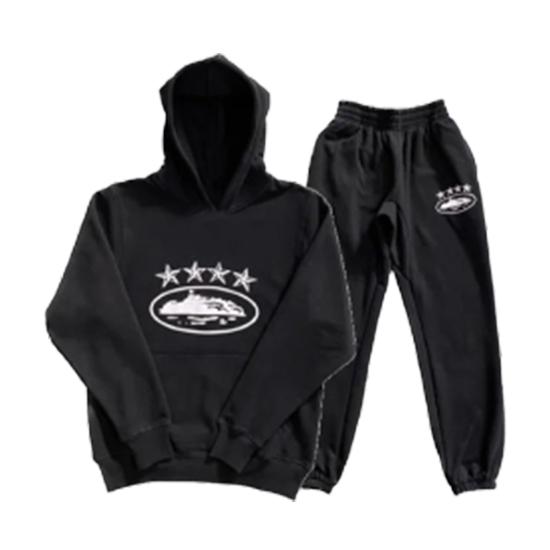
Pictured with fiance she wore a beige and navy std polo and shorts set with a leather belt slung low on her hips, the same boots, and a. The US Open is upon us. An overskirt isn't a dress in and of itself rather, a removable skirt piece that can be worn over a wedding dress. And much to my surprise, one editor even asked me, Is it crazy to submit a pair of jeans. there's her Moncler Outlet...

Студия Hotta, известная по мобильной MMORPG Tower of Fantasy, представила новый трейлер своего амбициозного проекта Neverness to Everness (NTE). Ролик глубже погружает в атмосферу Хетерео — современного мегаполиса, где привычная повседневность тесно переплетается с паранормальными аномалиями. Помимо основной локализованной версии, студия также выпустила англоязычный вариант трейлера....
