


 Crypto.
 About
About
 Passport
 Conference call
 send money
 Terms
Terms
 Privacy
 Sierra market
Accounting and Bookkeeping Services in Dubai: What You Need Changes as You Grow — Here's the Map
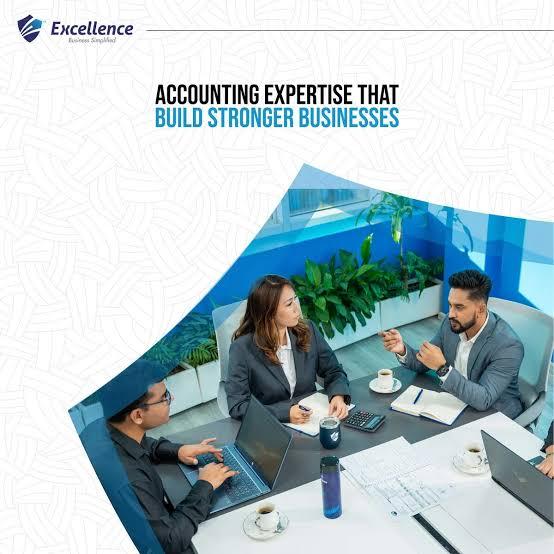
Meta description: A stage-by-stage guide to accounting and bookkeeping services in Dubai — what a startup actually needs versus a scaling business, and how to avoid outgrowing your financial setup without noticing.
There's a specific failure pattern that shows up again and again with businesses in Dubai: the financial setup that worked perfectly well at launch quietly becomes inadequate as the business grows, and nobody notices until a bank, investor, or the FTA flags a gap. The company didn't do anything wrong exactly — it just outgrew its own bookkeeping without anyone deciding to upgrade it.
This article maps accounting and bookkeeping needs to actual business stages, so the question isn't "what services exist" but "what do I actually need right now, and when does that change."
Why Treating Accounting and Bookkeeping as One Bundle Actually Makes Sense
Elsewhere, it's worth separating these two functions clearly — bookkeeping is the daily recording of transactions, accounting is the interpretation and reporting built on top of it. But operationally, for most small and mid-sized businesses in Dubai, they need to function as a single connected system, not two separate vendors passing files back and forth.
The businesses that run into trouble are often the ones where bookkeeping and accounting are handled by disconnected parties — a freelancer doing data entry, a separate accountant doing tax filings, with no consistent handoff between them. Errors live in that gap.
Stage One: Formation and First Year — What You Actually Need
At formation, most founders overbuy or underbuy financial services — there's rarely a middle ground reached intuitively.
What's actually necessary at this stage:
-
A properly configured chart of accounts from day one, set up for UAE VAT and corporate tax reporting — not a generic template.
-
Basic monthly bookkeeping, even at low transaction volume, to build a clean historical record rather than reconstructing the first year later.
-
VAT registration assessment — even businesses below the mandatory AED 375,000 threshold should evaluate whether voluntary registration makes sense, particularly if there's meaningful input VAT to recover on startup costs.
-
Corporate tax registration, which applies regardless of current profitability.
What's usually unnecessary this early:
-
A dedicated in-house finance hire — the transaction volume rarely justifies it.
-
Complex multi-entity structuring, unless the business model specifically requires it from day one.
The biggest first-year mistake isn't underspending on accounting — it's treating it as a startup cost to minimize rather than infrastructure that determines how clean year two looks.
Stage Two: Early Growth — When the Gaps Start Showing
Somewhere between the first and second year, transaction volume, headcount, and complexity increase faster than the original bookkeeping setup was designed for. This is where the quiet outgrowing tends to happen.
Signs a business has entered this stage without upgrading its financial setup:
-
Bank reconciliation is happening monthly instead of weekly, and it's starting to take noticeably longer each time.
-
The person handling bookkeeping is also handling five other operational roles, and it's the first thing that slips under pressure.
-
VAT filings are accurate but always feel rushed against the 28-day deadline.
-
Payroll has grown past a handful of employees, adding WPS compliance complexity that wasn't a factor before.
What typically needs to change:
-
Moving from ad hoc or founder-managed bookkeeping to a dedicated bookkeeper or outsourced bookkeeping service with consistent weekly reconciliation.
-
Introducing management reporting — not just compliance-driven statements, but numbers the founder can actually use to make decisions month to month.
-
Reassessing free zone qualifying income status if the business has started generating revenue streams that weren't part of the original licence activity.
Stage Three: Scaling — Where Accounting Becomes Strategic, Not Just Compliant
Once a business is generating consistent revenue, hiring at pace, or preparing for investment or expansion, the accounting function needs to do more than keep the business compliant — it needs to support decisions.
What this stage typically requires:
-
Full monthly management accounts, including cash flow forecasting, not just historical statements.
-
Corporate tax planning that goes beyond filing — structuring decisions, transfer pricing considerations for related-party transactions, and Free Zone Qualifying Income optimization.
-
Audit readiness maintained year-round rather than assembled reactively before a licence renewal deadline.
-
Potentially, a hybrid model: an in-house finance lead who coordinates with an outsourced firm handling specialized tax and audit work.
This is also typically the stage where investors or lenders start asking for financial statements that hold up to real scrutiny — and where the cost of having treated bookkeeping loosely in earlier stages becomes visible, usually in the form of a longer, more expensive due diligence process.
A Structural Comparison: What Changes at Each Stage
|
Area |
Startup |
Growth |
Scale |
|
Bookkeeping frequency |
Monthly |
Weekly |
Daily/real-time |
|
Reporting focus |
Compliance only |
Compliance + basic visibility |
Strategic decision support |
|
VAT filing pressure |
Low volume, manageable |
Rushed against deadlines |
Systematized, rarely last-minute |
|
Corporate tax involvement |
Registration and basic filing |
Filing plus qualifying income review |
Active planning and structuring |
|
Typical setup |
Founder-managed or freelancer |
Outsourced bookkeeping firm |
In-house lead + outsourced specialists |
How to Choose a Provider That Can Actually Grow With You
A common mistake is selecting an accounting and bookkeeping provider based on current needs alone, without asking whether they can support the next stage too. Worth asking directly:
Do they offer both bookkeeping and accounting under one coordinated process, or will you be managing the handoff yourself? Fragmented handoffs are where reconciliation errors tend to originate.
Have they supported businesses through the growth stage you're heading into? A firm well-suited to startups isn't automatically equipped for management reporting and tax structuring at scale — and vice versa, a firm built for larger clients may be overkill and overpriced for an early-stage business.
How do they handle a client outgrowing the current service tier? The answer reveals whether they think in terms of a long-term relationship or a fixed package.
Can they support both free zone and mainland compliance if your structure changes? Businesses sometimes restructure between free zone and mainland setups as they grow, and not every provider is equally fluent in both.
The Bottom Line
Accounting and bookkeeping in Dubai isn't a single static service — it's a function that needs to evolve as a business does. The businesses that avoid painful catch-up projects later are the ones that periodically ask whether their current setup still matches their current complexity, rather than assuming what worked at launch will keep working indefinitely. The right question isn't "what accounting and bookkeeping services do I need" in the abstract — it's "what does my business need right now, and who can I trust to tell me honestly when that changes."
Bub
Do?

Categories
Read More
Cantarella: Power and Support Cantarella, a five-star Havoc Rectifier Resonator, stands as the current patriarch of the Fisalia lineage within Wuthering Waves. Her family, one of Rinascita's most venerable bloodlines, has longstanding ties to the enigmatic Order of the Deep, with Phoebe serving as her devoted acolyte. The Fisalia clan resides within the historic Porto-Veno Castle, renowned for...

While the video streaming industry in the United States has largely flourished in a relatively light-touch regulatory environment, especially when compared to the highly regulated world of traditional broadcast television, it is now facing a new and increasing level of scrutiny from lawmakers and regulatory bodies. This emerging trend is a critical and often overlooked factor in the long-term...
The world of Path of Exile is ever-expanding, and with the upcoming Path of Exile 2 content update, players will find themselves drawn into the heart of the ancient and powerful Vaal Empire. Titled The Fate of the Vaal, this new league offers an immersive journey to the height of the empire’s glory, where the POE 2 Currency legendary Queen Atziri and her devoted followers hold sway over...

Workday has become an important enterprise cloud platform for organizations managing human resources, finance, payroll, talent, reporting, and other business functions. For students planning to build a career in Workday, understanding theoretical concepts is only the first step. Practical learning can help students understand how business processes and Workday functionality are applied in...
Dune's Epic Power Struggles Imagine a universe where colossal sandworms reign over endless deserts, where political alliances shift like shifting sands, and secretive religious orders led by enigmatic women manipulate the course of history. This is the essence of Dune, an expansive science fiction saga centered on two noble houses vying for control over a rare and potent substance known as...
