


 Crypto.
 About
About
 Passport
 Conference call
 send money
 Terms
Terms
 Privacy
 Sierra market
How to Create a Winning Crypto Marketing Strategy for Your Project
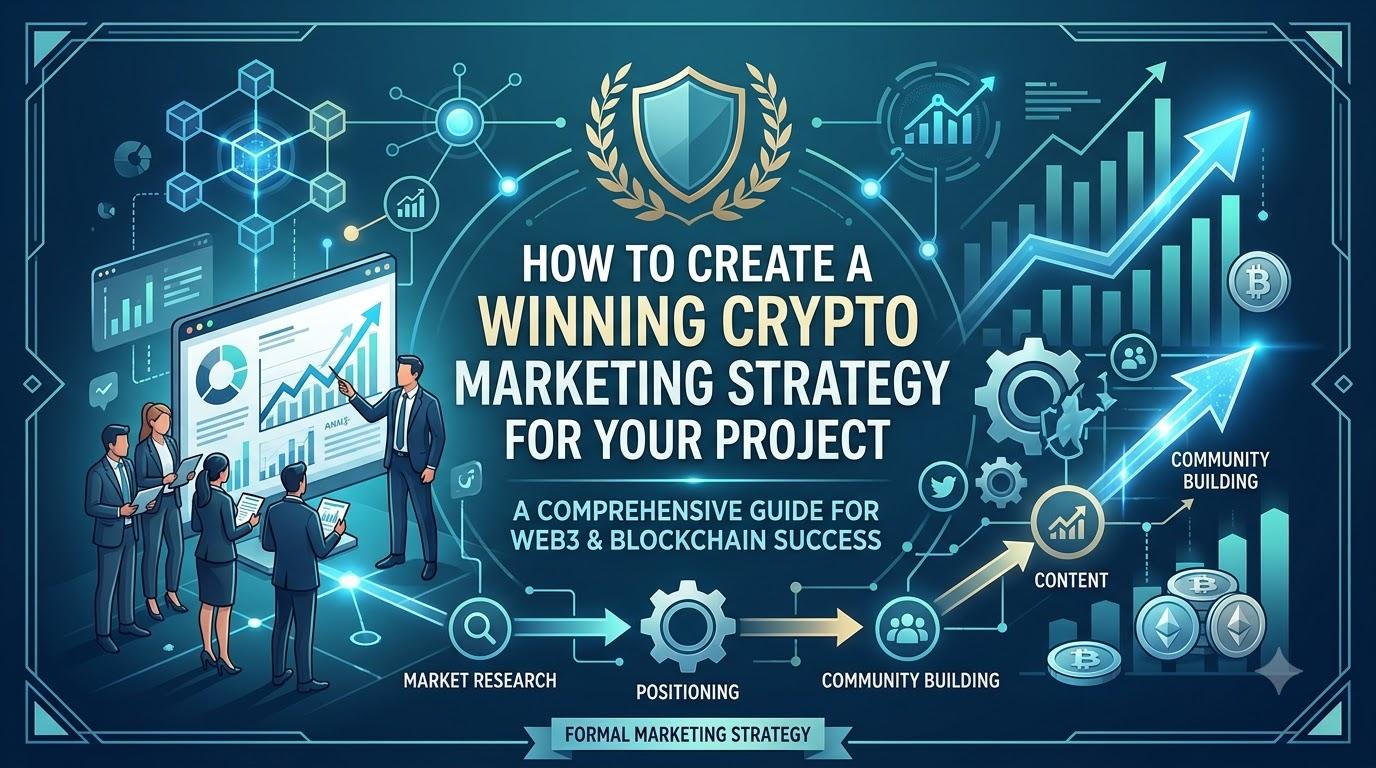
Launching a cryptocurrency project requires more than creating a token or publishing a whitepaper. With a crowded market and cautious users, projects need a strategy that connects their technology, utility, community, and goals with the right audience. A winning strategy should build awareness, credibility, engagement, and long-term user adoption.
Start With a Clear Understanding of Your Project
Before choosing marketing channels, clearly define what the project offers and the problem it solves. Explain why blockchain is necessary and what role the token plays. A strong positioning strategy should answer:
-
What problem does the project solve?
-
Who needs the solution?
-
Why is blockchain useful?
-
Why should users choose this project?
These answers should guide the website, whitepaper, social media, PR, community, and advertising.
Define Your Target Audience
Crypto users have different needs. Traders, developers, DeFi users, investors, gamers, and newcomers respond to different messages. Segmenting the audience helps create more relevant campaigns.
Consider user location, crypto experience, preferred platforms, motivations, and content preferences. Geographic targeting is also important, as crypto adoption varies significantly across regions.
Build a Consistent Brand
Your website and communication channels should clearly explain what the project does, who it serves, and how it works. The whitepaper can provide deeper technical and economic information.
Brand messaging should also match the project's stage. Pre-launch projects may focus on technology and awareness, while live products should highlight usage, integrations, and ecosystem development. Clear communication builds trust without relying on excessive hype.
Create Educational Content
Crypto products often require education before users are ready to participate. Create content for different stages of the user journey, including beginner guides, technical articles, tutorials, product updates, research, and governance content.
SEO-focused content can attract users searching for solutions related to your project's technology, category, and use cases. Every piece of content should support a specific objective, such as attracting developers, educating users, or increasing product adoption.
Choose the Right Social Platforms
Different platforms serve different purposes. X can support industry discussions and announcements, Telegram can support community communication, and YouTube can provide detailed educational content. Discord can work well for developers and gaming communities, while Reddit supports deeper discussions.
The goal should not be to maintain every channel. Focus on platforms where your target audience is active and measure meaningful engagement rather than follower counts.
Build a Genuine Community
A large community does not always mean an active one. Thousands of inactive members or automated accounts may create impressive numbers without generating adoption.
Effective community management includes AMAs, discussions, educational events, feedback channels, and transparent communication. Strong moderation is also important for reducing scams and impersonation. Over time, community members should become participants who discuss the product, share experiences, and contribute ideas.
Use Influencer and KOL Marketing Carefully
Influencer campaigns should focus on audience relevance rather than follower count alone. Evaluate engagement, audience quality, geography, content history, and relevance to your project.
Promotional campaigns should also avoid unsupported claims about token prices or guaranteed returns. Transparent and factual communication helps protect the project's reputation and supports responsible marketing.
Combine Organic and Paid Marketing
Organic marketing builds credibility, while paid campaigns can increase the reach of valuable content. Paid promotion should not compensate for weak positioning or poor community engagement.
Start by identifying content that performs organically, then use paid distribution where appropriate. Track meaningful metrics such as qualified traffic, registrations, wallet connections, active users, conversions, and customer acquisition cost.
Build Valuable Partnerships
Strong partnerships should provide genuine value rather than simply exchanging logos. DeFi projects can work with wallets and infrastructure providers, blockchain networks can collaborate with developers, and gaming projects can connect with relevant ecosystems.
Partnerships can strengthen distribution, credibility, and product utility when they are closely connected to the project's goals.
Plan Marketing Across the Project Lifecycle
Marketing should begin before launch and continue after it. Pre-launch activities should focus on awareness, education, positioning, partnerships, and community development.
During launch, website updates, social media, PR, influencer campaigns, and community communication should deliver consistent information. After launch, the focus should shift toward user retention, product adoption, ecosystem growth, and continued community engagement.
Measure Meaningful Results
Follower counts and impressions can provide useful information, but they should not define success. A smaller active community may be more valuable than a large inactive audience.
Track awareness, engagement, acquisition, activation, retention, and business results. These metrics help identify which channels contribute to genuine growth and where the strategy needs improvement.
Conclusion
A winning crypto marketing strategy combines clear positioning, audience research, useful content, community engagement, strategic partnerships, and measurable results. Projects should focus on building credibility and long-term adoption instead of short-term hype. Blockchain App Factory provides crypto marketing services covering content, social media, community management, influencer outreach, PR, and campaign planning to help Web3 projects reach relevant audiences.
Bub
Do?

Categories
Read More
The most pressing challenge for forward‑thinking businesses is finding a technology partner that can deliver cutting‑edge interactive displays without inflating budgets or extending timelines. By zeroing in on reputable interactive panel manufacturers in China, decision‑makers unlock a blend of rapid innovation, scalable production, and cost efficiency that is hard to match elsewhere. This...

The Medical Device Sterilization Market trends indicate increasing adoption of innovative sterilization technologies such as vaporized hydrogen peroxide, gamma irradiation, and ethylene oxide systems. Hospitals and surgical centers are upgrading their sterilization infrastructure to comply with strict regulatory standards and enhance patient safety. The market is witnessing a...
Role of Character Classes In the world of MMO gaming, character classes serve as the foundation of the player experience, and Dune: Awakening is no exception. Each class offers a distinct approach to gameplay, ranging from sheer utility to tactical combat and resource management. This diversity encourages players to adopt different playstyles, making each class feel uniquely tailored and...
Modern pharmacies are evolving beyond medication dispensing to become comprehensive healthcare hubs, offering clinical services, preventive care, and chronic disease management. With the pharmacy market valued at USD 1,111.08 billion in 2024, this transformation is driven by healthcare access gaps, rising chronic diseases, and the need for cost-effective care delivery. The market was valued at...
Netflix expands its European storytelling with a new Danish series now filming. 'The Rain' explores a Scandinavia ravaged by a deadly virus, following young survivors on a perilous quest. This original production brings together creator Jannik Tai Mosholt and producer Christian Potalivo, with Miso Film at the helm. A talented ensemble cast, including Mikkel Boe Følsgaard and Alba...
