


 Crypto.
 About
About
 Passport
 Conference call
 send money
 Terms
Terms
 Privacy
 Sierra market
How Europe Is Accelerating Offshore Wind Development
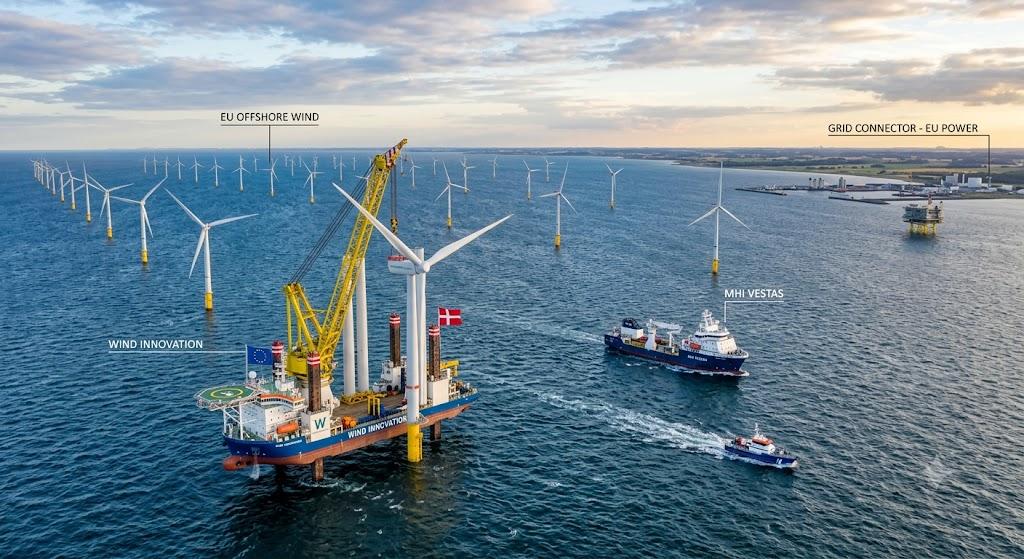
Europe Offshore Wind Market: What the Next Decade Could Mean for Europe’s Energy System
The Europe Offshore Wind Market is moving from an early growth story toward a broader energy-system role. Over the coming decade, offshore wind is expected to interact more closely with electricity networks, industrial demand, hydrogen production, storage, and cross-border power trading. This evolution could change how European countries plan renewable generation and how businesses approach long-term energy procurement.
A key opportunity comes from the scale of offshore resources. Large wind farms can produce substantial electricity from areas that are less constrained by land availability. As turbine technology improves, projects may achieve higher capacity factors and generate more power from individual sites. This can support electrification across industries while reducing dependence on imported fossil fuels.
The North Sea is likely to remain an important center of development because of its strong wind resources, existing project experience, and concentration of energy infrastructure. However, opportunities are not limited to one region. The Baltic, Atlantic, Mediterranean, and other European waters can support different development models based on wind conditions, water depth, grid capacity, industrial demand, and policy frameworks.
Floating wind could expand the geographic reach of the sector. Deep-water areas that are difficult to develop with fixed foundations may become accessible through floating platforms. Commercial deployment will depend on reducing platform, anchoring, cable, installation, and maintenance costs. Industrial learning from demonstration and early commercial projects can provide valuable information for larger future developments.
The relationship between offshore wind and hydrogen is another area to watch. When renewable electricity exceeds immediate grid demand or when projects are connected to dedicated electrolysis facilities, offshore generation could support hydrogen production. Hydrogen can then serve industrial applications, transport, seasonal energy strategies, or low-carbon fuel production. The commercial success of this model will depend on electrolyser costs, hydrogen demand, infrastructure, and policy incentives.
Grid architecture will become increasingly important as capacity expands. Traditional radial connections may become less suitable for very large deployment levels. Coordinated offshore networks could improve electricity sharing between countries, increase transmission efficiency, and reduce the need for multiple separate connections. Achieving this vision will require common technical standards and agreements covering investment, regulation, system operation, and cost allocation.
Batteries can provide short-duration flexibility and help manage power fluctuations, while longer-duration storage can address different balancing requirements. Storage will not replace the need for strong transmission, but it can improve system flexibility when combined with renewable generation and responsive demand.
Corporate electricity demand could provide another source of growth. Data centers, industrial facilities, ports, transport operators, and other large consumers are seeking lower-carbon power supplies. Long-term renewable contracts can provide demand visibility for developers while helping businesses manage emissions and energy strategies. As electricity consumption increases through electrification, these arrangements may become more significant.
The Europe Offshore Wind Market Size perspective can help stakeholders evaluate capacity development, market opportunities, technology pathways, and the factors that may shape future expansion. For companies planning investments, understanding the scale and direction of the market is important for resource allocation and strategic positioning.
The next decade could therefore transform offshore wind from a specialized renewable segment into a core component of Europe's integrated energy system. Its contribution will extend beyond electricity generation toward industrial competitiveness, energy security, infrastructure modernization, and new clean-energy value chains.
For Europe, the opportunity is significant, but execution will determine outcomes. Projects that connect reliable generation with suitable grids, demand centers, infrastructure, and skilled supply chains can deliver value across multiple sectors. Coordinated planning and continued innovation will be essential for turning offshore wind potential into durable economic and environmental benefits. This approach can support stronger energy resilience and broader economic value for European economies.
Bub
Do?

Categories
Read More
Vanguard : Sécurité et Controverses Depuis l’apparition des jeux compétitifs en ligne, la triche est un fléau persistant qui trouble à la fois les développeurs et les joueurs. Malgré les efforts constants des entreprises de jeux vidéo pour éradiquer ce phénomène, la lutte contre les tricheurs reste un...

Exciting Cast Joins Boyd Holbrook in Netflix's Upcoming Thriller In a thrilling development for Netflix subscribers, acclaimed actors Michael C. Hall, Cleopatra Coleman, and Bokeem Woodbine have signed on to join Boyd Holbrook in the mysterious thriller "In the Shadow of the Moon." Currently in production and slated for worldwide release in 2019, the film follows a Philadelphia police...
Resident Evil Requiem delivers a deliberate split between survival horror and action horror, embodied by its two protagonists. Director Koshi Nakanishi describes the game as offering “an emotional range unlike any other Resident Evil title,” achieved by giving each character a distinct playstyle and even different save mechanics. A Tale of Two Protagonists Grace Ashcroft’s...
Auralee has become one of the most respected names in modern fashion thanks to its clean designs, premium fabrics, and timeless appeal. Unlike brands that follow short-lived trends, Auralee focuses on quality, comfort, and thoughtful craftsmanship. Every collection reflects a balance between simplicity and elegance, making it a favorite among people who appreciate understated...

The political drama 'Designated Survivor' is being revived for a new chapter. A third season has been greenlit, transforming the series into a Netflix global original. Production is slated to begin later this year for a 2019 premiere. This new season will consist of ten episodes. Neal Baer will take over as showrunner, with Entertainment One (eOne) producing. Season three will place President...
