


 Crypto.
 About
About
 Passport
 Conference call
 send money
 Termini e Condizioni
 Privacy
 Sierra market
How Custom Bag Tags Help Brands Create a More Professional Packaging Experience
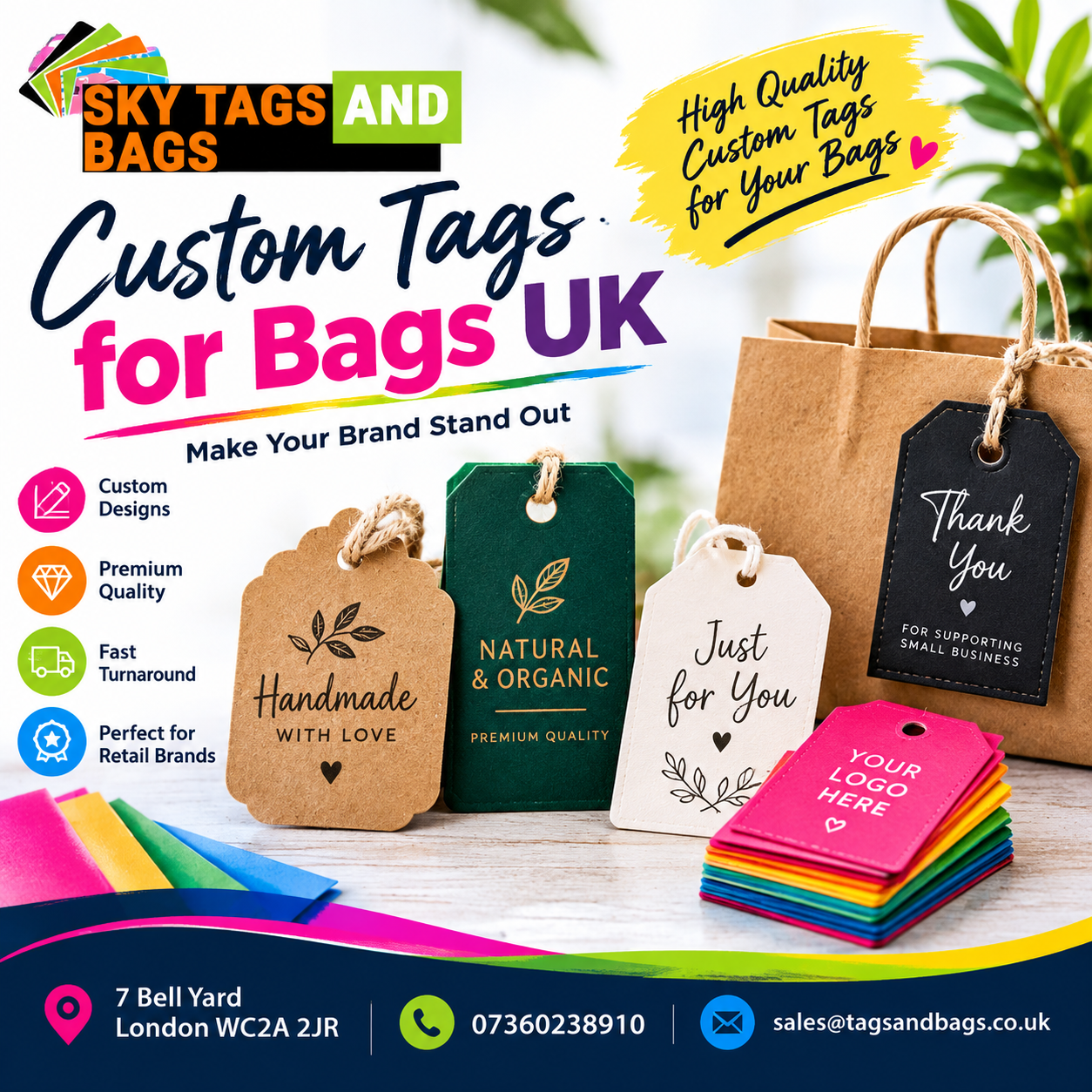
Packaging is often the first physical interaction a customer has with a product. Before opening a bag or examining what is inside, shoppers notice the colours, materials, labels, tags and overall presentation. For retailers and e-commerce businesses, small packaging details can therefore influence how a product is perceived.
Among these details, bag tags offer a practical way to communicate information while adding a distinctive visual element. From independent fashion labels to gift businesses and boutique retailers, custom bag tags can be adapted to suit different products, branding styles and packaging formats.

In the UK retail market, where businesses compete across physical stores and online platforms, well-planned tags can support both brand recognition and product presentation. The key is to treat a tag as more than decoration: it should have a clear purpose, remain easy to read and work effectively with the rest of the packaging.
What Are Bag Tags and How Are They Used?
Bag tags are printed or finished pieces of card, paper or other suitable materials attached to bags or packaging. Depending on the application, they may include a brand name, logo, product information, care instructions, pricing, contact details or a short message.
Retailers can use different formats depending on the type of bag and the desired presentation. Common options include:
- Swing tags attached with string, ribbon or cord
- Hang tags secured through a handle or punched hole
- Printed tags used for product identification
- Branded tags incorporated into gift packaging
- Information tags containing product or care details
- Promotional or seasonal tags for specific campaigns
The flexibility of these formats makes them useful across fashion, accessories, gifts, handmade products, hospitality and specialist retail.
For example, a clothing retailer may use a swing tag to display its logo and garment information, while a gift business might use a decorative hang tag with a short message. The same basic packaging component can therefore serve very different purposes.

Why Customisation Matters for Modern Retail Packaging
Generic packaging can perform its basic function, but customised elements provide businesses with greater control over presentation. Custom tags for bags UK retailers use can be designed around an existing visual identity, helping packaging look consistent across products and sales channels.
Brand consistency is particularly important for smaller businesses. When the same typography, colours, logo treatment and tone appear across a website, social media, labels and physical packaging, customers can more easily recognise the brand.
Personalised tags for bags can also be useful when businesses want packaging to reflect a particular collection or occasion. Seasonal products, limited editions, wedding-related gifts and handmade goods may require a different visual approach from standard retail packaging.

However, customisation should not become excessive. A useful tag normally has a clear hierarchy:
- Brand or product identification
- Important supporting information
- Optional decorative or messaging elements
Too many fonts, colours or competing messages can make a small tag difficult to read. Effective packaging design usually depends on simplicity and consistency rather than adding as many elements as possible.
Practical Design Considerations for Personalised Bag Tags
When creating personalised bag tags, businesses should consider how the tag will actually be used before finalising artwork.
Size and Shape
The tag should be proportionate to the bag. A very small tag may not provide enough room for essential information, while an oversized tag can interfere with the packaging or appear visually unbalanced.
Shape can also contribute to brand presentation. Standard rectangular tags are versatile, whereas unusual shapes may be appropriate for particular product categories or campaigns.

Material and Finish
The material should match the intended use. Paper and card are common choices because they can accommodate a wide range of printing and finishing techniques.
Depending on the design, businesses may consider:
- Matte or gloss finishes
- Foil details
- Embossing
- Debossing
- Rounded corners
- Die-cut shapes
- Textured card stocks
Finishing should support the brand rather than simply add decoration. For example, a restrained embossed logo may communicate a different visual impression from a brightly coloured, heavily printed tag.
Typography and Readability
Small packaging surfaces require careful typography. Text should remain legible when the tag is viewed at normal distance.
Businesses should avoid using decorative fonts for every piece of information. A display typeface may work well for a logo or heading, while a simpler font can be used for product details.

Contrast is equally important. Text that looks attractive on a computer screen may become difficult to read when printed at a small size.
Custom Swing Tags and Hang Tags: Choosing the Right Format
The terms swing tag and hang tag are sometimes used interchangeably, but businesses may choose different attachment methods depending on their packaging.
Custom swing tags for bags are commonly associated with retail products and can be attached using string, cord or similar fasteners. They are particularly useful where a business wants a removable branded element that does not need to be permanently fixed to the packaging.
Custom hang tags for bags can similarly provide branding and information while hanging from a handle, opening or attachment point. They are suitable for retail bags, gift bags and various types of presentation packaging.
The choice should consider:
- Bag material
- Handle design
- Tag weight
- Attachment method
- Product size
- Expected handling during transport
- Whether the tag needs to be removable
A tag that looks attractive but frequently twists, tears or becomes detached will not deliver a good packaging experience. Practical testing with the finished bag is therefore an important part of the design process.

Common Challenges and How Businesses Can Solve Them
One common issue is trying to place too much information on a small tag. Businesses may want to include a logo, website, social media accounts, product details, care information and promotional messaging simultaneously.
A better approach is to decide what the customer genuinely needs to know at that point in the buying journey. Secondary information can often be moved to the packaging, website or a separate insert.
Another challenge is inconsistent branding. If product tags use different colours, fonts or logo proportions from other marketing materials, the packaging can look disconnected from the wider brand identity.
Creating a basic packaging specification can help. It might define:
- Approved logo versions
- Brand colours
- Preferred fonts
- Standard tag sizes
- Finishing preferences
- Attachment methods
- Information hierarchy
Businesses should also check print-ready artwork carefully. Bleed, safe areas, image resolution, colour settings and spelling can all affect the finished result.

Where Printed Tags Fit into the E-Commerce Experience
Packaging has become increasingly important for online retailers because the physical parcel is often the first tangible brand interaction after an online purchase.
Printed tags for bags can help bridge the gap between digital branding and physical presentation. A customer may have encountered a brand through a website or social media advertisement, then receive an order packaged with matching colours, typography and messaging.
This consistency can contribute to a more cohesive customer experience.
There are also practical opportunities. A tag could contain a short care instruction, product identification, brand story or message encouraging customers to explore another part of the range. QR codes can also be incorporated where appropriate, provided they are large enough and printed with sufficient contrast to scan reliably.

For UK businesses, providers such as Tags and Bags offer examples of how customised tags can be developed for different bag and retail packaging requirements.
Making Custom Bag Tags More Sustainable
Sustainability is another consideration in contemporary packaging decisions. Businesses increasingly need to think about not only how packaging looks, but also what happens to it after use.
Material selection, unnecessary coatings, excessive sizing and difficult-to-separate components can all affect the overall packaging footprint.
Where appropriate, businesses can explore recyclable or responsibly sourced paper and card options. They should also consider whether every decorative element is necessary.

A well-designed tag can sometimes serve multiple purposes — for example, combining branding and product information into one component rather than using several separate inserts.
Final Takeaway
Bag tags are small packaging components, but their role can extend well beyond visual decoration. When carefully planned, they can communicate useful information, reinforce brand consistency and contribute to a more considered retail or e-commerce presentation.
The most effective approach is to begin with purpose: determine what information the customer needs, select an appropriate size and attachment method, then develop the design around the wider packaging identity.
Whether a business chooses custom bag tags, swing tags, hang tags or other printed formats, successful packaging depends on the balance between appearance, functionality, readability and responsible material choices. For brands operating in competitive retail environments, that balance can make even a small packaging detail feel deliberate and professionally considered.
Read More :
- https://manbat-team.co.il/blogs/20570/How-Customised-Paper-Bags-Help-UK-Businesses-Build-a-Stronger
https://jogajog.com.bd/blogs/184853/How-Paper-Shopping-Bags-Are-Evolving-for-Modern-Retail
https://feedingtrends.com/feed
https://daren.livepositively.com/creator-skills/custom-bottle-neck-tags-a-practical-guide-for-uk-product-packaging
https://www.tagsandbags.co.uk/can-shops-charge-for-paper-carrier-bags-uk/
https://www.tagsandbags.co.uk/are-shops-allowed-to-charge-for-paper-bags/
Bub
Do?

Categorie
Leggi tutto
Demand for plastics with engineered electrical characteristics is expanding as modern products require increasingly sophisticated performance from their materials. The Conductive Plastic Compounds Market was valued at US$17.08 billion in 2025 and is projected to reach US$41.81 billion by 2034, growing at a 10.46% CAGR throughout 2026–2034. Their ability to provide controlled conductivity...

The demand for energy-efficient and environmentally sustainable building materials has accelerated the growth of the Foam Insulation Market. Foam insulation solutions offer superior thermal performance, reduce energy expenditure, and contribute to lower greenhouse gas emissions. These benefits make foam insulation an attractive choice for modern construction projects across residential,...

The latest Valorant update, patch 12.01, brings a new mandatory security measure for more players, specifically requiring multi-factor authentication (MFA) in competitive matches. However, this change applies only to certain users. Over recent months, Riot Games has intensified efforts to combat smurfing and account boosting by targeting multiple-account misuse. Earlier in the year, they...
Introduction to FUTBIN Podcast Episode 5 NepentheZ returns for episode five alongside Richard Buckley and MattFUTTrading, ready to discuss the latest updates in FC 26. The conversation covers Manchester United’s player ratings, offering insights into how the squad stacks up for the new game. New Icon cards are highlighted, with a special focus on Ibrahimovic’s stats and what his...
Creative Artistic Revival Emily Gravett, an acclaimed artist and storyteller, shares her creative journey with us. This marks the release of the newly illustrated 'Quidditch Through the Ages'. Originally penned by J.K. Rowling under the pseudonym Kennilworthy Whisp, this Hogwarts library classic first appeared in 2001. The book's initial publication supported the charities Comic Relief and...
