


 Crypto.
 About
About
 Passport
 Conference call
 send money
 Terms
Terms
 Privacy
 Sierra market
Cloud DevSecOps: Building Faster, Safer, and More Resilient Cloud Operations
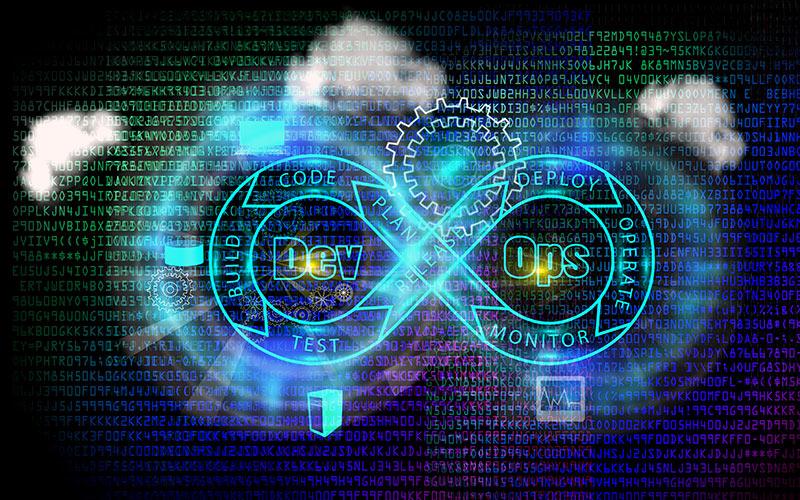
Cloud environments have transformed how businesses build, deploy, and scale applications. Yet the speed and flexibility of the cloud can introduce a difficult question: how can organizations move quickly without allowing security and operational risks to grow alongside them? This is where cloud devsecops becomes increasingly important.
Rather than treating development, operations, and security as separate responsibilities, cloud DevSecOps brings them together throughout the software delivery lifecycle. Security becomes part of planning, coding, testing, deployment, and monitoring instead of being something checked only before production. The result is an approach designed to help teams release software efficiently while maintaining stronger control over infrastructure, applications, and data.
What Is Cloud DevSecOps?
Cloud DevSecOps combines DevOps practices with continuous security controls in cloud-based environments. Traditional DevOps focuses heavily on collaboration, automation, continuous integration, and continuous delivery. DevSecOps adds security directly into those processes.
The cloud element makes this approach particularly valuable because modern environments can include containers, Kubernetes clusters, serverless applications, infrastructure as code, APIs, databases, and multiple cloud accounts. Each component creates potential configuration and security concerns.
Instead of waiting for a security team to identify vulnerabilities after deployment, cloud DevSecOps encourages automated checks throughout the pipeline. Developers can receive feedback while they are still working on the code, making security a shared responsibility rather than a final checkpoint.
Why Traditional Security Approaches Struggle in the Cloud
Cloud infrastructure can change extremely quickly. A developer might create a new environment through infrastructure as code, deploy a container, update an application, and scale resources within minutes.
Manual security reviews cannot always keep pace with this speed.
For example, a cloud environment might contain an incorrectly configured storage resource, an exposed credential, an outdated container image, or excessive permissions. If these issues are discovered only after deployment, remediation can become disruptive and expensive.
Meanwhile, organizations using multiple cloud providers may face another layer of complexity. Different environments can have different configurations, access policies, monitoring systems, and deployment processes.
Cloud DevSecOps addresses this challenge by embedding repeatable security checks into automated workflows.
Security Starts Before Deployment
One of the most important principles of cloud DevSecOps is shifting security to the left.
This means identifying potential problems earlier in the development lifecycle. Static application security testing can inspect source code for vulnerabilities, while software composition analysis can identify risks in third-party dependencies.
Infrastructure as code can also be scanned before resources are created. A Terraform configuration, for instance, can be evaluated for potentially unsafe settings before it reaches production.
Secrets detection is another important layer. Developers occasionally place passwords, API keys, or tokens in code repositories by mistake. Automated scanning can identify these patterns and prevent sensitive information from progressing through the pipeline.
These controls do not eliminate every security risk, but they can make problems visible much earlier.
Automation Makes Security Scalable
Manual security checks become increasingly difficult as application delivery accelerates. Automation provides a way to apply consistent controls across development and production environments.
A mature cloud DevSecOps pipeline might include several automated stages:
-
Source-code security scanning
-
Dependency and vulnerability analysis
-
Container image scanning
-
Infrastructure configuration checks
-
Secrets detection
-
Compliance validation
-
Automated security testing
-
Deployment policy enforcement
Tools such as Trivy, SonarQube, Vault, and cloud-native security services can support different parts of this process. The specific tools matter less than how effectively they work together within the delivery workflow.
The goal is not to create an endless collection of security gates. Excessive or poorly configured controls can slow developers down and encourage teams to bypass processes. Effective automation should identify meaningful risks while allowing legitimate releases to move forward efficiently.
Kubernetes and Container Security
Containers have become central to many modern cloud architectures, but they also introduce specific security considerations.
A vulnerable container image can become a serious concern when it is deployed across multiple environments. Consequently, image scanning should ideally occur before deployment. Organizations can establish policies that prevent images containing unacceptable vulnerabilities from progressing through the pipeline.
Kubernetes introduces additional considerations involving permissions, network policies, secrets, workloads, and cluster configurations.
Cloud DevSecOps practices can incorporate security policies into Kubernetes deployment workflows. GitOps approaches can further improve consistency by managing desired infrastructure and application configurations through version-controlled repositories.
This combination creates a more traceable process: teams can understand what changed, who changed it, and how that change moved toward production.
Observability Is Part of Security
Security does not end when an application is deployed.
Continuous monitoring is essential because new risks can emerge after deployment. Applications change, dependencies receive updates, cloud configurations drift, and attackers continuously search for weaknesses.
Observability platforms using metrics, logs, and traces can help teams understand what is happening inside their environments. Security monitoring can complement this information by identifying suspicious activity, unexpected access patterns, configuration changes, and other signals.
Prometheus, Grafana, Datadog, and cloud-native monitoring services can contribute to broader operational visibility. When observability and security work together, teams have more context when investigating an incident.
This also supports faster incident response. Instead of discovering an issue only after customers report it, teams can establish alerts around meaningful indicators and investigate problems earlier.
Cloud DevSecOps and Cost Control
Security and operations are often discussed separately from cloud spending, but the three areas can influence one another.
Unused resources, oversized infrastructure, uncontrolled environments, and excessive data retention can increase cloud costs. At the same time, weak governance can make it difficult to determine who owns those resources.
Automated infrastructure policies can establish standards for resource creation and configuration. FinOps practices can then provide greater visibility into consumption and spending.
For example, teams can monitor resource utilization, identify idle infrastructure, establish budgets, and implement appropriate retention policies. This creates an operational environment where security, reliability, and financial accountability reinforce one another.
Building a Practical Cloud DevSecOps Strategy
Organizations do not need to transform everything at once.
A practical strategy can begin by identifying the most important applications, infrastructure components, and security risks. Teams can then introduce automated controls gradually.
The process might start with source-code scanning and dependency checks before expanding into infrastructure security, container scanning, secrets management, runtime monitoring, and compliance automation.
Clear ownership is equally important. Developers, security specialists, platform engineers, and operations teams should understand which responsibilities belong to them and where responsibilities overlap.
Most importantly, security controls should be measurable. Teams can track vulnerability remediation time, failed security checks, deployment frequency, incident response metrics, configuration drift, and other indicators relevant to their environment.
The Future of Cloud DevSecOps
Cloud environments will continue becoming more distributed and automated. Applications are increasingly built from APIs, containers, managed services, serverless components, and third-party dependencies. Artificial intelligence is also introducing new software development patterns and infrastructure requirements.
That evolution makes integrated security increasingly important.
The future of cloud DevSecOps is not simply about adding more security tools to development pipelines. It is about creating intelligent, automated systems in which secure infrastructure, secure code, reliable deployments, and continuous monitoring are treated as connected parts of the same operating model.
Ultimately, organizations should ask a broader question than whether their cloud applications are secure today. They should ask whether their development and operational processes can continue producing secure software as complexity increases. The answer may depend less on adding another security checkpoint and more on building security into every stage of how cloud technology is designed, delivered, and maintained.
Bub
Do?

Categories
Read More
China’s game market has felt the effects of a government review freeze imposed in March this year, with many domestic releases delayed or halted and industry growth slowing sharply. A new body, the Online Games Ethics Committee under the State Administration of Press and Publications (aligned with the propaganda department), has recently begun operations to resume oversight. The...

تكنولوجيا الليزر أصبحت واحدة من أكثر الابتكارات الطبية والجمالية تأثيرًا في العصر الحديث. من إزالة الشعر غير المرغوب فيه إلى تحسين ملمس البشرة وتجديد الشباب، تلعب تقنيات الليزر دورًا رئيسيًا في تعزيز المظهر والثقة بالنفس. مع تطور هذه التكنولوجيا بسرعة، أصبح من الممكن الآن تحقيق نتائج دقيقة وآمنة مع وقت شفاء أسرع. لماذا تعتبر افضل عيادة ليزر في الرياض خيارك الأمثل؟ عند البحث عن خدمات الليزر،...

Managing the visual assets for a franchised business model introduces a highly specific set of operational challenges. The corporate headquarters spends millions developing a master brand identity, defining exact typography rules, establishing strict colour palettes, and creating a highly polished aesthetic. However, the individual franchise owners operating the local branches require...
The digital inspection market represents one of the fastest-growing sectors within industrial technology advancement and quality assurance domains globally. Organizations across manufacturing, aerospace, automotive, and energy sectors increasingly recognize the importance of implementing sophisticated digital inspection solutions to enhance operational efficiency and maintain product quality...

Like many avid fans, I've been eager for a true comeback for Dice's beloved Battlefield franchise following the rocky start of 2042. Although recent updates have improved its stability and gameplay, I remain on the lookout for a modern shooter that captures the essence of the classic titles I cherished. Titles like Battlebit kept me engaged for a while, whereas Call of Duty Black Ops 6 didn't...
