


 Crypto.
 About
About
 Passport
 Conference call
 send money
 Terms
Terms
 Privacy
 Sierra market
How to Choose Top Recovery Rooms Manufacturers In India?
INTRODUCTION
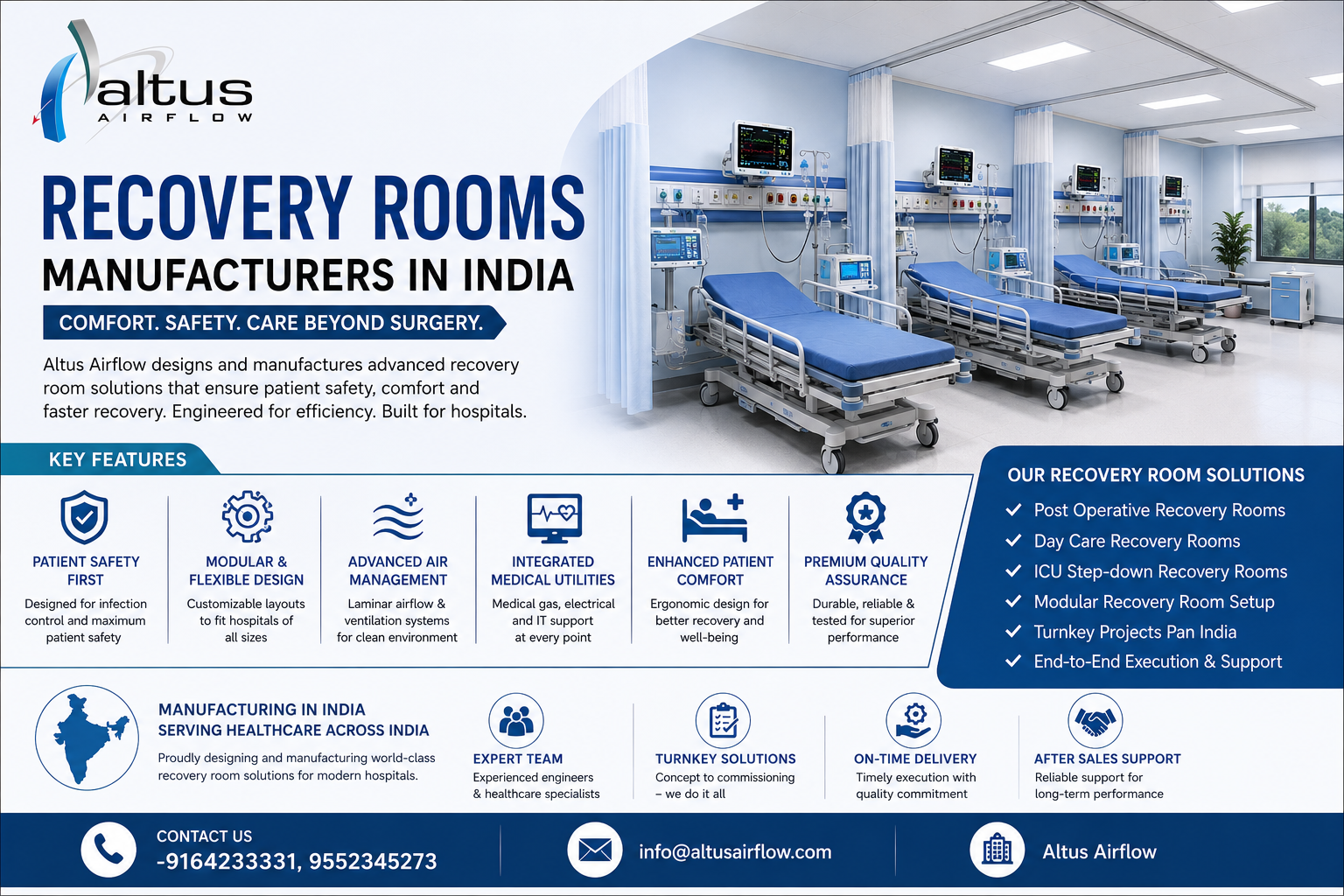
Selecting the right Recovery Rooms Manufacturers In India is an important step when developing a safe and functional postoperative care environment. A recovery room needs to support patients during the period immediately after surgery or anesthesia, when close observation and timely intervention may be required. NHSRC postoperative-care guidance identifies concerns such as airway obstruction, hypoxia, bleeding, blood-pressure changes, pain, hypothermia, vomiting, aspiration, and residual effects of anesthesia that should be observed in the recovery area.
Evaluate Recovery Room Design
The physical design should provide sufficient space around each patient for monitoring, clinical procedures, and emergency intervention. Patient beds, monitoring equipment, oxygen and suction points, electrical connections, storage, and staff circulation should be positioned logically. NHSRC critical-care infrastructure guidance also highlights accessibility, safe circulation, medical gas infrastructure, infection-control provisions, and appropriate movement of wheeled equipment as important planning considerations.
Check Equipment Integration
A recovery area should be capable of accommodating the monitoring and emergency equipment required for postoperative observation. Hospitals should examine whether the design allows convenient placement of patient monitors, oxygen delivery systems, suction equipment, emergency devices, infusion equipment, and other necessary technologies. NHSRC maintains technical specifications for medical devices used across critical-care and anesthesia-related departments, demonstrating the importance of coordinated equipment planning.
Focus on Medical Gas and Electrical Infrastructure
Reliable infrastructure is essential for a recovery environment. Hospitals should assess oxygen supply, suction, medical gas pipeline systems, electrical outlets, emergency power, and other utility connections before finalising the design. NHSRC guidance for critical-care facilities includes medical gas pipeline systems and permanent electrical infrastructure, while its MGPS guidance emphasizes testing, certification, documentation, and staff training after installation.
Consider Infection Prevention
Recovery rooms should be designed to support cleaning, disinfection, and appropriate infection-control practices. Surfaces, ventilation, hand-hygiene facilities, equipment placement, and circulation routes should be considered during planning. NHSRC critical-care guidance recommends environmental disinfection, hand hygiene, appropriate protective measures, and cleaning or disinfection of equipment between patients when equipment is shared.
Assess Patient and Staff Movement
Efficient movement is another important consideration when evaluating a recovery room solution. Patients may need to be transferred from operating theatres to recovery areas and subsequently moved to wards, intensive care, or other departments. Corridors, doors, lifts, ramps, and circulation areas should allow smooth movement of beds and essential equipment without unnecessary obstruction. NHSRC infrastructure guidance specifically notes the need for circulation spaces that permit manoeuvring of wheeled equipment.
Review Emergency Preparedness
A recovery room should support rapid response when a patient's condition changes. Emergency equipment, oxygen, suction, monitoring devices, emergency medications, and backup power should be accessible to trained staff. Facility guidance from AANA similarly highlights emergency preparedness, equipment inspection, airway equipment, supplemental oxygen, suction, defibrillation capability, emergency drugs, and backup power as relevant considerations for anesthesia-related care environments.
Examine Maintenance and Technical Support
The evaluation should continue beyond installation. Hospitals should understand how equipment and infrastructure will be inspected, maintained, calibrated, tested, and repaired. NHSRC's Biomedical Equipment Management and Maintenance Program includes critical-care equipment specifications as well as dedicated guidance on equipment maintenance, calibration, and testing.
Consider Future Requirements
A good recovery room design should also allow hospitals to respond to changing clinical and operational requirements. Adequate service access, carefully planned utility points, sufficient storage, adaptable equipment locations, and appropriate circulation can make future modifications easier. Hospitals can also review current IPHS infrastructure resources when planning new or renovated healthcare facilities.
Conclusion
Choosing Recovery Rooms Manufacturers In India requires more than evaluating the physical appearance of a proposed facility. Hospitals should examine design, patient movement, equipment integration, medical gases, electrical systems, infection prevention, emergency preparedness, maintenance, and future adaptability. A carefully planned recovery environment can provide healthcare teams with an organized space for postoperative observation while supporting safe and efficient hospital operations.
FAQs
1. What should hospitals check before selecting a recovery room solution?
Hospitals should review design, equipment integration, medical gases, electrical infrastructure, patient movement, infection-control provisions, emergency access, and maintenance support.
2. Why is equipment integration important in a recovery room?
Proper integration helps ensure monitoring and emergency equipment can be positioned conveniently without restricting staff movement or access to the patient.
3. What infrastructure is important in a postoperative recovery area?
Oxygen, suction, electrical power, emergency backup systems, monitoring connections, ventilation, and suitable circulation areas are important considerations.
4. How can maintenance affect recovery room operations?
Regular inspection, testing, calibration, and preventive maintenance can help keep essential equipment operational and support long-term reliability.
5. Should recovery room planning consider future changes?
Yes. Flexible layouts, adequate utility connections, service access, storage, and adaptable equipment placement can make future modifications easier.
Read Our Previous Blog-----------> What Should You Know About Leading PICU Manufacturers?
Bub
Do?

Categories
Read More
Summary Buying POE2 Currency from a reputable marketplace can significantly reduce grinding and help you reach Path of Exile 2's endgame much faster. This guide explains why currency is essential, how to find a trustworthy seller, why MMOexp is a popular choice, and the best practices for making safe purchases. 1. Why POE2 Currency Is So Important In Path of Exile 2, currency...

A removal utility targeting this specific Mac threat is now accessible via securemac.com The malware resurfaces, this time compromising users acquiring illicit Adobe Photoshop copies for macOS Rather than exploiting operating system flaws, the infection relies entirely on social engineering It cleverly hides within the application's own installation files Consequently, the trojan deploys...

Netflix's Ultra HD Streaming Library Expands to 26 Titles For viewers equipped with the latest Ultra HD televisions, Netflix continues to enhance its premium offering with an expanding collection of 4K content. The streaming giant now features 26 titles available in stunning Ultra HD resolution. To access this premium content, subscribers need three key components: a compatible 4K television,...
Netflix and BBC Worldwide Announce Renewal of Hit Romantic Comedy Series In an exciting development for fans of quirky romantic comedies, Netflix and BBC Worldwide North America have confirmed that a second season of the popular series featuring Dylan Witter and his romantic misadventures has been greenlit for production. The streaming giant has commissioned an expanded eight-episode second...
For enthusiasts of action RPGs that combine compelling storytelling with versatile combat mechanics, Duet Night Abyss is a title worth exploring. This overview provides a comprehensive look at its gameplay dynamics, character roster, and standout features to assist visitors of ultimategacha.com in gaining all essential insights. Developed by Pan Studio and published by Hero Games, Duet Night...
