


 Crypto.
 About
About
 Passport
 Conference call
 send money
 Terms
Terms
 Privacy
 Sierra market
Fiber Laser Cleaning Machine Is Transforming Modern Industrial Surface Cleaning
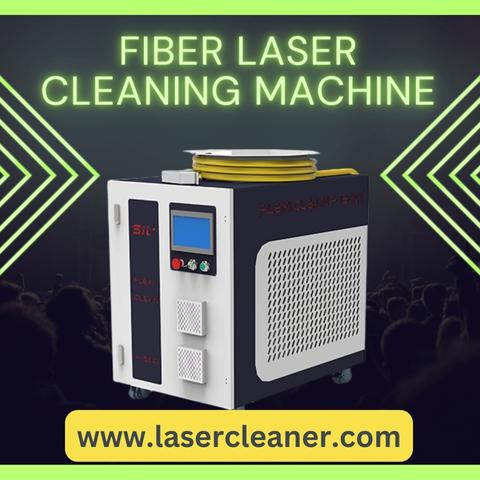
Industrial surface preparation has become an important part of manufacturing, maintenance, restoration, and fabrication. Traditional cleaning methods often involve abrasive materials, chemicals, solvents, or extensive manual labor. As industries look for more controlled and efficient processes, laser technology has become increasingly relevant. A fiber laser cleaning machine provides a modern approach to removing unwanted surface materials while maintaining precise control over the cleaning process.
From rust and paint to oil, grease, oxidation, and other contaminants, laser cleaning can be adapted to many industrial applications. The technology is particularly useful where surface quality, accuracy, and repeatable results are important. With appropriate laser parameters, operators can target contaminants while minimizing unnecessary interaction with the underlying material.
What Is a Fiber Laser Cleaning Machine?
A fiber laser cleaning machine is an industrial laser system designed to remove contaminants and unwanted layers from a material surface. It uses concentrated laser energy to interact with substances such as rust, paint, oxide layers, dirt, carbon deposits, and grease.
The laser beam is directed toward the target area. When the energy reaches the contaminant, it causes the unwanted material to separate, vaporize, or be removed from the surface through a controlled process. The exact cleaning effect depends on the material, contaminant, laser power, scanning pattern, frequency, and other operating parameters.
Fiber laser technology is widely used because it can produce a focused and controllable beam. This makes it suitable for applications where operators need accurate treatment of specific areas rather than cleaning an entire component indiscriminately.
How Laser Cleaning Works
The cleaning process begins when the operator positions the laser head toward the contaminated surface. The machine then delivers laser pulses or continuous laser energy according to the selected operating configuration.
Different materials absorb laser energy differently. Contaminants such as rust, paint, and residue may respond differently from the base material underneath them. By selecting suitable parameters, the operator can create a cleaning process focused on removing the unwanted layer.
The scanning system moves the laser beam across the selected area. This controlled movement allows operators to cover larger surfaces systematically while maintaining a consistent treatment pattern.
For industrial users, correct parameter selection is essential. Before cleaning a production component, it is good practice to test the process on a representative sample or an inconspicuous section. This helps determine the appropriate power, speed, frequency, and scanning settings.
Removing Rust From Metal Surfaces
Rust removal is one of the most recognized applications for a fiber laser cleaning machine. Steel, iron, and other metal components can develop oxidation when exposed to moisture and environmental conditions.
Conventional rust removal may involve grinding, blasting, wire brushing, or chemical treatment. Laser cleaning provides another method in which the operator directs laser energy toward the oxidized layer.
This approach can be used on machinery parts, metal frames, tools, industrial components, automotive parts, and fabricated structures. The process can be adjusted according to the thickness and condition of the rust.
Paint and Coating Removal
Paint stripping is another important industrial application. Manufacturers and maintenance teams may need to remove coatings before repainting, welding, inspection, restoration, or repair.
A fiber laser system can scan across coated surfaces and interact with the paint layer. The appropriate settings depend on the type and thickness of the coating and the material beneath it.
This makes laser cleaning useful for selected restoration and maintenance projects where controlled coating removal is required. Operators can adjust the scanning path and working parameters to address specific sections of a component.
Surface Preparation Before Welding
Clean surfaces are important for many welding processes. Oil, oxidation, paint, and other contaminants can interfere with surface preparation and affect the working environment.
A fiber laser cleaning machine can be used before welding to remove unwanted materials from selected areas. This can be especially useful when preparing metal surfaces around joints or welding zones.
Instead of mechanically treating a broad area, operators can direct the laser toward the specific region that requires preparation. The cleaning process can therefore become part of a more controlled fabrication workflow.
Oil, Grease, and Industrial Residue
Manufacturing equipment and mechanical components can accumulate oil, grease, dirt, and other residues during operation. Cleaning these surfaces is often necessary during maintenance, inspection, refurbishment, or repair.
Laser cleaning can be applied to selected metal surfaces to remove certain types of contamination. The appropriate settings vary according to the residue and substrate.
For maintenance teams, this creates an option for treating individual parts or localized areas without relying exclusively on traditional cleaning procedures.
Cleaning Machinery and Industrial Components
Factories contain a wide variety of metal components that require periodic cleaning. Molds, gears, frames, tools, machine parts, and production equipment can accumulate contaminants over time.
A fiber laser cleaning system can be integrated into maintenance workflows where localized or detailed cleaning is required. Operators can work on individual components after removing them from machinery or, where the system and safety conditions permit, clean suitable areas within an industrial environment.
The portability of some laser cleaning systems also allows them to be moved between different workstations.
Applications in Automotive Manufacturing and Repair
The automotive industry includes numerous metal components that require surface preparation and restoration. Laser cleaning can be used for applications involving rust, coatings, contamination, and preparation around repair areas.
When working with automotive components, operators should select parameters according to the specific substrate and contamination. Precision is particularly important when treating components with delicate surfaces, markings, or dimensional requirements.
Restoration and Maintenance Work
Restoration projects often involve older metal surfaces covered with oxidation, dirt, coatings, or accumulated deposits. The challenge is to remove unwanted material while maintaining the character and condition of the underlying component.
Laser cleaning offers a highly controllable method for selected restoration applications. Operators can gradually adjust the process while monitoring the surface.
This makes the technology relevant to industrial restoration, equipment refurbishment, architectural metalwork, and selected conservation projects.
Choosing the Right Laser Cleaning System
Selecting a laser cleaning machine should begin with the application rather than simply focusing on laser power. The type of contaminant, base material, surface condition, cleaning width, production volume, and working environment all influence the appropriate system.
Laser power is an important consideration, but higher power is not automatically appropriate for every application. Delicate surfaces may require a different approach from heavy industrial rust removal.
Safe and Controlled Operation
Laser cleaning equipment should always be operated according to the manufacturer's safety instructions. Industrial laser systems can present serious hazards if used incorrectly.
Operators should use the required protective equipment and establish an appropriate controlled working area. Reflections from metal surfaces should also be considered during setup. Ventilation or suitable extraction may be necessary because the cleaning process can produce fumes or airborne particles depending on the contaminant.
Training is important because effective laser cleaning involves more than simply pointing the laser at a surface. Operators need to understand material response, parameter adjustment, scanning patterns, and workplace safety.
Building a Modern Cleaning Workflow
A successful cleaning process normally starts with identifying the contaminant and substrate. The operator can then perform a small test to determine suitable settings before treating the complete component.
After establishing the working parameters, the laser can be moved across the surface using a consistent scanning pattern. The cleaned area can then be inspected to determine whether additional passes are necessary.
Future of Fiber Laser Cleaning
Laser cleaning technology continues to attract interest across manufacturing, fabrication, maintenance, automotive, and metalworking industries. As businesses seek more precise surface-treatment processes, fiber laser systems are becoming an increasingly visible part of modern industrial equipment.
The technology can complement existing cleaning methods rather than necessarily replacing every traditional process. Different applications require different techniques, and the correct solution depends on the material, contamination, production requirements, and desired surface condition.
Final Thoughts
A fiber laser cleaning machine offers a controlled and versatile approach to industrial surface treatment. Its applications range from rust and paint removal to surface preparation, machinery maintenance, residue cleaning, and restoration work.
Bub
Do?

Categories
Read More
Introduction About Paulo Dybala Hailing from Laguna Larga in Córdoba, Argentina, Paulo Dybala is a forward whose technical artistry and creative vision have made him a standout talent in Italian football. Currently showcasing his skills with AS Roma in Serie A, his journey began in the youth ranks of Club Atlético Instituto before his professional debut with their first team. His...

ExpressVPN and LinkedIn have launched a strategic collaboration, extending exclusive cybersecurity benefits to Premium members throughout August 2025. This partnership grants three months of complimentary access to ExpressVPN's premium services, directly through LinkedIn's subscriber-only Premium Perks portal. Professionals leveraging remote work or international travel will value the enhanced...
Within just an offensive shootout, the Sparks struggled toward continue to keep rate with just one of the ideal groups in just the league within the Independence, slipping towards Refreshing York, Freedom shot a scorching 55. 9% towards the business and strike 14 3guidelines. LA shot 46. 8% all round, a legit mark, still basically went 931 versus outside of the arc, compounding their defensive...

Africa's gaming potential has long been celebrated, yet the critical infrastructure for creators has lagged far behind. A new initiative is directly confronting this disparity. The COD:M Creators College, a fully-funded intensive program, is now actively shaping its first cohort of ten African content creators. This isn't about vague potential; it's about constructing the missing framework....
Quest: Spiegel, Labyrinth, König Um die Quest „Spiegel, Labyrinth und der König“ in Genshin Impact anzutreten, benötigst du mindestens Abenteuer-Rang 28. Reise danach zu den Hiisi-Inseln, wo das Abenteuer beginnt. Im Rahmen der Chroniken von Mondfrost begibst du dich gemeinsam mit der Diebin Maite in den Palast des Krabbenkönigs. Deine Aufgabe ist es, einen...
