


 Crypto.
 About
About
 Passport
 Conference call
 send money
 Terms
Terms
 Privacy
 Sierra market
The Complex Choreography of Flight: An Introduction to the Airport Operations Industry
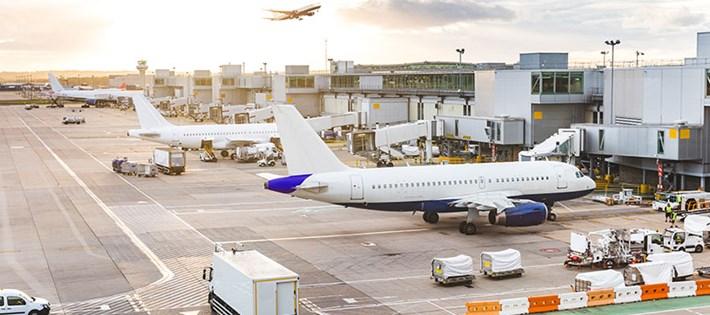
An airport is far more than just a place where planes take off and land; it is a complex, high-stakes ecosystem, a "city within a city" that operates 24/7 with a level of precision that is nothing short of extraordinary. The immense and multifaceted Airport Operations industry is the invisible hand that orchestrates this complex choreography, ensuring the safe, secure, and efficient movement of millions of passengers, tons of cargo, and thousands of aircraft every single day. This industry encompasses a vast array of activities and services that are essential for an airport to function. It is broadly divided into two main categories: airside operations and landside operations. Airside operations include everything that happens on the airfield itself, from managing runway and taxiway traffic to aircraft ground handling, fueling, and air traffic control coordination. Landside operations cover all the passenger-facing activities within the terminal buildings, including check-in, security screening, baggage handling, and managing the flow of people through customs and immigration. The seamless integration of these two domains is the ultimate goal of airport operations, a task that requires a sophisticated blend of human expertise, robust processes, and advanced technology.
Delving deeper into airside operations, we find the critical functions that ensure the safety and punctuality of every flight. This is the domain of the Airport Operations Control Center (AOCC), the nerve center of the airport. From here, operators manage aircraft stand and gate allocation, coordinate with air traffic control on flight arrivals and departures, and oversee the complex ballet of ground service equipment. Ground handling is a major component, involving a host of services provided to an aircraft while it is parked at the gate. This includes marshalling the aircraft into its parking position, connecting ground power and pre-conditioned air, loading and unloading baggage and cargo, catering services, and pushback for departure. Aircraft fueling, de-icing in cold weather, and airfield maintenance—such as runway inspections and snow removal—are also vital airside functions. The primary focus of all these activities is safety and on-time performance. Any delay or error on the airside can have a cascading effect, leading to network-wide disruptions, frustrated passengers, and significant financial costs for airlines and the airport alike.
On the landside, the focus shifts to the passenger journey and the efficient management of the terminal environment. This begins the moment a passenger arrives at the airport. Landside operations are responsible for managing kerbside traffic, parking facilities, and the check-in hall. The check-in process itself, once entirely manual, is now a hybrid of traditional agent-staffed counters, self-service kiosks, and online/mobile check-in, all of which must be managed and supported. The security screening checkpoint is another critical and often challenging operational area, requiring close collaboration with government security agencies to ensure a thorough but efficient screening process. Once past security, passengers enter the retail and concessions area, the management of which is a key revenue-generating operation for the airport. The most complex landside operation is baggage handling. Modern airports use highly automated baggage handling systems (BHS)—vast networks of conveyors, scanners, and sorters—to move millions of bags from check-in to the correct aircraft, a process that requires incredible precision and reliability to avoid lost or delayed luggage.
Underpinning both airside and landside operations is a complex web of information technology and communication systems. The smooth functioning of a modern airport is utterly dependent on the real-time flow of data between dozens of different stakeholders, including the airport operator, airlines, ground handlers, air traffic control, and government agencies. This data exchange is facilitated by a suite of specialized software systems, such as the Airport Operational Database (AODB), which acts as the single source of truth for all flight-related information. Resource Management Systems (RMS) are used to optimize the allocation of gates, check-in counters, and other fixed assets. Flight Information Display Systems (FIDS) provide passengers with real-time updates on their flights. The increasing digitalization of these systems is the most significant trend in the airport operations industry, as airports move towards a more integrated, data-driven, and collaborative decision-making environment to cope with ever-increasing traffic demands and passenger expectations.
Explore Our Latest Trending Reports:
Bub
Do?

Categories
Read More
Market Overview The global free-from food market size was valued at USD 97.75 billion in 2024 and is projected to reach from USD 110.41 billion in 2025 to USD 292.48 billion by 2033, growing at a CAGR of 12.95% during the forecast period (2025-2033). The global Free-From Food market continues to evolve...

The Asia Pacific Renewable Energy Market is on a trajectory of remarkable expansion, projected to reach significant milestones in the coming years. According to the latest data from MRFR, the market is estimated to grow at a compound annual growth rate (CAGR) of 9.90%, reaching USD 1,156.8 billion by 2035. With this surge, key players are likely to intensify their strategies in solar and wind...

The financial services landscape is undergoing a profound digital transformation, and at the forefront of this evolution is the rapidly expanding global Cardless ATM industry. This innovative sector is redefining one of the most common banking interactions: cash withdrawal. It encompasses the technology, infrastructure, and services that allow consumers to access cash from an automated...

Federal agencies have received urgent directives from CISA to address critical vulnerabilities. These flaws, identified as CVE-2025-20362 and CVE-2025-20333, exist in Cisco ASA and Firepower systems. When combined, they permit unauthenticated remote attackers to achieve full device control. Cisco previously noted these were exploited as zero-days against specific 5500-x series devices. The...

Will Byers' Evolution: From Victim to Hero in Stranger Things Noah Schnapp reveals the transformative journey of his character Will Byers in the first volume of Stranger Things' final season. After taking a backseat in recent installments, Will emerges as a central figure with unexpected abilities that shock viewers in the Volume 1 finale. "I think people mistake fear for weakness," Schnapp...
