Is WiFi the Same as Internet or Completely Different?
Many people use the words WiFi and internet as if they mean the same thing. In reality, they are closely related but completely different technologies. Understanding the difference helps you troubleshoot connection problems, choose better internet plans, and avoid common confusion when your network stops working. The question “is WiFi the same as internet” is one of the most searched tech queries because so many users experience slow or disconnected service and don’t know which part is actually failing.
WiFi is simply a way to connect devices without cables, while the internet is the global system that delivers data, websites, and online services. You can have WiFi without internet access, and you can also have internet without WiFi by using wired connections. This article explains the differences, how both work together, and why understanding them is important for your daily digital life.
What WiFi Is and How It Works
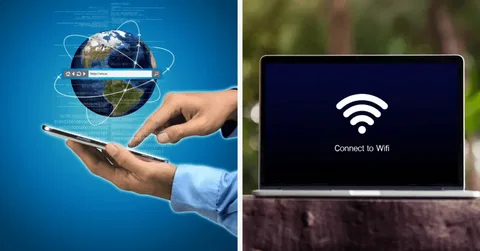
WiFi is a wireless technology that allows devices like smartphones, laptops, and smart TVs to connect to a local network without physical cables. It uses radio waves to transmit data between your device and a router. The router acts as a central hub that manages communication within your home or office network.
When you connect to WiFi, you are actually connecting to a router—not directly to the internet. The router may or may not be connected to an internet service provider (ISP). This is an important distinction when asking “is WiFi the same as internet”, because WiFi alone does not guarantee online access.
WiFi is designed for convenience and mobility. It allows multiple devices to share a single network connection, making it easier to browse, stream, and communicate without being tied to a cable. However, its performance depends on signal strength, distance from the router, and interference from other electronic devices.
Even though WiFi feels like “the internet,” it is really just the local bridge that connects your device to a router, which then may connect you to the wider internet.
What the Internet Is and How It Works
The internet is a massive global network that connects millions of computers, servers, and devices worldwide. It allows information to flow between users through websites, apps, emails, and online services. Unlike WiFi, the internet is not local—it is worldwide infrastructure.
When you load a website or stream a video, your device is requesting data from a remote server somewhere in the world. That data travels through multiple networks and reaches your device through your internet service provider. This process is completely independent of WiFi, even though WiFi is often used to access it.
Understanding this helps clarify the question “is WiFi the same as internet” because the internet exists even without WiFi. For example, Ethernet cables can connect your computer directly to the internet without any wireless signal involved.
The internet is essentially the “information highway,” while WiFi is just one of many ways to enter that highway. Without internet service, WiFi alone cannot load websites or provide online content.
Key Differences Between WiFi and Internet
The main difference between WiFi and internet is their function. WiFi is a method of connecting devices locally, while the internet is a global system that provides access to online content and services. One is a connection method, and the other is a vast network of information.
Another key difference is dependency. WiFi depends on a router, while the internet depends on an internet service provider. If your ISP goes down, your WiFi may still work locally, but you won’t be able to access online websites or apps. This is a common reason people get confused about “is WiFi the same as internet.”
WiFi can exist without internet, but internet access usually requires some form of connection like WiFi or an Ethernet cable. For example, you can still transfer files between devices on the same WiFi network even if there is no internet connection available.
In short, WiFi is about local connectivity, while the internet is about global communication. Mixing the two leads to misunderstandings when diagnosing network issues.
How WiFi and Internet Work Together at Home
At home, WiFi and internet work together to provide seamless connectivity. Your internet service provider delivers data to your home through a modem. The modem connects to a router, which then broadcasts WiFi signals to your devices.
When everything is working properly, you don’t notice the difference between WiFi and internet because both systems function together smoothly. However, when problems occur, it becomes important to understand which part is failing. If WiFi is down, your devices won’t connect to the router. If the internet is down, WiFi may still show as connected, but nothing will load online.
This is why the question “is WiFi the same as internet” becomes especially important during troubleshooting. Many users restart their router thinking it will fix internet issues, but sometimes the real problem is with the ISP.
Modern smart homes rely heavily on both WiFi and internet working together. From streaming services to smart appliances, both systems must be stable for smooth digital performance.
Common Misconceptions About WiFi vs Internet
One of the biggest misconceptions is that a strong WiFi signal means fast internet. In reality, WiFi strength only shows how well your device is connected to the router, not how fast your internet service is.
Another misconception is that turning off WiFi turns off the internet. In truth, the internet connection may still be active through wired devices or other networks. This misunderstanding is at the core of the question “is WiFi the same as internet,” and it often leads to confusion during outages.
Many people also believe that upgrading WiFi automatically improves internet speed. However, if your internet plan is slow, better WiFi equipment alone will not significantly increase performance. Both systems must be balanced for optimal results.
Understanding these misconceptions helps users make better decisions about their home network setup and avoid unnecessary frustration when connectivity issues occur.
Conclusion
WiFi and the internet are closely connected but fundamentally different technologies. WiFi is a wireless method of connecting devices to a local network, while the internet is a global system that delivers online content and services. Answering the question “is WiFi the same as internet” clearly shows that they are not the same, even though they work together every day in homes, offices, and public spaces.
By understanding the difference, you can better diagnose network problems, choose the right equipment, and improve your overall online experience. WiFi gives you convenience and mobility, while the internet provides access to the digital world. Knowing how both work together helps you stay connected more efficiently and with fewer frustrations.
Bub
Do?
Kategorien
Mehr lesen
Katlanır çatı merdivenleri yaşam alanlarında çatıya güvenli, pratik ve yer tasarrufu sağlayan bir erişim çözümü sunar. Özellikle bakım, depolama veya teknik alanlara çıkış gerektiren yapılarda yaygın olarak tercih edilir. Çatı merdiven sistemleri genel olarak iki ana malzeme grubunda incelenir: katlanır ahşap çatı merdivenleri...
On this fiftieth anniversary of his historic declaration, a new documentary series arrives to explore a life of profound transformation. From the halls of power to the heart of America's conscience, the journey of Robert F. Kennedy is revisited with fresh eyes. Dawn Porter directs this four-part Netflix original, weaving unseen archives with poignant testimonies. Digitized footage breathes new...
The Summertime of Celebs was a person for the publications, with Spain hoisting the trophy for the fourth season in just Euros heritage. That getting explained, which country consists of gained it the greatest days simply because the tournaments conception inside 1960?FOX Athletics Experiments broke down every single one state that is made up of received within get toward present yourself a...
Pokémon GO is undergoing a major transformation in its Trainer Battles, with the entire battle system being rebuilt from scratch to improve gameplay consistency and fairness. Niantic revealed today that this is the most significant update to the GO Battle League ever, promising far-reaching effects across PvP battles, Team GO Rocket encounters, and other combat modes. The core aim of...
Understanding Peptides and Their Role in the Body Peptides are short chains of amino acids that serve as the building blocks of proteins and play a vital role in regulating numerous biological functions. Acting as natural bioregulators, they communicate with cells to influence processes such as hormone production, tissue repair, and immune responses. Their ability to modulate these processes...