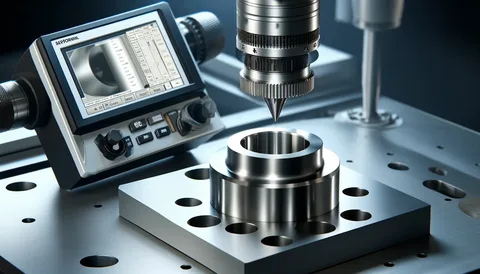




CNC Machining Surface Finish Options for Prototype and Production Parts

CNC machining is widely used in manufacturing because it delivers high precision, repeatability, and efficiency for both prototype and production parts. However, one of the most important factors that determines the final quality, functionality, and appearance of machined components is the surface finish. Understanding different cnc machining surface finish options helps engineers and designers select the right finishing method for performance, durability, and aesthetics.

From rough machining marks to mirror-like polishing, surface finishing plays a crucial role in improving wear resistance, corrosion protection, and overall product quality. In this article, we will explore the most common surface finishing techniques used in CNC machining and how they apply to both prototypes and mass production.

As-Machined Surface Finish

The as-machined finish is the most basic result directly coming from the CNC machine without additional post-processing. It retains visible tool marks but offers high dimensional accuracy and fast turnaround time, making it ideal for functional prototypes and internal components.

This finish is often chosen when appearance is not a priority but performance and precision are critical. It is one of the most cost-effective cnc machining surface finish options available for both prototyping and production testing.

Key characteristics:

  • Visible tool marks and machining lines
  • High dimensional accuracy
  • Lowest cost finishing option
  • Fastest production time

The as-machined surface is commonly used in early-stage product development where engineers focus on testing fit, function, and assembly rather than aesthetics. It allows quick iterations without spending additional time or cost on finishing.

In production environments, this finish is suitable for parts that remain hidden inside assemblies or machinery. It provides reliable performance while keeping manufacturing costs low.

Bead Blasting Finish

Bead blasting is a surface finishing process that uses fine glass beads blasted at high pressure to create a smooth, matte texture. It removes tool marks and gives a uniform appearance without changing part dimensions significantly.

This is one of the most popular cnc machining surface finish options when a clean, non-reflective surface is required for aesthetic or functional reasons.

Key characteristics:

  • Smooth, matte, and uniform texture
  • Removes machining marks
  • Non-reflective surface finish
  • Suitable for aluminum and stainless steel

Bead blasting is widely used in consumer products, aerospace components, and medical devices where appearance and cleanliness matter. It enhances visual consistency across multiple parts in production.

For prototypes, bead blasting helps present a more refined look during product demonstrations or client reviews. It bridges the gap between raw machining and final production finish.

Anodizing Finish (For Aluminum Parts)

Anodizing is an electrochemical process used primarily on aluminum parts to improve corrosion resistance, surface hardness, and appearance. It creates a durable oxide layer that can also be dyed in different colors.

Among advanced cnc machining surface finish options, anodizing is one of the most functional and visually versatile treatments available.

Key characteristics:

  • Increases corrosion and wear resistance
  • Available in multiple color options
  • Maintains tight dimensional tolerances
  • Ideal for aluminum alloys

Type II anodizing is commonly used for decorative purposes, while Type III (hard anodizing) is used for high-wear industrial applications. It is widely used in aerospace, electronics, and automotive industries.

For both prototypes and production parts, anodizing improves durability and brand identity by allowing color customization while protecting the metal surface.

Powder Coating Finish

Powder coating is a finishing process where dry powder is applied electrostatically and then cured under heat to form a hard, protective layer. It provides excellent resistance to corrosion, chemicals, and impact.

This is one of the most durable cnc machining surface finish options, especially for parts exposed to harsh environments or outdoor conditions.

Key characteristics:

  • Thick, durable protective coating
  • Wide range of colors and textures
  • Excellent corrosion resistance
  • Environmentally friendly process

Powder coating is commonly used in automotive parts, industrial equipment, and consumer goods where strength and appearance are equally important. It also allows for textured finishes that improve grip or aesthetic appeal.

In production environments, powder coating helps extend product lifespan while reducing maintenance costs. For prototypes, it provides a near-final product appearance for testing market readiness.

Polishing and Mirror Finish

Polishing is a finishing process that smooths the surface to achieve a shiny, reflective, or mirror-like appearance. It is typically done through mechanical abrasion, buffing, or chemical polishing methods.

This is one of the most visually appealing cnc machining surface finish options, often used when aesthetics and luxury appearance are top priorities.

Key characteristics:

  • High-gloss or mirror-like surface
  • Reduces surface roughness significantly
  • Enhances visual appeal
  • Requires multiple finishing stages

Polishing is widely used in decorative parts, medical instruments, optical devices, and high-end consumer products. It improves not only appearance but also cleanliness by reducing surface imperfections where contaminants can accumulate.

For prototypes, polishing helps showcase premium product concepts to stakeholders or customers. In production, it is often reserved for visible components where appearance directly affects product value.

Conclusion

Choosing the right surface finish is essential in CNC machining because it directly impacts the performance, durability, and appearance of the final product. From basic as-machined surfaces to advanced treatments like anodizing and powder coating, each option serves a specific purpose depending on the application.

Understanding different cnc machining surface finish options allows manufacturers and designers to balance cost, functionality, and aesthetics effectively. Whether developing a prototype or scaling into mass production, selecting the right finish ensures the final part meets both engineering requirements and customer expectations.

 
Upgrade auf Pro
Wähle den für dich passenden Plan aus
Bub

Do?

Mehr lesen
salon https://sierra-le.com