


 Crypto.
 About
About
 Passport
 Conference call
 send money
 Términos
 Privacidad
 Sierra market
How Can Web Scraping Help Businesses Build Stronger Data Supply Chains
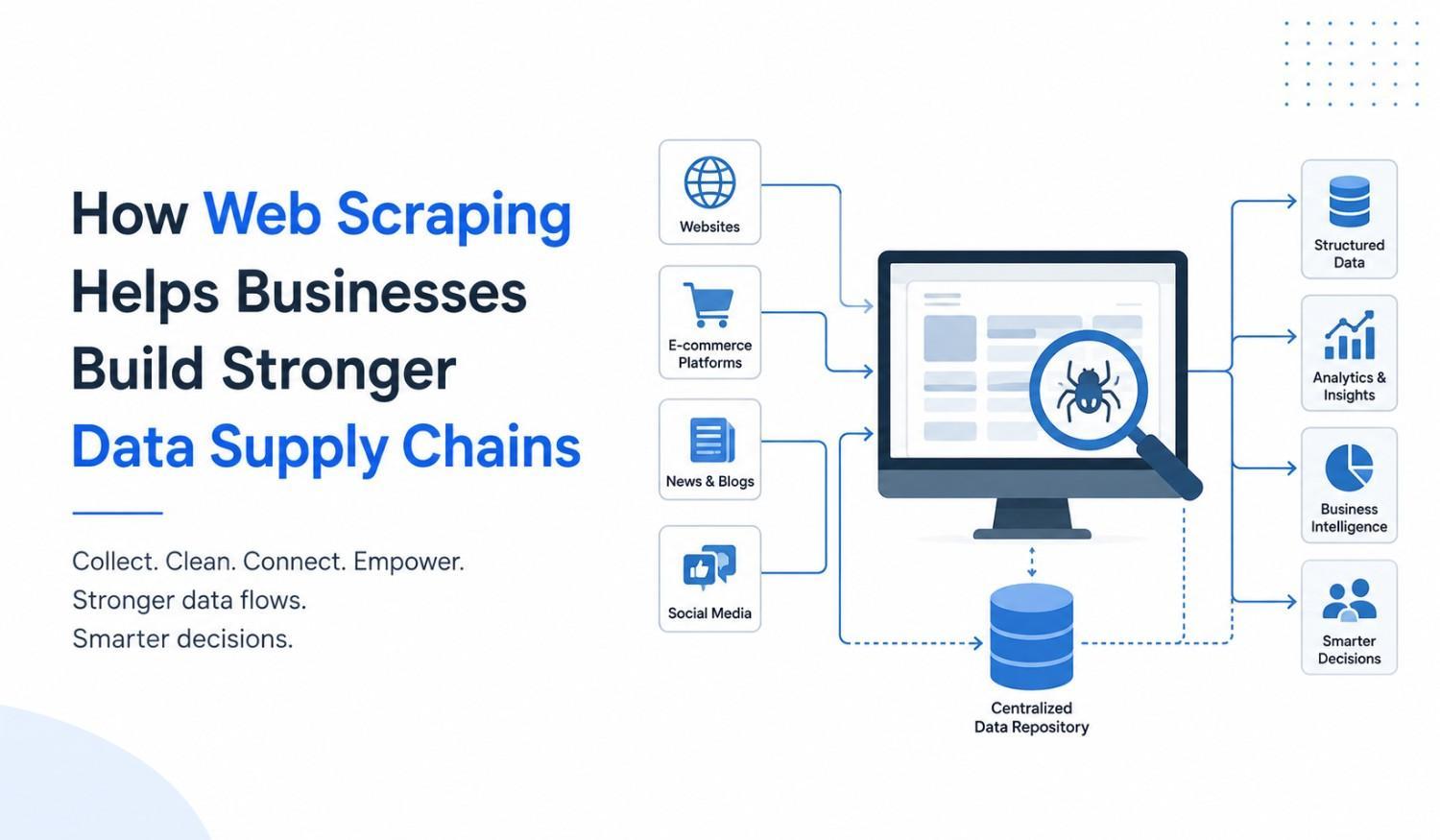
Data drives modern business decisions, but collecting reliable information often feels like trying to fill a swimming pool with a teaspoon. Organizations depend on accurate, timely, and consistent data to support operations, forecasting, and growth. Unfortunately, data arrives from countless sources and in countless formats. That is where web scraping enters the picture. By automating data collection, businesses can build stronger and more dependable data supply chains. We have seen organizations transform scattered information into valuable business intelligence—and when data starts flowing properly, every department tends to breathe a little easier.
Understanding the Concept of a Data Supply Chain
A data supply chain works much like a traditional supply chain, except instead of moving products, it moves information. Data is collected, processed, validated, stored, and delivered to the people who need it. Every stage must operate efficiently to ensure reliable outcomes. When one part breaks down, the effects ripple across the organization. We often compare it to a relay race—except the baton is data, and dropping it can affect sales, operations, customer service, and strategic planning simultaneously. Strong businesses recognize that data movement deserves the same attention as inventory movement.
What Is a Data Supply Chain?
At its core, a data supply chain is the process that transforms raw information into actionable business insights. It starts with data sources, continues through collection and processing, and ends with analytics or decision-making systems. Businesses rely on these pipelines to maintain visibility across operations. Without a structured approach, teams spend more time hunting for information than using it. The challenge becomes even greater as data volumes grow. A well-designed data supply chain ensures information arrives where it is needed—accurate, organized, and ready for action.
Why Data Quality Matters
Poor data creates expensive problems. Inaccurate information can lead to flawed forecasts, ineffective marketing campaigns, inventory issues, and missed opportunities. Even the most advanced analytics tools cannot produce valuable insights from unreliable data. We have watched companies invest heavily in dashboards only to discover the underlying information was outdated. That is a bit like buying a luxury car and filling it with the wrong fuel. Strong data quality practices help businesses maintain consistency, improve trust in reports, and make better decisions based on facts rather than assumptions.
The Growing Demand for Continuous Data Collection
Business environments change quickly. Customer preferences shift, competitors adjust strategies, and markets evolve almost daily. Organizations that rely on periodic manual research often struggle to keep pace with these changes. Continuous data collection has become essential because opportunities rarely wait for quarterly reports. Real-time visibility enables faster reactions and more confident decisions. As digital ecosystems expand, companies require a steady stream of fresh information to remain competitive. Data supply chains are no longer static systems; they must operate continuously to support modern business requirements.
Why Traditional Data Gathering Methods Fall Short
Manual data collection may work for small projects, but it becomes increasingly difficult as information needs grow. Teams spend countless hours copying, organizing, and verifying data from multiple sources. Human error becomes unavoidable, and updates often arrive too late to be useful. We occasionally see businesses assigning talented employees to repetitive data-gathering tasks that software could handle more efficiently. That approach resembles hiring a skilled chef and asking them to peel potatoes all day. Traditional methods simply cannot match the speed and scale modern organizations require.
The Shift Toward Automated Data Acquisition
Automation has changed the way businesses collect and manage information. Instead of relying on manual processes, organizations can gather large volumes of data continuously and accurately. Automated data acquisition helps eliminate bottlenecks while ensuring information remains current. This shift supports better analytics, faster reporting, and improved operational efficiency. As businesses generate and consume more data than ever before, automation becomes less of a luxury and more of a necessity. Companies that embrace automated collection methods position themselves to respond more effectively to market changes and customer demands.
How Web Scraping Strengthens Data Supply Chains
Web scraping strengthens data supply chains by creating a reliable flow of external information. Rather than manually collecting data from websites, businesses can automate the process and receive consistent updates. This improves data availability while reducing delays and errors. Information from multiple sources can be gathered, standardized, and integrated into existing systems. A professional web scraping company can help organizations build scalable collection frameworks that support long-term growth. The result is a stronger foundation for analytics, forecasting, and strategic planning throughout the business.
Creating Reliable Data Pipelines
Reliable data pipelines ensure information moves efficiently from source to destination. Web scraping contributes by continuously collecting data and feeding it into business systems without interruption. Consistency becomes easier to maintain because automated processes follow predefined rules. Businesses gain confidence knowing that reports are based on current information rather than outdated snapshots. Strong pipelines also reduce the burden on employees who would otherwise spend valuable time gathering data manually. In many ways, automated collection acts as the engine that keeps the entire data supply chain moving smoothly.
Improving Data Availability Across Departments
Data becomes significantly more valuable when it reaches the right people at the right time. Many organizations struggle with isolated systems where departments maintain separate datasets and limited visibility. Web data extraction helps bridge these gaps by supplying centralized information that multiple teams can access. Sales, marketing, operations, and leadership teams benefit from a shared understanding of business conditions. When everyone works from the same source of truth, collaboration improves naturally. Better access to information reduces confusion, accelerates decision-making, and creates a more connected organizational environment.
Ensuring Faster Data Flow
Speed matters in business, especially when opportunities and risks appear unexpectedly. Delayed information often results in delayed action, and competitors rarely wait politely while decisions are being made. Automated collection methods help maintain a continuous flow of fresh information into business systems. Teams gain access to current insights rather than outdated reports. Faster data movement supports quicker responses to market changes, customer demands, and industry developments. Strong data supply chains reduce friction throughout the organization and help leaders act confidently when timing is critical.
Enhancing Data Accuracy and Consistency
Accurate data forms the foundation of every successful business strategy. Unfortunately, information gathered from multiple sources often arrives with inconsistencies, formatting differences, and occasional errors. Automated collection processes help standardize data before it enters business systems. Consistency becomes easier to maintain because predefined rules guide collection and validation. We often remind clients that analytics platforms are excellent calculators—but they cannot magically fix poor-quality inputs. Strong data accuracy practices improve reporting reliability, increase trust in business intelligence, and support more informed decision-making across departments.
Eliminating Repetitive Manual Tasks
Few employees dream of spending their day copying information from website to spreadsheet. Manual data collection consumes valuable time while increasing the likelihood of mistakes. Automation removes these repetitive tasks and allows teams to focus on higher-value activities. Employees can spend more time analyzing information and less time gathering it. This shift improves productivity while reducing operational inefficiencies. Businesses benefit from faster data acquisition and improved workforce utilization. In many cases, organizations discover hidden capacity within existing teams simply by eliminating unnecessary manual work.
Maintaining Structured Data Formats
Raw data often arrives in different formats, making analysis more complicated than necessary. One source may present information in tables, another in text blocks, and another in entirely different structures. Automated collection systems help normalize and organize information into consistent formats. Structured datasets are easier to integrate with reporting platforms, dashboards, and analytical tools. This consistency reduces preparation time and improves overall efficiency. Businesses gain cleaner information streams that support more accurate forecasting, stronger reporting, and better decision-making throughout the organization.
Supporting Better Business Intelligence and Analytics
Business intelligence depends on reliable information. Even the most advanced analytics solutions cannot generate meaningful insights without high-quality data. Web scraping services provide organizations with continuous access to external information that complements internal datasets. This broader perspective helps identify trends, measure performance, and uncover opportunities that might otherwise remain hidden. Organizations can analyze market conditions, customer behavior, and competitive activity more effectively. Stronger data supply chains ensure that analytics platforms receive the information they need to deliver valuable insights and support strategic growth initiatives.
Turning Raw Data into Actionable Insights
Collecting information is only the beginning of the journey. The real value emerges when businesses transform raw data into actionable insights. Automated collection enables organizations to gather large amounts of information quickly and consistently. Analytical tools can then identify patterns, opportunities, and emerging trends. Businesses gain a deeper understanding of market dynamics and customer expectations. Instead of reacting to events after they occur, companies can anticipate changes and prepare accordingly. Better insights create better strategies, and better strategies often produce stronger business outcomes.
Enabling Data-Driven Decision Making
Successful organizations increasingly rely on evidence rather than assumptions when making decisions. Data-driven decision making reduces uncertainty and improves confidence across leadership teams. Access to current and accurate information allows businesses to evaluate opportunities more effectively. Market trends, customer preferences, and operational performance become easier to understand when supported by reliable data. We have seen organizations move from guesswork to measurable outcomes simply by improving data availability. Strong decision-making processes create competitive advantages that become increasingly valuable in rapidly changing business environments.
Strengthening Competitor and Market Monitoring
Understanding the competitive landscape requires continuous observation. Markets evolve quickly, and businesses need visibility into pricing, product changes, customer sentiment, and industry developments. Automated data collection supports ongoing monitoring without requiring extensive manual effort. Companies can track important indicators and respond more effectively to changes. Competitive intelligence becomes more accessible when information is collected consistently and organized efficiently. Strong monitoring capabilities help organizations identify opportunities, mitigate risks, and maintain awareness of developments that could affect long-term business performance.
Tracking Industry Changes in Real Time
Industry trends rarely arrive with advance notice. New technologies emerge, customer expectations shift, and competitors adjust strategies regularly. Real-time data collection helps businesses stay informed about these developments as they happen. Continuous monitoring provides visibility into evolving market conditions and enables faster reactions. Rather than discovering important changes weeks later, organizations can identify them early and adapt accordingly. This proactive approach strengthens agility and improves responsiveness. Businesses that understand industry movements in real time often gain an advantage over competitors relying on delayed information.
Building a More Responsive Business Strategy
A responsive business strategy depends on timely information and the ability to adapt quickly. Organizations that maintain strong data supply chains can evaluate changing conditions more effectively and adjust plans when necessary. Access to current information supports smarter resource allocation, better forecasting, and stronger operational planning. Flexibility becomes easier when decision-makers have confidence in the data they receive. In a rapidly changing marketplace, responsiveness often separates thriving organizations from struggling ones. Reliable information empowers businesses to move forward with greater speed and certainty.
Improving Supply Chain Visibility Beyond Internal Systems
Many organizations focus heavily on internal data while overlooking valuable external information. Yet markets, customers, suppliers, and competitors all generate signals that influence business outcomes. Strong data supply chains extend beyond company walls and incorporate external intelligence into decision-making processes. Automated data collection helps businesses maintain visibility across broader ecosystems without creating additional workload. When internal metrics are combined with external insights, organizations gain a more complete picture of their operating environment. Better visibility supports smarter planning, stronger forecasting, and improved strategic alignment.
Collecting External Market Signals
External market signals provide important clues about changing business conditions. Customer reviews, product trends, pricing updates, industry announcements, and economic indicators all contribute valuable insights. Collecting this information manually can be overwhelming, particularly when data sources continue to expand. Automated data extraction solutions help businesses gather these signals efficiently and consistently. Decision-makers gain access to information that supports proactive planning instead of reactive responses. Organizations that monitor external signals effectively are often better prepared to identify opportunities and navigate emerging challenges before competitors recognize them.
Creating a More Connected Information Ecosystem
Business information is most valuable when it works together rather than existing in isolated systems. A connected information ecosystem combines internal records with external intelligence to create a comprehensive view of operations and markets. Data collected through automated processes can flow directly into analytics platforms, dashboards, and reporting systems. This integration improves visibility and reduces the effort required to assemble information manually. Organizations benefit from more complete insights, better collaboration between departments, and stronger confidence in the decisions they make every day.
Scaling Data Operations Without Scaling Complexity
Growth often creates additional data requirements. More customers, products, markets, and competitors generate larger volumes of information that must be collected and analyzed. Manual methods quickly become difficult to manage at scale. Automated data collection allows businesses to expand their data capabilities without dramatically increasing operational complexity. Systems can gather information from multiple sources simultaneously while maintaining consistency and reliability. This scalability helps organizations support growth objectives while keeping data management processes efficient, cost-effective, and aligned with long-term business goals.
Handling Large Volumes of Data Efficiently
Modern businesses generate and consume enormous amounts of information every day. Processing these volumes manually is neither practical nor sustainable. Automated collection systems can gather, organize, and deliver large datasets quickly and accurately. Businesses gain access to broader market intelligence without increasing staffing requirements. Efficient data handling reduces bottlenecks and ensures information remains available when needed. As data volumes continue to rise, organizations require scalable solutions capable of supporting expanding requirements. Efficient processing helps maintain performance while preserving the quality and reliability of information.
Supporting Long-Term Business Growth
Growth requires more than ambition—it requires information. Businesses that invest in strong data supply chains position themselves for sustainable expansion. Reliable data supports forecasting, strategic planning, customer engagement, and operational improvements. Automated collection methods provide the flexibility needed to adapt as business requirements evolve. We often see growing companies reach a point where spreadsheets begin waving a white flag. At that stage, scalable data systems become essential. Organizations that establish strong foundations today are better prepared to capitalize on future opportunities tomorrow.
The Role of a Professional Web Scraping Partner
Building effective data collection systems requires technical expertise, ongoing maintenance, and careful planning. A professional scraping company helps businesses design solutions that align with specific objectives while maintaining data quality and reliability. Experienced teams understand how to manage complex websites, changing structures, and evolving business requirements. This expertise reduces implementation challenges and improves long-term performance. Rather than treating data collection as a one-time project, successful organizations view it as an ongoing capability that supports growth, innovation, and competitive advantage.
Why Expertise Matters
Data collection may appear straightforward on the surface, but successful implementation often involves numerous technical considerations. Website structures change, data formats vary, and quality standards must remain consistent. Experienced specialists understand how to address these challenges while maintaining reliable operations. Expertise helps businesses avoid common pitfalls and achieve better outcomes from their data initiatives. Reliable collection processes reduce disruptions and support stronger business intelligence. Organizations benefit from solutions designed to perform consistently even as data sources and business requirements continue to evolve.
Choosing the Right Data Collection Strategy
Every organization has unique objectives, which means data collection strategies should be tailored accordingly. Some businesses require competitive intelligence, while others focus on market research, pricing analysis, or customer insights. Selecting the right approach ensures collected information supports meaningful business goals. Effective strategies balance scalability, accuracy, and efficiency while remaining flexible enough to accommodate future growth. Businesses that align data collection efforts with strategic priorities often achieve greater value from their investments. The right approach transforms information gathering from a routine task into a competitive advantage.
Common Challenges and How Businesses Overcome Them
Building strong data supply chains is not without obstacles. Organizations frequently encounter issues related to data quality, source reliability, integration complexity, and evolving requirements. Fortunately, these challenges can be addressed through careful planning and ongoing optimization. Successful businesses establish processes for validation, monitoring, and continuous improvement. Rather than expecting perfection from the start, they focus on creating systems that adapt and improve over time. A proactive approach helps organizations maintain reliable data flows even as business environments become increasingly complex.
Managing Data Quality at Scale
Maintaining quality becomes more challenging as data volumes increase. Small inconsistencies can quickly multiply when thousands of records are collected daily. Effective quality management involves validation rules, monitoring systems, and regular reviews to identify potential issues. Automated processes help maintain consistency while reducing the likelihood of errors. Businesses that prioritize quality create stronger foundations for reporting and analytics. Reliable information improves confidence across departments and supports better decision-making. High-quality data is not merely desirable—it is essential for long-term success in competitive markets.
Adapting to Changing Web Sources
Websites evolve constantly. Layouts change, content structures shift, and data presentation methods are updated regularly. These changes can disrupt collection processes if systems are not designed to adapt. Ongoing monitoring and maintenance help ensure continuity while minimizing disruptions. Experienced teams anticipate changes and implement adjustments proactively. Businesses benefit from reliable access to information without needing to rebuild systems repeatedly. Adaptability is a critical characteristic of successful data supply chains because stability depends on the ability to respond effectively when sources evolve.
A Quick Observation from Our Experience
Over the years, we have noticed a recurring pattern. Many organizations believe they have a data problem when, in reality, they have a data flow problem. Information exists somewhere, but it is scattered across websites, platforms, reports, and disconnected systems. One client described their reporting process as a treasure hunt—and not the fun kind involving maps and hidden gold. Once automated collection and integration were implemented, visibility improved dramatically. The lesson was simple: valuable insights often already exist; businesses simply need a better way to access them.
Why the Future of Data Supply Chains Depends on Automation
The volume of digital information continues to grow at an extraordinary pace. Businesses that rely solely on manual processes will find it increasingly difficult to keep up with changing market conditions. Automation provides the speed, consistency, and scalability required to manage modern data demands. As organizations pursue digital transformation initiatives, strong data supply chains become a critical competitive asset. Automated systems help ensure information remains accessible, accurate, and actionable. The future belongs to organizations that can transform data into decisions faster and more effectively than their competitors.
Increasing Demand for Real-Time Intelligence
Business leaders no longer want information that explains what happened last month. They need visibility into what is happening right now. Real-time intelligence enables faster responses to market changes, customer behavior shifts, and emerging opportunities. Automated data collection supports this requirement by delivering fresh information continuously. Organizations gain the ability to monitor developments as they occur rather than after the fact. This immediacy improves planning, enhances operational agility, and supports better decision-making. As markets become more dynamic, access to real-time intelligence will continue growing in importance.
Building a Sustainable Competitive Advantage
Competitive advantages are increasingly built on information. Organizations that collect, analyze, and act on data effectively can identify opportunities faster and respond more confidently. Strong data supply chains provide the foundation for this capability. By combining automation, analytics, and reliable information sources, businesses create systems that support long-term success. The goal is not simply collecting more data—it is creating a framework that transforms information into measurable business value. Companies that master this process position themselves to remain resilient, adaptable, and competitive in evolving markets.
Conclusion
Strong data supply chains have become essential for modern organizations seeking growth, efficiency, and competitive advantage. From improving data accuracy and visibility to supporting analytics and strategic planning, automated collection plays a critical role in business success. Web scraping helps transform fragmented information into a continuous flow of valuable insights that decision-makers can trust. As markets become more complex and data volumes continue expanding, organizations need scalable solutions that keep information moving efficiently. In the end, the businesses that manage data effectively are often the ones best prepared for whatever comes next.
Frequently Asked Questions
1. What is web scraping and how does it strengthen data supply chains?
Web scraping is the process of automatically collecting information from websites and converting it into structured data. It strengthens data supply chains by ensuring a consistent flow of timely information into business systems. Instead of relying on manual research, organizations can automate collection processes and maintain access to current market intelligence. This improves data availability, supports analytics, and helps decision-makers work with more accurate information. Stronger data supply chains enable businesses to respond faster to changing conditions and make better strategic decisions.
2. How does automated data collection improve business efficiency?
Automated data collection reduces the time employees spend gathering information manually. Instead of searching multiple websites and entering data into spreadsheets, businesses can collect information automatically and deliver it directly into operational systems. This reduces human error, improves consistency, and accelerates reporting processes. Teams can focus on analysis and decision-making rather than repetitive administrative tasks. Increased efficiency often leads to faster responses, improved productivity, and better use of organizational resources across departments.
3. Can web scraping support competitor monitoring?
Yes, automated data collection is widely used for competitor monitoring. Businesses can track pricing updates, product launches, promotional activities, and market positioning across multiple sources. Continuous monitoring provides visibility into competitive movements and helps organizations identify trends earlier. This information supports strategic planning and enables faster responses to market developments. By maintaining awareness of competitor activities, businesses can make more informed decisions and improve their ability to adapt within competitive environments.
4. What industries benefit from data extraction solutions?
Many industries benefit from automated data collection, including retail, eCommerce, healthcare, finance, logistics, manufacturing, real estate, and technology. Organizations use collected information for market research, pricing intelligence, customer analysis, supply chain management, and performance tracking. The ability to gather and analyze external information efficiently creates value across a wide range of business functions. Any industry that relies on timely market insights can benefit from stronger data collection and management practices.
5. How does web scraping improve data quality?
Automated collection processes follow predefined rules that help maintain consistency across datasets. Information can be standardized, validated, and organized before entering reporting or analytics systems. This reduces the risk of errors associated with manual data entry and improves overall reliability. Better data quality leads to more accurate reporting, stronger forecasting, and improved business intelligence. Organizations that prioritize data quality create a stronger foundation for informed decision-making and long-term operational success.
6. Is web scraping scalable for growing businesses?
Yes, one of the greatest advantages of automated data collection is scalability. Systems can gather information from multiple sources simultaneously and process large volumes of data efficiently. As business requirements grow, collection frameworks can expand without significantly increasing operational complexity. This flexibility supports long-term growth while maintaining consistency and reliability. Scalable solutions help organizations manage increasing information demands without relying on proportional increases in manual effort or staffing.
7. Why should businesses work with a web scraping company?
An experienced web scraping company provides technical expertise, reliable infrastructure, and customized solutions designed around specific business objectives. Professional teams understand how to handle changing website structures, maintain data quality, and ensure consistent performance. This expertise reduces implementation challenges while improving long-term results. Businesses gain access to reliable data pipelines that support analytics, market intelligence, and strategic planning without needing to build and maintain complex systems internally.
8. How does web scraping contribute to business intelligence?
Business intelligence depends on access to accurate and relevant information. Automated data collection provides organizations with market insights, customer trends, competitor activity, and industry developments that enhance analytical capabilities. By combining external intelligence with internal data, businesses create a more complete understanding of their operating environment. This broader perspective supports stronger forecasting, better reporting, and more effective decision-making. Reliable data collection serves as a critical foundation for successful business intelligence initiatives.
Bub
Do?

Categorías
Read More
Chinese domestic wheelchair manufacturers versus international brands — the Karma Medical (台湾), Miki (日本), Otto Bock (德国), and Permobil (瑞典) international brands competing with Chinese domestic producers (鱼跃医疗 Yuwell, 互帮互爱, 上海互邦, and hundreds of smaller manufacturers) — creates the defining competitive commercial dynamic, with the China Wheelchair Market reflecting domestic...

Une faille technique récente dans VALORANT a permis à certains joueurs d'usurper l'identité de développeurs, en arborant illégalement le tag réservé « Riot ». Cette manipulation a généré une vague d'inquiétude au sein de la communauté, suite à la diffusion de captures d'écran montrant...
For individuals experiencing pelvic floor weakness, postpartum changes, or mild vaginal laxity, Vaginal Reconstruction Surgery is not always the first or only option, as many non-surgical treatments can significantly improve symptoms and function without the need for invasive procedures. These alternatives are often recommended for mild to moderate conditions, early-stage...

Вы уже присоединились к сообществу игроков, которые ищут нестандартные способы побеждать в PlayerUnknown’s Battlegrounds? В игре выживание зачастую зависит не только от навыков стрельбы, но и от тактики, удачи и правильного выбора места. Однако есть способ выиграть матч, не прикасаясь к оружию вообще. Этот необычный подход продемонстрировал стример по имени Kurtjmac, который решил...
Your spellbinding wish for a dedicated Wizarding World experience is answered Crafted jointly by Wizarding World Digital (creators of Pottermore) and Warner Bros. This official companion app weaves magic for Harry Potter and Fantastic Beasts enthusiasts Teeming with enchanting innovations Discover fresh interactive quizzes and spellbinding features Plus exclusive content surprises brewing...
