Businesses own a wide range of valuable assets, from commercial real estate and industrial equipment to intellectual property, trade receivables, and infrastructure projects. While these assets contribute significantly to a company's value, many remain illiquid and cannot easily be leveraged to raise capital or attract investors without selling them outright.
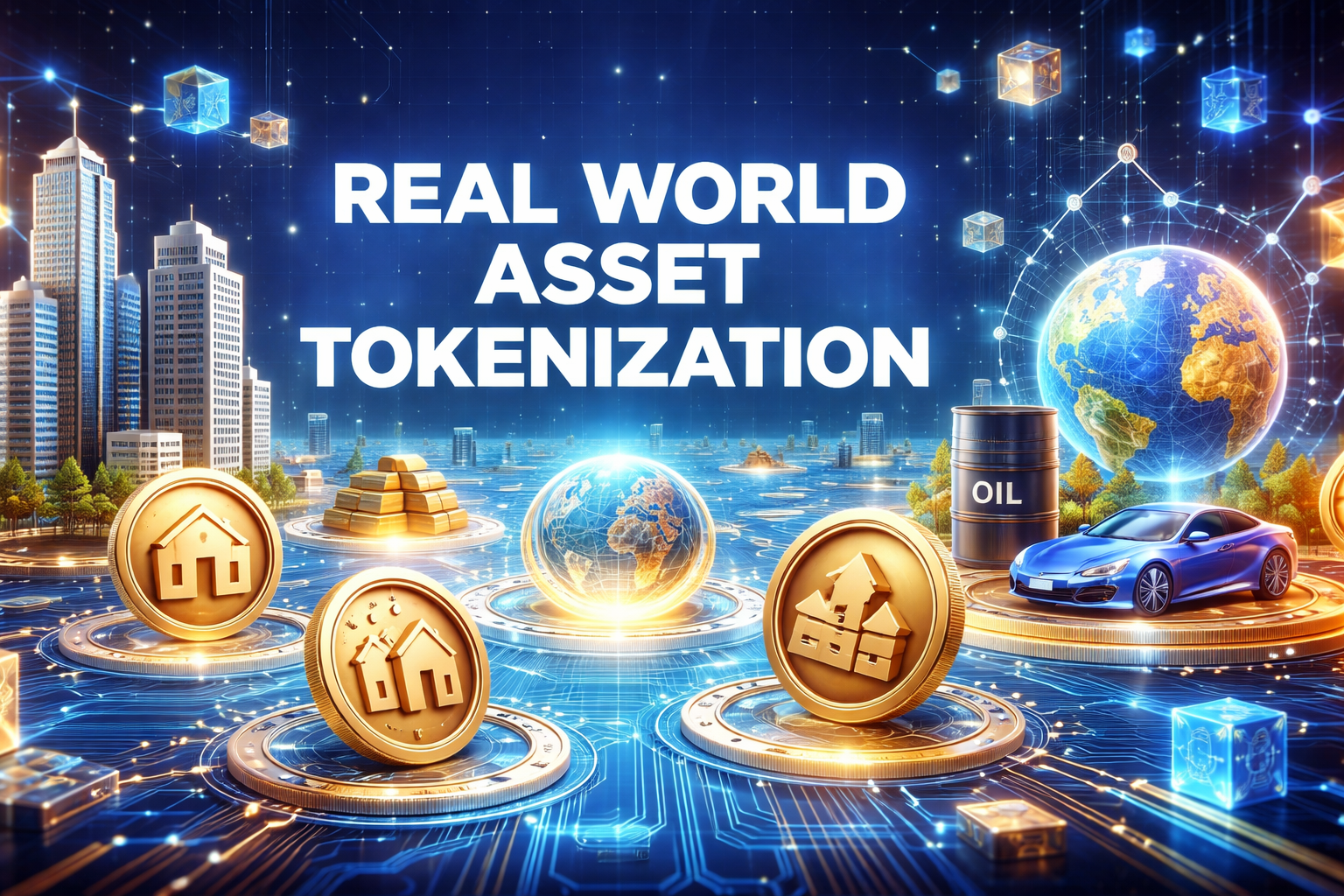
Real World Asset (RWA) tokenization is transforming this landscape by enabling businesses to convert physical and financial assets into blockchain-based digital tokens. These tokens represent ownership, revenue rights, or economic interests in underlying assets, making them easier to manage, transfer, and finance.
By creating investable digital assets, businesses can unlock new funding opportunities, expand investor participation, improve liquidity, and build scalable digital asset ecosystems that support long-term growth.
What Is Real World Asset Tokenization?
Real World Asset tokenization is the process of converting ownership rights or financial interests in tangible or intangible assets into digital tokens recorded on a blockchain.
These tokens are backed by real assets and can represent:
- Full or fractional ownership
- Revenue-sharing rights
- Rental income
- Royalties
- Debt obligations
- Equity interests
Common assets that businesses tokenize include:
- Commercial and residential real estate
- Manufacturing equipment
- Trade receivables and invoices
- Commodities
- Renewable energy projects
- Infrastructure assets
- Intellectual property
- Private equity holdings
Smart contracts automate ownership management, compliance, transfers, and income distribution, creating a secure and transparent investment framework.
What Are Investable Digital Assets?
Investable digital assets are blockchain-based tokens that represent ownership or economic rights in real-world assets and can be offered to eligible investors through compliant digital investment platforms. Unlike cryptocurrencies that derive value primarily from market demand, investable digital assets are supported by underlying assets that generate measurable economic value.
Examples include:
- Tokenized commercial properties
- Fractional ownership of industrial equipment
- Revenue-sharing infrastructure projects
- Tokenized intellectual property royalties
- Asset-backed investment funds
- Tokenized invoices and receivables
These digital assets enable businesses to transform traditionally illiquid assets into accessible investment opportunities.
How Real World Asset Tokenization Helps Businesses Create Investable Digital Assets
1. Converts Physical Assets Into Digital Investment Units
Many business assets are valuable but difficult to divide or transfer. Real World Asset Tokenization converts these assets into blockchain-based digital units that represent proportional ownership or financial rights. For example, a commercial office building worth millions can be divided into thousands of digital tokens, allowing multiple investors to participate without purchasing the entire property. This creates an investable asset that appeals to a broader investor base.
2. Enables Fractional Ownership
One of the biggest advantages of tokenization is fractional ownership.
Instead of requiring investors to purchase entire assets, businesses can divide ownership into smaller, affordable units.
Fractional ownership:
- Lowers investment barriers
- Expands investor participation
- Improves fundraising flexibility
- Increases market accessibility
Businesses benefit by attracting more investors while maintaining strategic control over valuable assets.
3. Unlocks Capital Without Selling Core Assets
Selling strategic assets can reduce long-term business value and operational flexibility. Tokenization allows businesses to raise capital by offering fractional ownership or revenue rights while retaining operational control of the underlying asset. This enables companies to monetize assets without losing the benefits they generate.
4. Creates New Revenue Streams
Tokenized assets can generate recurring returns for investors through various income models, including:
- Rental income from real estate
- Equipment leasing payments
- Intellectual property royalties
- Infrastructure usage fees
- Revenue-sharing agreements
- Trade receivable repayments
Smart contracts automatically distribute earnings based on token ownership, creating transparent and efficient revenue-sharing mechanisms.
5. Expands Access to Global Investors
Traditional fundraising often depends on local financial institutions or regional investment networks. Tokenized assets can be offered to qualified investors across multiple jurisdictions, subject to regulatory compliance.
This provides businesses with access to:
- Institutional investors
- Accredited investors
- Family offices
- Retail investors (where regulations permit)
A global investor base increases fundraising opportunities and improves capital availability.
6. Improves Liquidity of Traditionally Illiquid Assets
Assets such as commercial real estate, infrastructure, and private equity are typically difficult to sell quickly. Tokenization enables ownership interests to be transferred through regulated secondary marketplaces, improving liquidity for investors. Although liquidity depends on market participation and regulatory frameworks, tokenization creates more flexible exit opportunities than traditional ownership models.
7. Enhances Transparency and Investor Trust
Blockchain technology records every transaction, ownership transfer, and revenue distribution on an immutable ledger.
This provides:
- Transparent ownership records
- Verifiable asset history
- Simplified auditing
- Greater investor confidence
- Improved regulatory reporting
Transparency helps businesses build credibility while reducing administrative complexity.
8. Automates Asset Management
Smart contracts automate many operational processes, including:
- Investor onboarding
- Ownership transfers
- Dividend payments
- Compliance verification
- Voting rights
- Settlement
Automation reduces costs, minimizes manual errors, and improves operational efficiency.
9. Supports Alternative Capital Formation
Businesses can use tokenized assets to create innovative fundraising structures, such as:
- Asset-backed investment offerings
- Revenue-sharing investment models
- Tokenized private placements
- Infrastructure financing programs
- Renewable energy investment platforms
These alternatives reduce dependence on traditional bank financing and equity dilution.
10. Builds a Scalable Digital Asset Ecosystem
Creating investable digital assets is the first step toward building a comprehensive digital asset ecosystem.
Businesses can integrate tokenized assets with:
- Enterprise Resource Planning (ERP) systems
- Treasury management platforms
- Compliance solutions
- Digital identity systems
- Blockchain marketplaces
This creates a connected infrastructure that supports long-term innovation and operational efficiency.
Business Assets That Can Become Investable Digital Assets
Many types of assets are suitable for tokenization, including:
Commercial Real Estate
Office buildings, retail centers, warehouses, and hotels.
Industrial Equipment
Manufacturing machinery, transportation fleets, and production facilities.
Trade Receivables
Outstanding invoices and payment obligations.
Intellectual Property
Patents, copyrights, trademarks, software licenses, and royalty agreements.
Renewable Energy Projects
Solar farms, wind energy assets, battery storage facilities, and carbon credits.
Infrastructure
Roads, ports, logistics centers, telecommunications assets, and utility networks.
Benefits of Creating Investable Digital Assets
Businesses that tokenize assets gain several strategic advantages.
Improved Liquidity
Convert illiquid assets into accessible investment opportunities.
Broader Investor Participation
Reach a larger pool of domestic and international investors.
Alternative Capital Raising
Reduce dependence on traditional lending and equity financing.
Lower Operational Costs
Automate administrative processes through smart contracts.
Greater Transparency
Improve trust with investors, auditors, and regulators.
Enhanced Asset Utilization
Generate value from assets that would otherwise remain underutilized.
Challenges Businesses Should Consider
While Real World Asset tokenization offers substantial benefits, successful implementation requires addressing several challenges.
Regulatory Compliance
Tokenized assets must comply with securities, financial, and property laws in relevant jurisdictions.
Legal Structuring
Ownership rights must be clearly defined and legally enforceable.
Technology Integration
Blockchain platforms should integrate seamlessly with existing enterprise systems.
Asset Valuation
Reliable valuation is essential to ensure fair pricing and investor confidence.
Secondary Market Development
Liquidity depends on the availability of compliant trading venues and active investor participation.
The Future of Investable Digital Assets
The adoption of Real World Asset tokenization is expected to accelerate as blockchain infrastructure and regulatory frameworks continue to mature.
Key trends shaping the future include:
- AI-driven asset valuation and monitoring
- Institutional investment in tokenized assets
- Cross-border digital asset marketplaces
- Integration with decentralized finance (DeFi)
- Digital identity and automated compliance
- Multi-chain interoperability for enterprise assets
These advancements will enable businesses to create increasingly sophisticated digital investment ecosystems.
Conclusion
Real World Asset tokenization is transforming how businesses unlock value from physical and financial assets. By converting real-world assets into investable digital assets, companies can improve liquidity, attract a global investor base, automate asset management, and raise capital without selling strategic resources.
While regulatory and technological challenges remain, the long-term potential is significant. As digital asset markets continue to evolve, businesses that embrace Real World Asset Tokenization will be well-positioned to build scalable investment ecosystems, diversify funding sources, and create new opportunities for sustainable growth.



 Crypto.
 Über
Über
 Passport
 Conference call
 send money
 Bedingungen
 Datenschutz
 Sierra market