Crypto.

 Passport
 Conference call
 send money
 الشروط
 الخصوصية
 Sierra market
Why Your Weekend Gardening Project Might Ruin Your Underground Plumbing
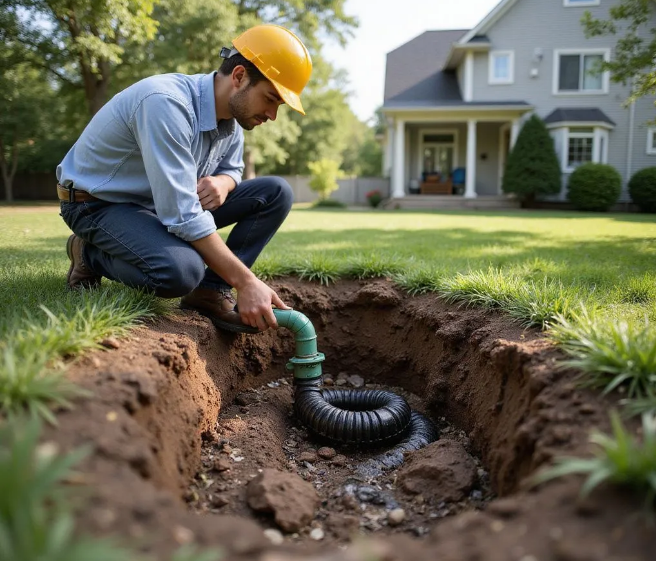
The first few warm days of spring always trigger a massive wave of outdoor productivity. Homeowners rush to the local garden centre, filling their cars with shovels, automatic sprinkler kits, heavy stone pavers, and aggressive new shrubs. There is a deep satisfaction in transforming a plain patch of grass into an intricate floral display or a highly functional vegetable garden. The problem is that many amateur landscapers start digging deep trenches for irrigation lines or setting heavy fence posts without the slightest idea of what lies directly beneath their boots. Your sprawling domestic sanitation network is buried remarkably close to the surface, and a single misplaced strike with a heavy steel shovel can turn a pleasant weekend project into an absolute nightmare.
The lateral lines that make up your drainage field are not buried deep within the earth's crust. In many residential properties, these fragile, perforated PVC pipes are sitting just twelve to eighteen inches below the grass. They rely on this shallow depth to interact with the oxygen-rich topsoil. When you decide to install a new automated sprinkler system and drag a mechanical trencher across the yard, you are playing a very dangerous game of subterranean roulette. The spinning blades of a trencher will slice through a plastic drainage pipe in a fraction of a second. The same goes for driving heavy wooden stakes into the ground to support new saplings or garden borders.
Once a lateral pipe is punctured or shattered by a gardening tool, the entire distribution of wastewater becomes dangerously unbalanced. The liquid that is supposed to flow evenly across the entire grid suddenly gushes out of the single break point. This concentrated flood quickly overwhelms that specific patch of dirt. Within a matter of days, the soil becomes completely waterlogged, creating a foul, spongy sinkhole in the middle of your brand-new flowerbed. Even worse, the dirt and mud from your digging project will wash backwards into the broken pipe, travelling up the line and creating a permanent, rock-hard blockage that stops the entire network from functioning.
Before you break ground on any significant outdoor project, you must have a complete map of your underground utilities. If you do not know exactly where the main holding tank and the spreading lateral lines are located, you simply cannot dig safely. Relying on Septic Pumping Experts in Chatham NJ allows you to schedule a professional extraction while simultaneously asking the technicians to help identify the exact boundaries of your sensitive infrastructure. Once the main chamber is serviced and the field is accurately marked out, you can design your garden around the danger zones rather than blindly digging straight through them.
We must also be incredibly careful about what we choose to plant near these marked zones. Even if you avoid hitting a pipe with your shovel, planting the wrong vegetation will cause severe damage later in the season. Deep-rooted vegetables, fast-growing privacy hedges, and large ornamental grasses will aggressively seek out the constant moisture provided by the lateral lines. Their root systems will wrap around the PVC, slowly crushing the plastic and invading the perforations. You must restrict your planting over the drainage area to shallow-rooted, low-maintenance ground covers or simple turf grass.
Cultivating a beautiful outdoor space should never put the structural foundation of your home at risk. We can easily design stunning, vibrant gardens that perfectly complement our properties without threatening the machinery buried in the dirt. By mapping out the exact location of our hidden plumbing, keeping sharp tools far away from the fragile plastic pipes, and adhering to a strict routine of professional waste extraction, we strike the perfect balance. We keep our hands in the soil and our homes perfectly safe from expensive, self-inflicted plumbing disasters.
Conclusion
Undertaking heavy DIY landscaping projects without knowing the exact location of your underground plumbing frequently results in shattered drainage pipes and flooded lawns. A single misplaced shovel strike or mechanical trench can destroy the delicate distribution of treated wastewater in an instant. Mapping your yard and restricting your digging guarantees your weekend projects do not cause devastating infrastructure damage.
Call to Action
Ensure your spring gardening projects are entirely safe by having your underground system professionally assessed and emptied. Reach out to local professionals today to clear your tank and protect your property’s hidden infrastructure.
Bub
Do?

الأقسام
إقرأ المزيد
What makes a college offense feel impossible to stop even when you know exactly what is coming? Is it raw talent, or is it the structure of the scheme itself that bends defenses out of shape? In College Football 26 Coins, spread option playbooks are one of the most dangerous systems for exactly this reason. They force defenders into constant conflict, stretch the field horizontally, and turn...

The collaboration between Fortnite and The Simpsons has resulted in an exciting crossover event. The iconic Springfield town has merged with the Fortnite island, offering players a unique experience. To explore this crossover, players can watch specially created animated shorts featuring characters from The Simpsons alongside Fortnite gameplay. Recently, an unusual phenomenon has appeared on...

In the village of Kingshot, the Range serves as the training ground for archers. This facility becomes accessible once the town center reaches level 8. As you upgrade the Range, you unlock more advanced archer units that boast improved attributes. Additionally, upgrading enhances the building’s capacity to train more archers simultaneously and reduces the time required to complete...
Lena Dunham-Network Partnership Lena Dunham has entered into a groundbreaking agreement with Netflix, marking a new chapter in her creative journey. Under this exclusive first-look deal, she will develop and produce serialized content through her own production company, Good Thing Going. Established in 2018 by Dunham and co-managed with Michael P. Cohen, Good Thing Going champions...
Mumbai, the financial capital of India, is one of the country's busiest metropolitan cities. Every year, thousands of professionals, business owners, students, and families relocate to and from Mumbai for work, education, and personal reasons. During relocation, transporting your vehicle safely becomes a major concern. A professional car transport in Mumbai ensures your vehicle reaches its...