


 Crypto.
 Sobre
Sobre
 Passport
 Conference call
 send money
 Termos
 Privacidade
 Sierra market
Industrial Racking Systems: Types, Benefits, and Best Uses
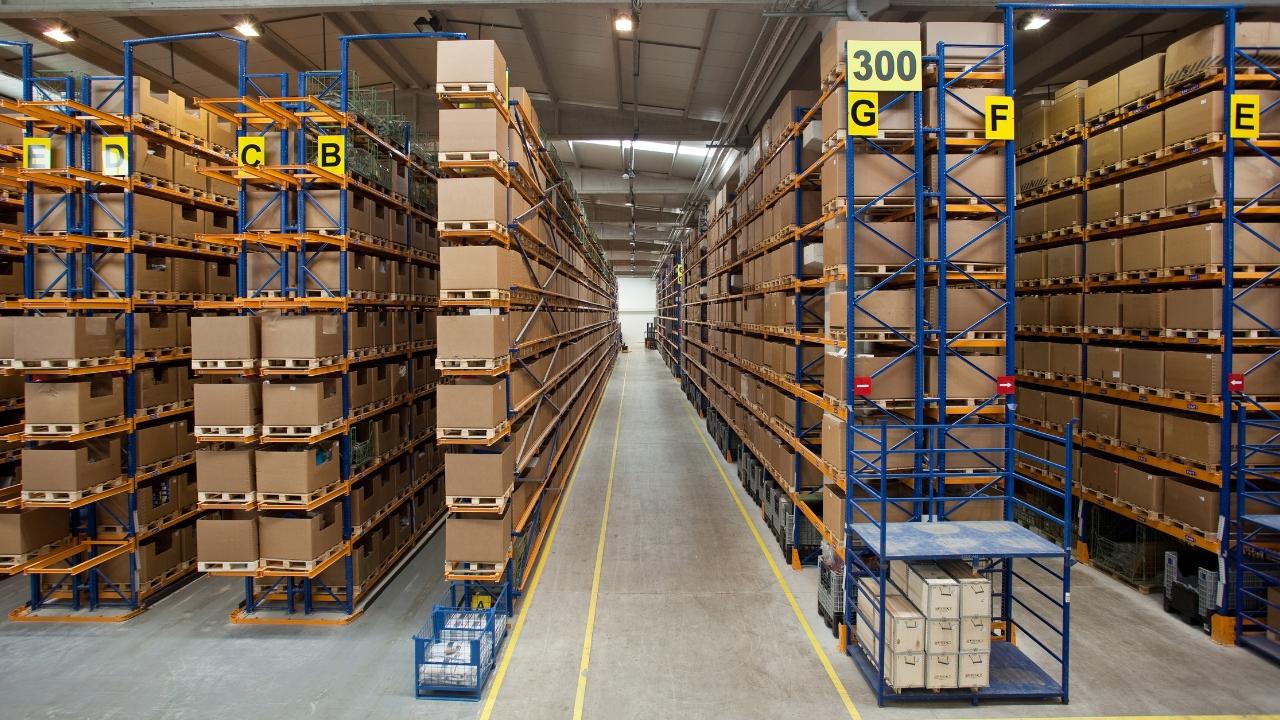
Industrial racking systems are essential for warehouses, factories, distribution centers, and storage facilities that need organized and efficient inventory management. The right racking solution can improve storage capacity, accessibility, workflow, and safety. Master Racks Limited can be considered when businesses are evaluating professional warehouse storage solutions.
What Is an Industrial Racking System?
An industrial racking system is an engineered storage structure designed to hold products, pallets, materials, and inventory in organized locations.
Unlike ordinary shelving, industrial storage systems are designed for demanding warehouse environments. They can be configured according to product dimensions, load requirements, available floor space, ceiling height, handling equipment, and operational needs.
A well-planned racking system allows businesses to make better use of both horizontal and vertical warehouse space.
This can be particularly valuable when inventory levels increase but available floor space remains limited.
Why Racking Systems Matter
Warehouse efficiency depends heavily on how inventory is stored.
Poorly organized storage can make products difficult to locate, increase unnecessary movement, and create congestion.
A properly designed system can help businesses:
-
Increase storage capacity
-
Improve inventory organization
-
Use vertical space efficiently
-
Improve product accessibility
-
Support better warehouse workflows
-
Create clearer storage locations
-
Improve material-handling efficiency
-
Support safer warehouse operations
The ideal system depends on the company's specific requirements.
Understanding Different Types of Industrial Racking
There is no single racking system that works for every warehouse.
Different industries store different types of products, and each facility has its own operational requirements.
Understanding the major types can help warehouse managers make better decisions.
Selective Pallet Racking
Selective pallet racking is one of the most widely used warehouse storage systems.
It provides direct access to individual pallets, making it suitable for facilities that handle a variety of products.
Best Uses of Selective Pallet Racking
Selective systems are often suitable for:
-
General warehouses
-
Distribution centers
-
Retail storage
-
Manufacturing facilities
-
Spare-parts storage
-
Warehouses with many product categories
The main advantage is accessibility.
Employees can generally access individual pallet positions without moving other pallets first.
Benefits
Key benefits include:
-
Direct pallet access
-
Flexible configuration
-
Easy inventory visibility
-
Suitable for different product types
-
Efficient use of vertical space
For warehouses where product variety and accessibility are important, selective pallet racking can be a practical solution.
Drive-In Racking
Drive-in racking is designed for high-density storage.
Forklifts can enter the rack structure to place and retrieve pallets. This design can reduce the amount of aisle space required.
Best Uses
Drive-in racking can be suitable for businesses that store large quantities of similar products.
It can work particularly well when storage density is a higher priority than immediate access to every pallet.
Main Benefits
The system can provide:
-
High storage density
-
Efficient use of warehouse floor space
-
Reduced aisle requirements
-
Suitable bulk storage
However, businesses should carefully consider product rotation and accessibility requirements before selecting this system.
Drive-Through Racking
Drive-through racking is similar to drive-in racking but provides access from both ends.
This configuration can support certain inventory rotation strategies and may be useful where products need to enter and leave the storage area from different directions.
Best Uses
Drive-through systems may be appropriate for:
-
High-volume inventory
-
Bulk storage
-
Warehouses requiring two-sided access
-
Certain first-in, first-out storage applications
The final configuration should be based on the warehouse's operational requirements.
Double Deep Racking
Double deep racking allows pallets to be stored deeper than conventional single-depth configurations.
This can increase storage density by reducing the number of aisles required.
Benefits of Double Deep Storage
Double deep systems may help businesses:
-
Increase pallet storage
-
Reduce aisle requirements
-
Improve floor-space utilization
-
Increase storage density
However, businesses should consider forklift reach and pallet accessibility when evaluating this system.
It is particularly useful where inventory does not need to be accessed individually as frequently.
Cantilever Racking
Cantilever racking is designed for storing long, bulky, or irregularly shaped products.
Traditional pallet racks are not always suitable for these materials.
Cantilever systems use horizontal arms that provide open access for loading and unloading.
Best Uses of Cantilever Racking
This type of system can be useful for:
-
Steel sections
-
Pipes
-
Timber
-
Furniture
-
Long profiles
-
Construction materials
-
Other oversized products
The open design makes it easier to store materials that do not fit standard pallet dimensions.
Mezzanine Racking and Storage
Mezzanine systems use vertical space to create additional usable areas within a warehouse.
Instead of expanding the facility horizontally, businesses can utilize available height.
Depending on the design, a mezzanine structure may support:
-
Storage
-
Picking areas
-
Workstations
-
Offices
-
Production support
-
Additional operational space
When Mezzanine Storage Makes Sense
Mezzanine solutions can be useful when floor space is limited but sufficient vertical capacity is available.
Professional assessment is important because the structure must be appropriate for the intended loads, layout, and warehouse operations.
Heavy-Duty Racking
Heavy-duty racking is designed for warehouses handling substantial loads.
The exact specifications depend on the products, pallet configuration, storage height, and operational requirements.
Common Applications
Heavy-duty storage can be useful in:
-
Manufacturing
-
Automotive facilities
-
Engineering warehouses
-
Industrial distribution
-
Construction-material storage
-
Large-scale logistics operations
Load capacity should always be treated as a critical design consideration.
Businesses should never assume that a rack is suitable simply because it appears structurally strong.
Key Benefits of Industrial Racking Systems
The right racking system can provide several operational benefits.
Better Use of Warehouse Space
One of the biggest advantages is improved use of available space.
Warehouses often have significant unused vertical capacity.
A properly designed system can allow businesses to store inventory at greater heights while maintaining appropriate access and safety considerations.
Vertical Storage Advantages
Using vertical space can:
-
Increase storage capacity
-
Reduce pressure on floor space
-
Improve organization
-
Support future growth
-
Make better use of existing facilities
However, the available building height, equipment capabilities, and structural requirements should be considered before increasing storage height.
Improved Inventory Organization
An organized warehouse makes inventory easier to locate.
Clearly defined rack positions can help employees identify where products belong.
This can reduce unnecessary searching and movement.
Better organization may also support more consistent inventory management.
Faster Picking and Handling
Warehouse productivity depends partly on how easily employees can access products.
The right rack configuration can reduce unnecessary movement between storage locations.
Frequently accessed products can be positioned strategically based on warehouse processes.
This can help create a more efficient flow from receiving to storage and from picking to dispatch.
Improved Warehouse Workflow
Racking should support the overall warehouse process.
A typical workflow may involve:
Receiving → Inspection → Storage → Picking → Packing → Dispatch
If the storage layout interrupts this flow, the warehouse may become inefficient.
A professional rack design should therefore consider the movement of people, forklifts, pallets, and products throughout the facility.
Better Inventory Visibility
A properly organized storage system can make inventory easier to identify.
Warehouse employees can see where specific product categories are located and determine whether particular storage positions are occupied.
This can support better stock management and reduce confusion.
Improved Workplace Organization
A structured warehouse is generally easier to manage than one where products are stored randomly.
Clearly defined storage areas can help create:
-
Better housekeeping
-
Clearer aisles
-
More organized product placement
-
Easier inventory movement
-
More predictable workflows
Good organization can contribute to a more professional warehouse environment.
Safety Considerations for Industrial Racking
Safety should always be a major consideration when planning a storage system.
Racking structures may support substantial loads while forklifts and employees operate nearby.
Important Safety Factors
Businesses should consider:
-
Appropriate load capacity
-
Correct installation
-
Stable configuration
-
Clear aisles
-
Safe forklift operation
-
Proper pallet placement
-
Regular inspections
-
Employee training
-
Prompt attention to damaged components
A storage system should be designed and operated according to appropriate safety requirements.
Regular Rack Inspection
Racking systems should be inspected periodically.
Warehouse operators should look for visible damage, bent components, loose connections, or other concerns.
If a component is damaged, it should receive appropriate attention before the system continues to be used in an unsafe condition.
How to Choose the Right Racking System
Choosing a storage system should begin with an assessment of the warehouse.
Consider the Products
First, identify what will be stored.
Consider:
-
Product weight
-
Product dimensions
-
Packaging
-
Shape
-
Pallet type
-
Handling requirements
Long products may require cantilever storage, while palletized goods may be better suited to pallet racking.
Consider Storage Density
Ask whether the business prioritizes:
-
Maximum storage density
-
Direct access
-
Fast picking
-
Product rotation
-
Flexibility
These priorities can influence the appropriate system.
Consider Warehouse Dimensions
Measure available floor space and ceiling height.
The layout should also account for columns, doors, emergency routes, loading areas, and other physical features.
Consider Material-Handling Equipment
Forklifts and other handling equipment should be considered during rack design.
Turning space, lifting height, aisle requirements, and pallet dimensions can all affect the layout.
The Role of Professional Racking Design
Selecting racks should not be based only on appearance or storage capacity.
A complete design should consider the relationship between the rack system, building, products, equipment, employees, and workflow.
A professional storage provider can help evaluate:
-
Warehouse dimensions
-
Product characteristics
-
Load requirements
-
Storage density
-
Accessibility
-
Forklift operations
-
Workflow
-
Future expansion
This approach can help businesses develop a storage solution that supports their broader operational goals.
The Role of Master Racks Limited
Businesses looking for professional warehouse storage solutions may consider Master Racks Limited when evaluating racking options.
Every warehouse has different requirements.
A distribution center may need selective pallet access, while a manufacturing facility may need heavy-duty storage. A business storing long materials may benefit from cantilever systems.
The right solution should therefore be based on the actual operational requirements of the facility.
A professional provider can help businesses evaluate rack types, layouts, capacity requirements, workflow, and potential future expansion.
Industrial Racking for Growing Businesses
As a company grows, its inventory usually becomes more complex.
Additional products, higher stock volumes, and new customers can put pressure on existing storage capacity.
A well-designed industrial racking system can help businesses make better use of existing warehouse space.
Planning for Future Growth
Businesses should not only consider today's inventory.
They should also think about possible future changes.
A flexible system may make it easier to add storage positions or modify the layout when requirements change.
Any modification should be properly assessed to ensure that the system remains appropriate for its intended use.
Common Racking Mistakes to Avoid
Businesses can face problems when storage systems are selected or installed without sufficient planning.
Choosing a Rack Without Assessing Load Requirements
Every storage system should be appropriate for its intended load.
Overloading racks can create serious safety concerns.
Focusing Only on Maximum Capacity
More storage is not always better.
If employees cannot access products efficiently, high-density storage may reduce overall productivity.
Ignoring Workflow
Racks should support the movement of inventory through the warehouse.
A poorly planned layout can create unnecessary travel and congestion.
Forgetting Future Requirements
Warehouse needs can change.
Businesses should consider whether the system can adapt to future inventory growth or operational changes.
Neglecting Maintenance
Even well-designed systems require regular inspection and maintenance.
Damaged components should be identified and addressed promptly.
Maintenance and Long-Term Performance
Installing a racking system is only the beginning.
Long-term performance depends on appropriate use, regular inspection, and maintenance.
Warehouse operators should monitor:
-
Structural components
-
Connections
-
Rack frames
-
Beams
-
Load conditions
-
Pallet placement
-
Visible damage
Employees should also be trained to report damage and unsafe conditions.
Regular attention can help support the long-term reliability of warehouse storage systems.
How Racking Supports Warehouse Efficiency
The real value of a storage system is measured by how well it supports warehouse operations.
A good system can help reduce wasted space, improve accessibility, support inventory organization, and create more predictable workflows.
Businesses should therefore evaluate racking as part of the complete warehouse strategy rather than as an isolated piece of equipment.
Future Trends in Warehouse Racking
Warehouse operations are becoming increasingly connected with technology.
Modern facilities may integrate storage systems with:
-
Warehouse management software
-
Barcode scanning
-
Automated handling
-
Inventory tracking
-
Robotics
-
Automated storage systems
-
Data-driven warehouse planning
As automation becomes more common, racking systems may need to work alongside advanced handling equipment.
Businesses planning new facilities should consider whether their storage infrastructure can support future operational changes.
Why the Right Racking System Matters
There is no universal best rack.
The appropriate choice depends on the products, warehouse, handling equipment, workflow, storage strategy, and business objectives.
A system that works well for one facility may be unsuitable for another.
This is why businesses should assess their requirements carefully before making a decision.
Choosing a Reliable Storage Partner
Selecting a suitable supplier is an important part of any warehouse storage project.
Businesses should consider:
Technical Expertise
The provider should understand warehouse storage requirements and be able to recommend solutions based on the facility.
Design Capability
A capable provider should consider the complete warehouse layout rather than focusing only on individual rack components.
Quality and Suitability
The storage equipment should be appropriate for the intended application and load requirements.
Installation Support
Correct installation is important for system performance and safety.
Ongoing Support
Businesses may also benefit from inspection, maintenance, modification, or expansion support as their needs change.
A reliable storage partner can make the entire warehouse planning process more effective.
Why Master Racks Limited Can Be Considered
Master Racks Limited can be considered by businesses evaluating warehouse storage and racking solutions.
The company's requirements should remain the starting point of any storage project.
Businesses should assess their product types, load requirements, warehouse dimensions, accessibility needs, handling equipment, workflow, and future expansion plans.
This helps ensure that the selected system is aligned with actual operational requirements.
Conclusion
Industrial racking systems provide businesses with practical ways to organize inventory, improve warehouse capacity, use vertical space, and support efficient material handling. Different systems, including selective pallet, drive-in, drive-through, double deep, cantilever, mezzanine, and heavy-duty racking, serve different storage needs.
The best solution depends on the products, load requirements, warehouse layout, equipment, workflow, safety considerations, and future growth plans. Master Racks Limited can be considered when businesses are evaluating professional storage solutions designed around their operational needs.
With careful planning, appropriate design, regular inspection, and proper use, a modern racking system can become an important part of a more organized, productive, and adaptable warehouse.
Bub
Do?

Categorias
Leia mais
The long Early Access journey for Path of Exile 2 Currency is approaching its next major chapter. Grinding Gear Games has announced that Path of Exile 2 Version 1.0 will officially launch on December 11, following the game's extended Early Access period. The announcement was made during the Gamescom 2026 Opening Night Live livestream. The full release will be available on PC through Steam...

In Chapter 2 of Black Myth: Wukong, you’ll find a yellow-robed pig slumped near a cliff edge, completely drunk and demanding more alcohol. He won’t cooperate until you give him a special item: the Sobering Stone. This item is sold by a nearby merchant locked behind its own quest, but completing this entire chain unlocks a valuable secret zone and unique rewards. Finding the Drunk...

Yu Zhong is one of the most oppressive EXP-laners in Mobile Legends, thanks to his sustain-heavy passive Cursing Touch and high burst from Dragon Tail and Soul Grip. His Furious Drive and Black Dragon Form give him multiple gap-closers, crowd control, and one of the best initiation ultimates in the game. To shut him down, you need heroes who can dodge his skills, lock him down, and—most...
Introduction: The Prestige of Ligue 1 POTM in FC 26 Every month, fans have the opportunity to support their favorite Ligue 1 stars by casting their votes for the Player of the Month. The standout footballer who earns the most votes will be recognized for their exceptional performances. Winners receive exclusive FC 26 Player of the Month (POTM) items as a reward for their achievements. Don't...
The ongoing evolution of Dune: Awakening's endgame content continues to shift the game's focus away from its initial PvP-heavy design. At launch, players exploring the vast deep desert faced intense conflicts, as only a small fragment—roughly 10%—was designated as PvE-only, with the majority being contested zones ripe for combat. A subsequent hotfix on June 26 balanced this by...
