Crypto.
 Sobre
Sobre
 Passport
 Conference call
 send money
 Termos
 Privacidade
 Sierra market
One Bad Storm Can Wipe Out Your Home Build. Here's How Homeowners Protect Themselves
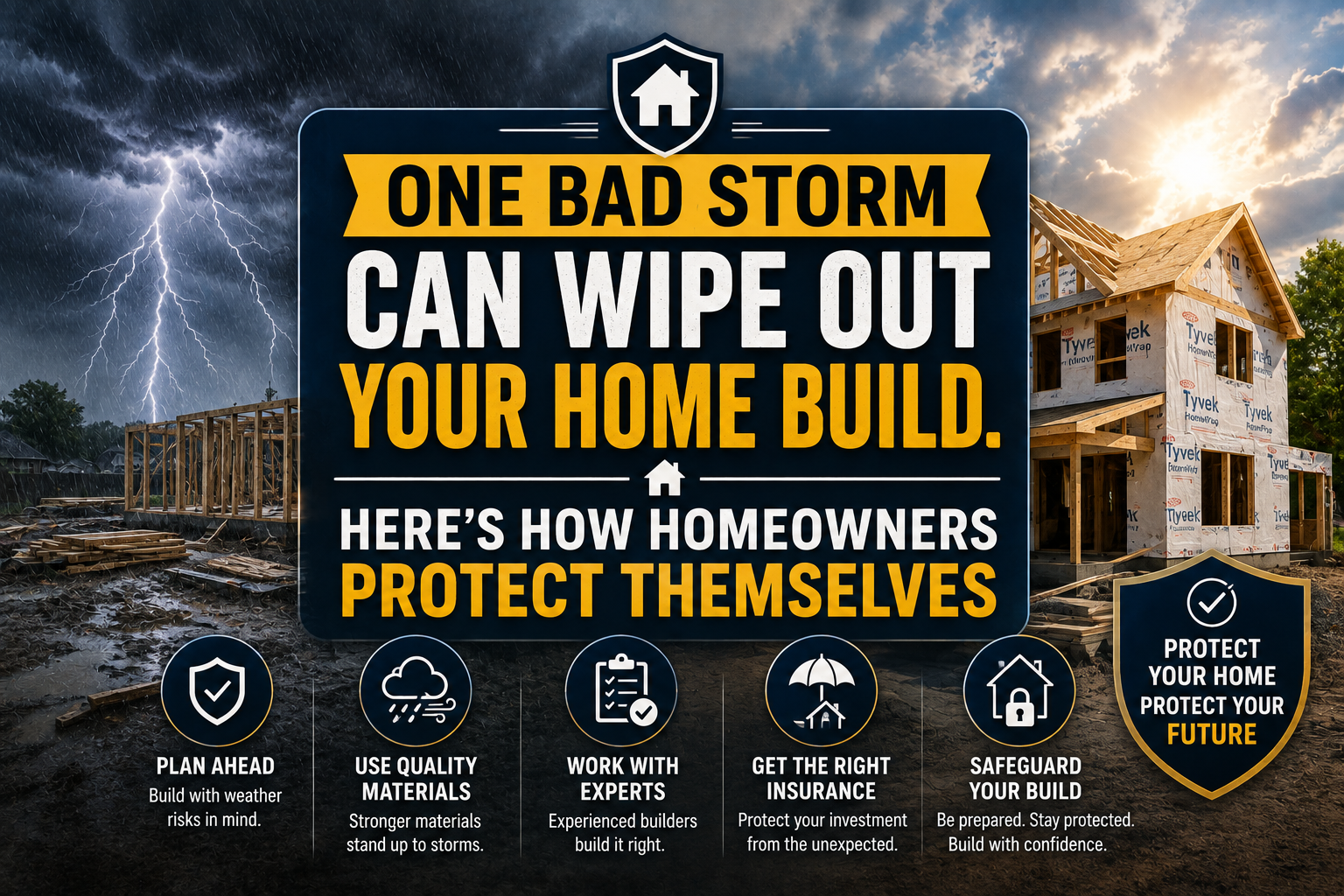
Most people planning a new home or a major renovation spend weeks thinking about floor plans, finishes, and contractor quotes. Very few spend the same energy thinking about what happens if a storm tears through the site the week before drywall goes up, or a subcontractor's tool gets stolen off the property overnight.
That gap in planning is where a lot of homeowners get burned. Not because they made a bad decision, but because they never made a decision at all. Nobody brought it up until it was too late to matter.
Why This Gets Overlooked So Often
Construction has a lot of moving pieces, and insurance rarely feels urgent compared to picking cabinet hardware or finalizing a contract with a builder. It's not that homeowners don't care about protecting their investment, it's that the topic just doesn't come up naturally until something goes wrong.
The "It Won't Happen to Me" Assumption
Most builds go fine. That's exactly why people skip this step. Nothing bad has happened to them before, so there's no obvious reason to think it will this time. But a half-built structure is genuinely more vulnerable than a finished home. Open framing, exposed materials, and a site full of expensive tools and equipment make an active build site an easy target for theft and a magnet for weather damage.
The Assumption That the Contractor Handles It
Some homeowners assume their builder's insurance automatically covers everything on-site, including the homeowner's own financial exposure. That's not always accurate. Depending on the contract, there can be real gaps between what a contractor's policy covers and what actually protects the homeowner if something goes wrong mid-project.
The Cost Hesitation
Nobody wants to add another line item to an already expensive project. But weighed against the cost of rebuilding a section of framing after a fire, or covering a lawsuit from an injured subcontractor, the premium usually looks small in comparison.
What Actually Needs Protecting During a Build
A construction site isn't just a pile of lumber, it's an accumulation of money sitting exposed to weather, theft, and human error until the final walkthrough.
The Structure Itself
Everything from the foundation up represents cash that's already been spent. A fire, severe storm, or act of vandalism partway through construction can set a project back financially in a way that's hard to recover from without the right coverage in place.
Materials and Equipment On-Site
Lumber, fixtures, appliances waiting for installation, and contractor tools left on-site overnight are all vulnerable. Job site theft is more common than most first-time homeowners expect, especially on projects in less visible or rural locations.
Third-Party Injuries
A construction site draws visitors, inspectors, delivery drivers, neighbors who wander over out of curiosity. If someone gets hurt on the property, liability can fall in unexpected directions depending on how the project is set up.
Worker Injuries
Even on smaller residential jobs, injuries happen. Falls, tool accidents, and overexertion are common enough that coverage for medical costs and lost wages isn't optional in most states.
Understanding the Policy Landscape
This is usually where things get confusing, because "construction insurance" isn't one single product. It's a collection of different policy types, each covering a different kind of risk, and figuring out which ones actually apply to a given project takes some homework.
For homeowners who want a clear breakdown of what each type of coverage actually protects, how much it typically costs, and what steps to take before signing a policy, this guide on residential construction insurance walks through builder's risk, general liability, workers' compensation, and professional liability coverage in plain terms, along with what's usually excluded.
Questions Worth Asking Before You Sign Anything
-
Does the coverage apply specifically during the construction phase, or does it kick in only once the home is finished?
-
What perils are excluded flooding and earthquakes are common gaps that surprise people later.
-
Does the policy cover materials and equipment stored on-site, or only the structure itself?
-
Is the coverage amount based on the total project cost, or a flat figure that might fall short?
-
Who is responsible for filing a claim if something happens to the homeowner, the contractor, or both?
Getting straight answers to these before construction starts avoids the scramble of trying to figure it out after something's already gone wrong.
Final Thoughts
A home build is one of the largest financial commitments most people will ever make, and it's exposed to risk in a way that a finished, insured home simply isn't. The homeowners who come out of a build without a costly surprise are usually the ones who treated insurance as part of the planning process, not an afterthought tacked on once the framing was already up.
It doesn't need to be complicated. It just needs to happen before the first shovel hits the ground, not after the first bad storm rolls through.
Bub
Do?

Categorias
Leia Mais
Four African American veterans revisit Vietnam in Spike Lee’s latest project, embarking on a journey to recover their fallen squad leader’s remains and uncover hidden treasure. As they navigate the treacherous landscape, both human and natural threats emerge, exposing the enduring scars left by the Vietnam War’s brutality. The film is directed by acclaimed filmmaker Spike...

As per MRFR analysis, the Assured PNT Market reached an estimated USD 0.91 billion in 2025 and is projected to grow from USD 1.17 billion in 2026 to USD 8.52 billion by 2035, registering a CAGR of 28.4% during the forecast period (2026–2035). The rapid expansion of secure navigation technologies reflects the increasing need for uninterrupted positioning, navigation, and timing services in...

The Braves have agreed to a minor league deal with free agent righty , per MLBTRs Tim Dierkes. Hell be in major league camp as a non-roster invitee in spring training. Weems is represented by OConnell Sports Management. Weems, who just turned 32, has spent the past three seasons with the Nationals, for whom hes totaled 136 innings with a 5.03 ERA, 22.9% strikeout rate and 10.8% walk rate out of...
The Musical Tapestry of "Cursed Child": Behind the Scenes The enchanting soundscape of "Harry Potter and the Cursed Child" emerged from a unique collaboration between award-winning musician Imogen Heap and the production's creative team. From the beginning, director John Tiffany and movement director Steven Hoggett envisioned Heap's distinctive sound as the perfect accompaniment to their...
Completing a dissertation is one of the most challenging academic tasks a university student will face. Whether studying at undergraduate, postgraduate, or doctoral level, students must demonstrate extensive research skills, critical thinking, academic writing ability, and subject knowledge. However, before the dissertation itself can begin, students are required to prepare a strong proposal...