


 Crypto.
 Environ
 Passport
 Conference call
 send money
 Conditions générale de vente
 Confidentialité
 Sierra market
MPO Connector Guide: Benefits, Types, Applications, and Selection Tips
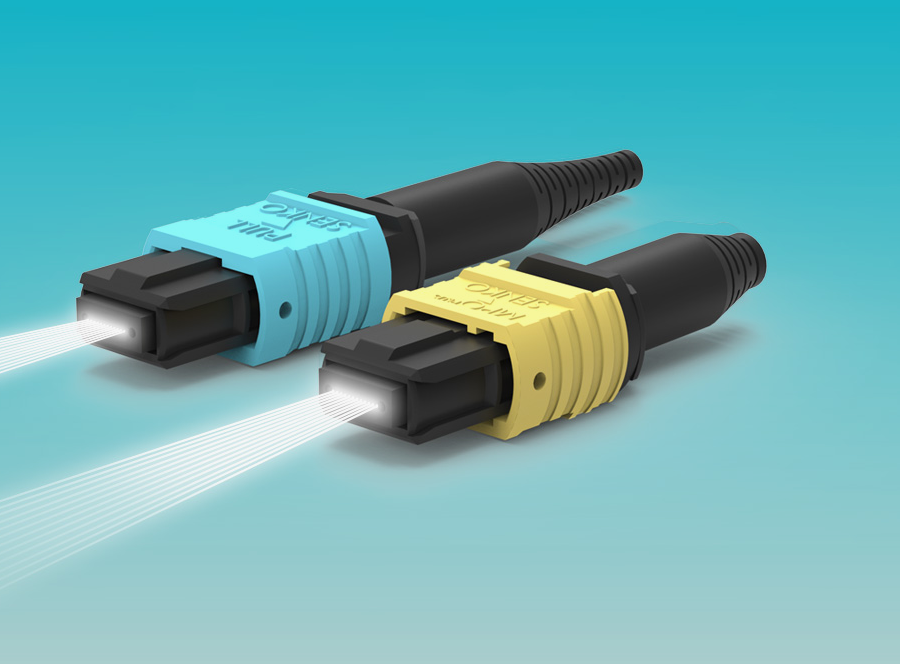
As data centers, enterprise networks, and telecommunications systems continue to demand greater bandwidth, network designers need connectivity solutions that can accommodate more fiber connections within limited physical space. An MPO connector is designed specifically for this type of high-density environment. Unlike conventional duplex fiber connectors that typically handle one fiber pair at a time, MPO technology can terminate multiple optical fibers within a single connector body. This multi-fiber approach allows network operators to simplify cabling arrangements, reduce congestion, and support high-capacity applications where efficient fiber management is essential.
The growing adoption of cloud computing, virtualization, artificial intelligence workloads, high-speed Ethernet, and large-scale storage systems has increased the pressure on network infrastructure. In these environments, every rack unit, cable pathway, and connection point can affect operational efficiency. An MPO connector provides a practical method for consolidating multiple fiber connections into a compact interface while supporting structured cabling designs. Understanding its construction, configurations, polarity, performance considerations, and installation requirements can help organizations make better decisions when planning or upgrading high-density optical networks.
What Is an MPO Connector?
MPO, short for Multi-fiber Push On, is a type of fiber-optic connector designed to connect multiple optical fibers through one interface. An MPO connector contains a precisely aligned array of fiber positions, allowing several fibers to be connected simultaneously rather than requiring individual connectors for every strand. The connector uses a push-pull coupling mechanism and incorporates alignment features that help position the fibers correctly during mating. MPO assemblies are available in different fiber counts and configurations, making them adaptable to various network architectures. They are particularly useful in structured cabling systems where pre-terminated assemblies can simplify installation and reduce the amount of field termination required. Because multiple fibers are handled as one connectorized unit, MPO technology can contribute to cleaner cable management and faster deployment in facilities where large numbers of optical connections must be installed within a restricted space.
Why MPO Connectivity Matters in High-Density Networks
The primary advantage of MPO connectivity is its ability to increase connection density without requiring a corresponding increase in rack and pathway space. In a large data center, thousands of individual fiber connections can quickly create complex cable-management challenges. Multi-fiber connectivity helps consolidate these connections and can make structured cabling easier to organize. Pre-terminated MPO trunks can also reduce installation time because technicians do not necessarily need to terminate every fiber individually at the installation site. This can improve consistency when assemblies are manufactured and tested under controlled conditions before deployment. MPO systems are particularly valuable for high-speed networking because modern optical architectures may use multiple fibers to transmit and receive data or to support parallel transmission. As network speeds increase, the ability to manage multiple optical channels efficiently becomes increasingly important for infrastructure planners.
MPO Connector Types and Fiber Configurations
MPO connectors are available in several configurations, and selecting the appropriate type requires careful attention to the network design. Different versions can contain varying numbers of fiber positions, while connector bodies may be designed for specific male or female configurations. A connector with guide pins is commonly used on one side of a connection, while the corresponding connector is designed to receive those pins for precise alignment. Fiber arrangement and polarity are equally important because the transmitting and receiving positions must correspond correctly between connected components. MPO assemblies can also differ according to the type of optical fiber they use, including single-mode and multimode variants. The chosen configuration should therefore be based on the equipment, transmission distance, application, and optical architecture rather than simply selecting a connector with the highest available fiber count.
Understanding MPO Polarity
Polarity is one of the most important technical considerations when deploying MPO systems. In a fiber network, signals must travel from the correct transmitting position to the corresponding receiving position. Because MPO connectors contain multiple fibers in a fixed physical arrangement, the relationship between positions must be deliberately managed across trunks, modules, adapters, and transceivers. Polarity methods provide different ways of arranging and mapping the fiber positions so that the correct transmit and receive paths are maintained. A mismatch can result in links that appear physically connected but fail to establish communication. For this reason, network engineers should document the selected polarity method before installation and ensure that every component in the optical path follows the same design. Careful polarity planning is particularly important in large deployments because correcting connection errors after extensive cabling has been installed can consume significant time and labor.
MPO Connector Applications
MPO technology is widely suited to environments where high fiber density and efficient deployment are important. Data centers are a major application because large numbers of servers, switches, storage systems, and optical transceivers can require extensive fiber connectivity within compact spaces. MPO assemblies can also be used in structured enterprise networks, telecommunications facilities, centralized cabling systems, and other installations that benefit from pre-terminated multi-fiber connections. High-speed Ethernet applications are another important area because modern network architectures increasingly rely on parallel optical channels and multi-fiber interfaces. In addition, MPO-based systems can provide a useful migration path when organizations need to upgrade network capacity without completely redesigning their physical cabling infrastructure. The exact application depends on the optical equipment and transmission architecture, so compatibility should always be verified before deployment.
Installation and Cleaning Best Practices
Proper installation practices are essential for maintaining optical performance. Fiber connectors are sensitive to contamination, and even small particles on an end face can increase insertion loss or create connection problems. MPO connectors require particular care because a single connector can contain many optical interfaces, meaning contamination can potentially affect multiple channels at once. Technicians should use appropriate inspection and cleaning procedures before mating connectors and should avoid touching fiber end faces. Cable routing also requires attention because excessive pulling force, crushing, or bending beyond the manufacturer's specified limits can damage the assembly or reduce optical performance. MPO connectors should be handled carefully during insertion and removal, and unused ports should remain properly protected from dust and other contaminants. A disciplined installation process can reduce troubleshooting requirements and help maintain consistent performance across a large optical network.
How to Choose the Right MPO Solution
Selecting an MPO system should begin with the requirements of the network rather than the connector itself. Buyers should identify the required fiber count, fiber type, transmission speed, connector configuration, polarity arrangement, cable length, and equipment interface. The optical characteristics of the assembly should also be appropriate for the intended application, with attention given to insertion loss and return loss requirements. Physical considerations such as cable diameter, bend radius, routing space, and connector accessibility can influence how easily the system can be installed and maintained. Organizations should also consider whether the cabling infrastructure needs to support future upgrades. A well-planned MPO deployment can provide a structured foundation for expansion, but only when current components are selected with compatibility and migration requirements in mind. Documentation is equally valuable because clearly labeled assemblies and connection maps make future changes much easier to manage.
The Role of MPO Technology in Future Network Infrastructure
As network traffic continues to grow, optical infrastructure must deliver higher capacity without creating excessive physical complexity. MPO technology is well positioned for environments where multiple optical channels need to be organized efficiently. Its compact form factor and multi-fiber design can support structured approaches to high-density connectivity, particularly when paired with modular cassettes, trunks, and modern optical transceivers. Future network upgrades are likely to place even greater emphasis on efficient space utilization, simplified deployment, and flexible migration between transmission technologies. However, successful implementation will continue to depend on careful optical engineering, accurate polarity management, proper cleaning, and component compatibility. Rather than viewing MPO as simply another connector type, network planners can regard it as part of a broader structured cabling strategy designed to make high-capacity optical infrastructure easier to deploy, maintain, and scale.
Conclusion
An MPO connector provides an efficient approach to managing multiple optical fibers within a compact connection, making it particularly valuable for high-density data centers, telecommunications facilities, and modern enterprise networks. Its benefits extend beyond connection density, supporting structured deployment, simplified cable management, and efficient preparation for high-capacity applications. At the same time, successful MPO implementation requires careful consideration of fiber type, connector configuration, polarity, optical performance, cleaning, routing, and equipment compatibility. Organizations planning a new installation or network upgrade should evaluate these factors as part of a complete cabling strategy rather than treating the connector as an isolated component. With appropriate planning and installation practices, MPO connectivity can help create a cleaner, more scalable, and more manageable foundation for demanding optical networks.
Bub
Do?

Catégories
Lire la suite
The protection of personal data on social platforms is a rising priority for many users. Twitter has now implemented a persistent HTTPS option, enhancing account security directly within its settings menu. While SSL encryption was already default for logins and official iOS applications, this new feature ensures all browsing sessions are secured. Previously, accessing a secure connection...

A highly anticipated adaptation of Harlan Coben's bestselling novel is underway, with filming set to commence in the UK starting March 4th. The series, titled "The Stranger," is a gripping eight-part drama produced by Red Production Company, a StudioCanal affiliate, in collaboration with Netflix. Leading the cast is Siobhan Finneran, renowned for her roles in "Happy Valley" and "Downton...
Cryptical Path presents a deceptive title for a game that defies typical roguelite expectations. While the gameplay involves navigating a maze of interconnected 2D corridors that branch unpredictably, the route itself is surprisingly straightforward. Instead of deciphering a complex or mysterious trail, players often find themselves constructing their own path with deliberate intent. Starting...
The global Mobile App Development Market growth is accelerating rapidly as businesses across industries continue investing in mobile-first digital transformation strategies. Mobile applications have become essential for customer engagement, e-commerce, digital banking, healthcare access, entertainment streaming, education platforms, and enterprise productivity solutions. Organizations are...
There’s an almost pleading line near the start of the Consensus Audit Guidelines draft that reveals how its authors hope to grab attention: address the reader as a CISO, CIO or IG and maybe they won’t look away.\n That tactic speaks to a bigger problem in information security: people often work harder to sidestep rules than to follow them. The CAG is an effort to make sensible...
