


 Crypto.
 Σχετικά
 Passport
 Conference call
 send money
 Όρους
Όρους
 Ιδιωτικότητα
 Sierra market
MT Ferrule Connector Guide: Design, Benefits, Applications, and Uses
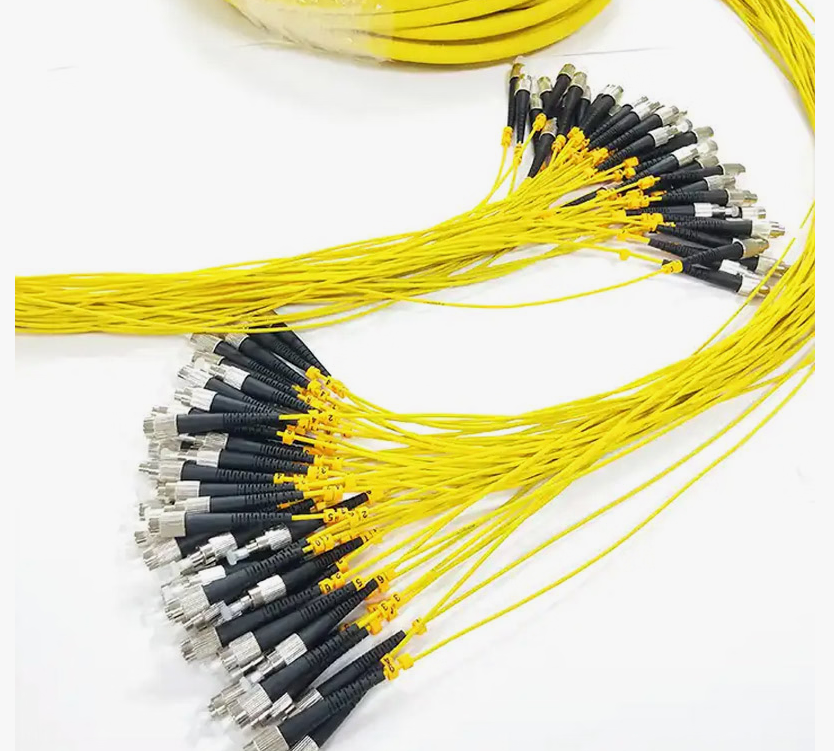
Modern optical networks increasingly require compact connectivity components capable of handling multiple fibers while maintaining precise optical alignment. The MT ferrule connector is an important component in this environment because it provides a structured way to position several optical fibers within a single ferrule. Unlike conventional single-fiber ferrules, an MT ferrule uses multiple precision-formed fiber holes arranged in a controlled pitch. This design enables several fibers to be aligned simultaneously, making the technology particularly useful for high-density optical connectivity, parallel transmission systems, and multifiber connector assemblies.
The importance of the MT ferrule connector has grown alongside the expansion of data centers, telecommunications infrastructure, high-speed computing, and other bandwidth-intensive applications. As networks require greater fiber counts without unlimited physical space, precise multifiber alignment becomes increasingly valuable. MT ferrules form the alignment foundation of several multifiber connector designs, helping manufacturers create compact assemblies that can connect multiple optical channels efficiently. Understanding their construction, alignment mechanism, manufacturing characteristics, and application requirements is essential when evaluating multifiber connectivity for modern network infrastructure.
What Is an MT Ferrule Connector?
An MT ferrule is a precision component designed to hold and align multiple optical fibers in a controlled arrangement. The abbreviation MT generally refers to Mechanical Transfer, reflecting the mechanical alignment principle used to position fibers accurately. Instead of relying on a single central fiber hole, an MT ferrule contains an array of precisely manufactured holes that accommodate multiple fibers. Two guide-pin holes are commonly incorporated into the ferrule design to support accurate alignment between mating components. The dimensional accuracy of these features is critical because even small alignment errors can influence optical coupling efficiency. MT ferrules may be manufactured using specialized materials and precision molding techniques that allow manufacturers to maintain consistent fiber-hole geometry across large production volumes. Their compact multi-fiber structure makes them particularly suitable for applications where numerous optical paths need to be connected within limited physical space.
How MT Ferrules Achieve Fiber Alignment
Precise alignment is fundamental to the performance of any multifiber optical connection. An MT ferrule achieves this through a combination of accurately positioned fiber holes and guide-pin mechanisms. During mating, guide pins help bring the corresponding ferrules into the correct orientation, while the fiber holes maintain the intended spacing between individual optical channels. The quality of this alignment depends on several factors, including ferrule dimensional tolerances, hole geometry, guide-pin accuracy, fiber positioning, and the condition of the mating surfaces. Because multiple fibers are aligned simultaneously, manufacturing precision becomes especially important. A small positional deviation affecting one area of the ferrule can influence coupling performance across individual channels. For this reason, MT ferrules are produced according to demanding dimensional requirements and are commonly inspected during manufacturing to ensure that the finished component can provide reliable multifiber alignment.
Key Applications of MT Ferrule Technology
MT ferrules are widely associated with multifiber optical assemblies used in high-density network environments. They are particularly relevant to data center infrastructure, where large quantities of optical connections must be accommodated efficiently. Multifiber assemblies can simplify the organization of numerous channels and support structured cabling approaches for high-speed network equipment. Telecommunications systems also use multifiber connectivity where multiple optical paths need to be managed within compact assemblies. MT-based technology can further support applications involving parallel optical transmission, where several fibers work together to transmit or receive data. Beyond conventional communication networks, multifiber alignment components can be relevant to specialized optical equipment, testing systems, and other applications requiring repeatable positioning of multiple fibers. The exact ferrule configuration depends on the intended application, fiber count, optical requirements, and connector architecture.
Benefits of Using MT Ferrules in Optical Networks
One of the most significant advantages of MT ferrules is their ability to support multiple fibers within a relatively compact component. This can help reduce the physical complexity associated with large fiber counts and make dense optical assemblies easier to integrate into network equipment. Their standardized alignment concept also enables manufacturers to produce compatible multifiber assemblies for different connectivity requirements. Another benefit is manufacturing consistency. Precision molding and controlled production processes can provide repeatable fiber-hole positioning, which is essential when multiple ferrules must mate accurately. MT ferrules can also contribute to more efficient connectorization because several optical channels can be handled as one assembly rather than requiring separate alignment structures for each fiber. These characteristics make the technology particularly useful for applications where space efficiency, fiber density, and repeatable optical alignment are important considerations.
MT Ferrule Manufacturing and Quality Considerations
The performance of an MT ferrule depends heavily on manufacturing precision. The fiber holes must maintain accurate diameter, pitch, and positional tolerances, while the guide-pin holes must provide reliable mechanical alignment between mating components. Surface quality is another important factor because imperfections can affect how accurately two ferrules come together. Material selection also matters because the ferrule must maintain dimensional stability under the environmental conditions associated with its intended application. Manufacturers may evaluate parameters such as hole position, end-face geometry, guide-pin alignment, and overall dimensional consistency during quality control. For buyers and system designers, it is therefore important to consider the manufacturing quality of the ferrule rather than focusing solely on its nominal fiber count. Consistent production tolerances can contribute significantly to reliable multifiber performance across repeated connections.
Choosing the Right MT Ferrule Configuration
Selecting an MT ferrule requires an understanding of the complete optical assembly in which it will be used. Important considerations include the number of fibers, fiber type, fiber spacing, guide-pin configuration, ferrule dimensions, polishing requirements, and compatibility with the intended connector system. The application may also determine whether a particular ferrule material or mechanical design is appropriate. Network designers should consider optical performance requirements alongside physical characteristics, especially when the ferrule will be incorporated into a high-speed or high-density system. Compatibility between the ferrule, optical fibers, connector housing, guide pins, and mating components is essential because a mismatch can compromise alignment or make assembly impractical. Careful specification at the beginning of a project can reduce compatibility problems and help manufacturers produce assemblies that meet the required mechanical and optical characteristics.
Maintenance and Handling of MT-Based Assemblies
Proper handling is essential for preserving the alignment performance of multifiber assemblies. The end face of an MT ferrule must remain clean because contamination can interfere with the physical interface between mating components and potentially affect multiple optical channels. Connectors should therefore be protected when not in use, and appropriate inspection and cleaning procedures should be followed before mating. Mechanical stress should also be minimized during installation because excessive force, improper cable routing, or damage to guide components can affect alignment. Technicians should use suitable handling practices and avoid unnecessary contact with precision surfaces. Regular inspection is particularly useful in high-density environments where connectors may be repeatedly connected and disconnected. Maintaining clean interfaces and protecting mechanical alignment features can help preserve consistent performance throughout the service life of an MT-based optical assembly.
The Future Role of MT Ferrule Technology
As optical networks continue moving toward higher bandwidth and greater connection density, multifiber alignment technology will remain an important part of network infrastructure. Higher-speed transmission architectures increasingly require compact interfaces capable of supporting multiple optical channels, creating continued demand for precise ferrule designs. MT technology provides a practical mechanical foundation for these applications because it combines multiple fiber positions with controlled alignment in a relatively small component. Future developments may focus on tighter manufacturing tolerances, improved materials, higher fiber counts, enhanced assembly processes, and greater compatibility with emerging optical architectures. The continuing evolution of data centers, high-performance computing, telecommunications, and other optical applications is likely to reinforce the importance of reliable multifiber alignment as network designers seek greater capacity without proportionally increasing physical infrastructure.
Conclusion
The MT ferrule connector is a foundational technology for precise multifiber optical connectivity, combining multiple fiber positions with mechanical alignment features in a compact component. Its role extends across data centers, telecommunications, high-speed optical systems, and specialized connectivity applications where accurate fiber positioning is essential. Performance depends not only on the ferrule's basic design but also on manufacturing tolerances, material stability, guide-pin accuracy, fiber placement, end-face quality, and proper handling. When selecting an MT-based solution, network designers and manufacturers should evaluate the complete assembly and ensure that its mechanical and optical characteristics match the intended application. With careful specification, manufacturing, installation, and maintenance, MT ferrule technology can provide a dependable foundation for increasingly dense and sophisticated optical networks.
Bub
Do?

Κατηγορίες
Διαβάζω περισσότερα
The opening week of Modern Warfare 4 feels different. Nobody has a perfect routine yet, and even strong players are still guessing which routes are actually safe. That's why early matches are worth treating like practice, not a race for clips. A few sessions in CoD MW4 Bot Lobbies can help you get your hands warm, test sensitivity, and stop panicking when a fight gets messy. Map Knowledge Wins...

Funcom, the developer behind Dune Awakening, has recently shared a comprehensive roadmap outlining upcoming enhancements and overarching plans for the MMO. The announcement opens with a candid apology acknowledging past communication shortcomings, attributing the issues partly to developers being on mandated vacations—an unavoidable aspect of their Norwegian work policies. This...

New TV Series in Napa Valley A fresh romantic comedy series is brewing in California's wine country, courtesy of two heavyweight television producers. The creative minds behind some of TV's most beloved characters are now turning their attention to the vineyards of Napa Valley. The upcoming show centers on a gifted winemaker whose relationship with her craft borders on destructive. After time...
New Character and Rewards The Annihilation Gang makes its grand entrance with a new playable face. While Duke Inferno's role took a different narrative path, the spotlight now shines on Constance, also known as Dahlia. She is poised to become the first representative from this faction to join our roster of trailblazers. For those eager to witness her official debut and learn her capabilities,...
Get ready for an exciting challenge as Scopely launches the Moon Mine tournament in Monopoly GO. This event kicks off on May 20 and lasts only for a single day. Participants can look forward to a variety of valuable rewards throughout the competition. Continue reading to discover the key milestones and the prizes you can earn. To excel in the Moon Mine tournament, focus on hitting the...
