


 Crypto.

 Passport
 Conference call
 send money
 الشروط
 الخصوصية
 Sierra market
Master Sudoku Skills Through Logic Challenges and Daily Practice
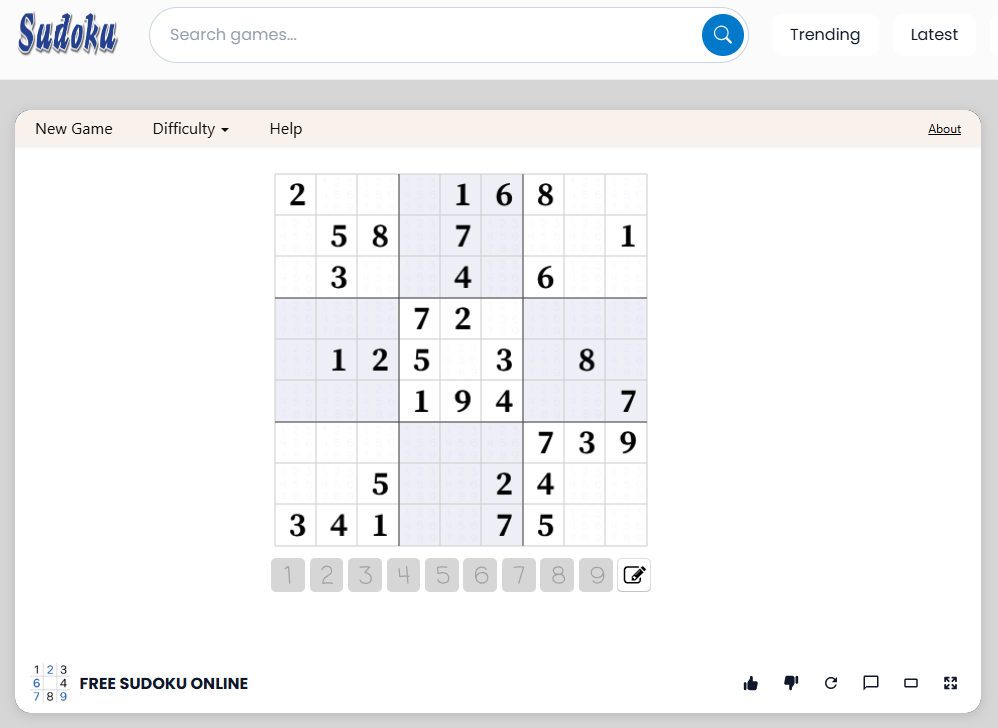
Sudoku is one of the most popular number puzzles in the world. Millions of people enjoy Sudoku every day because it combines entertainment, concentration, and problem-solving skills. Unlike many games that depend on luck, Sudoku rewards logical thinking and careful analysis. Every puzzle presents a unique challenge that encourages the brain to work efficiently while providing a satisfying sense of achievement.
The popularity of Sudoku continues to grow across different age groups. Students use Sudoku to improve concentration, adults play it as a relaxing mental exercise, and seniors enjoy it as a way to keep cognitive abilities active. Whether played on paper, on a mobile device, or through an online platform, Sudoku remains a timeless puzzle that offers both fun and educational value.
Understanding the Basics of Sudoku
Sudoku is a logic-based number puzzle played on a grid consisting of nine rows and nine columns. The grid is divided into nine smaller sections, each containing three rows and three columns. The objective is simple: fill every empty space with a number from one to nine.
Each row must contain every number from one to nine without repetition. Each column follows the same rule. In addition, every smaller three-by-three section must also include all numbers from one to nine exactly once.
Although the rules are straightforward, solving a Sudoku puzzle often requires careful observation and logical deduction. The challenge comes from finding the correct placement for each number while respecting all puzzle constraints.
Structure of a Standard Sudoku Grid
A standard Sudoku puzzle begins with several numbers already placed within the grid. These numbers serve as clues that guide the solving process. Easy puzzles provide more clues, while difficult puzzles contain fewer starting numbers and require advanced reasoning.
The arrangement of clues determines the difficulty level. A well-designed Sudoku puzzle always has one valid solution that can be reached through logical steps rather than guesswork.
Why Sudoku Remains Popular Worldwide
The enduring popularity of Sudoku comes from its simplicity and intellectual appeal. People can learn the rules within minutes, yet mastering advanced techniques may take years.
Sudoku also provides a break from digital distractions. Many players enjoy focusing on a single challenge without interruptions. The puzzle encourages patience, persistence, and analytical thinking, making it a valuable activity in daily life.
Mental Benefits of Regular Sudoku Practice
Regular Sudoku practice offers several cognitive benefits. Solving puzzles strengthens concentration because players must pay attention to patterns and relationships within the grid.
Memory can also improve through consistent play. Players often keep track of possible number placements while evaluating different sections of the puzzle. This process exercises short-term memory and mental organization.
Logical reasoning develops naturally during Sudoku sessions. Every move depends on evidence and deduction rather than random choices. Over time, this habit of structured thinking may transfer to other areas of life, including education and professional tasks.
Stress Relief Through Puzzle Solving
Many people view Sudoku as a relaxing activity. Focusing on numbers and patterns can help reduce everyday stress by directing attention toward a clear and manageable objective.
Completing a challenging puzzle creates a sense of accomplishment. This positive experience can improve mood and provide motivation for future challenges.
Effective Strategies for Solving Sudoku
Successful Sudoku players rely on logical techniques rather than trial and error. Learning a few fundamental strategies can significantly improve solving speed and accuracy.
Scanning Rows and Columns
One of the simplest techniques involves scanning rows and columns for missing numbers. By identifying which numbers are already present, players can narrow down the possibilities for empty spaces.
This method is especially useful at the beginning of a puzzle when many placements can be determined quickly.
Using Candidate Numbers
Candidate numbers are possible values that may fit into a specific cell. Experienced players often note these possibilities while solving the puzzle.
As additional numbers are placed within the grid, some candidates become impossible and can be eliminated. This process gradually reveals the correct solution.
Identifying Hidden and Naked Patterns
More advanced Sudoku techniques involve recognizing patterns among candidate numbers. Hidden pairs, naked pairs, and similar arrangements can help reduce uncertainty and uncover new placements.
These methods require practice but can dramatically improve performance on medium and difficult puzzles.
Different Types of Sudoku Puzzles
While the classic nine-by-nine format remains the most popular version, many variations offer fresh challenges and unique gameplay experiences.
Mini Sudoku
Mini Sudoku uses a smaller grid and fewer numbers. This version is ideal for beginners and younger players who want to learn the fundamentals of puzzle solving.
Killer Sudoku
Killer Sudoku combines traditional Sudoku rules with arithmetic challenges. Groups of cells contain target sums that must be achieved while maintaining standard number placement rules.
This variation appeals to players who enjoy both mathematics and logic.
Samurai Sudoku
Samurai Sudoku features multiple interconnected grids. Solvers must complete several puzzles simultaneously while considering overlapping sections.
This format provides a complex and rewarding experience for advanced enthusiasts.
How Sudoku Improves Daily Life
Sudoku offers benefits that extend beyond entertainment. Regular puzzle solving encourages habits that support productivity and personal development.
Better Concentration and Attention
Modern life often involves constant notifications and distractions. Sudoku encourages sustained focus on a single task, helping players strengthen attention skills over time.
Improved concentration can support academic performance, workplace efficiency, and everyday decision-making.
Enhanced Problem-Solving Abilities
Every Sudoku puzzle represents a problem that requires a structured solution. Players learn to analyze information, evaluate possibilities, and apply logical reasoning.
These skills are valuable in many professional and personal situations where careful thinking is necessary.
Increased Patience and Persistence
Difficult puzzles may require significant effort before progress becomes visible. This experience teaches patience and persistence, qualities that contribute to long-term success in many areas of life.
Tips for Beginners Entering the World of Sudoku
New players should begin with easy puzzles and focus on understanding basic techniques. Rushing into difficult challenges can create frustration and reduce enjoyment.
Consistency is more important than speed. Regular practice allows solving skills to develop naturally over time. Reviewing completed puzzles can also help identify successful strategies and areas for improvement.
Another useful habit involves avoiding random guesses. Logical deduction remains the foundation of effective Sudoku solving. Building confidence in logical methods leads to better results and greater satisfaction.
Conclusion
Sudoku continues to attract puzzle enthusiasts because it combines simple rules with deep strategic thinking. The game offers entertainment, mental stimulation, and opportunities for personal growth. From improving concentration and memory to strengthening logical reasoning, Sudoku provides benefits that extend far beyond the puzzle grid.
Whether solving a quick beginner puzzle or tackling an advanced challenge, Sudoku remains an engaging activity that rewards patience, focus, and analytical thinking. With regular practice and a willingness to learn new techniques, anyone can enjoy the lasting appeal of this classic number puzzle.
Bub
Do?

الأقسام
إقرأ المزيد
Market Report Analysis The global medical device sector, international aerospace engineering corridors, and modern water purification networks are executing a crucial transition toward high-performance, heat-resistant engineering thermoplastics. As modern healthcare facilities, transit systems, and chemical processing operations subject component parts to increasingly severe thermal stress,...

Loo at that, seeing how that works, and how that's put together is related directly to what I do. Many of these red toned sneakers are low profile a sneaker with a minimalist midsole and a simple upper that fits close to the foot which has come back into fashion, in resistance to the more, shapes that had been popular previously. After Goldengooseshoessales.com years in the making, I present to...

Indie game sequels occupy a strange corner of gaming. They pop up less often than triple-A franchises because independent studios usually prefer chasing a brand-new fever dream rather than revisiting an old one. Yet when an indie sequel does land, it often humiliates the original like a speedrunner demolishing a tutorial level. As 2026 keeps rolling, the conversation is still dominated by two...
The global steering wheel multifunction switch and controller systems market is estimated at USD 4.0 billion in 2026 and is projected to reach USD 5.4 billion by 2036, expanding at a 3.1% CAGR during the forecast period. Fact.MR estimates an incremental revenue opportunity of USD 1.4 billion between 2026 and 2036, supported by growing integration of advanced driver assistance systems (ADAS),...

Call of Duty: Mobile’s Season 6 roadmap has been revealed, promising a wealth of fresh content for players to enjoy by the end of May. This update brings new maps, exciting game modes, and additional features that fans won’t want to miss. Season 6 kicked off about a week ago, and while some content has already been introduced, there’s still plenty more on the horizon. Among...
