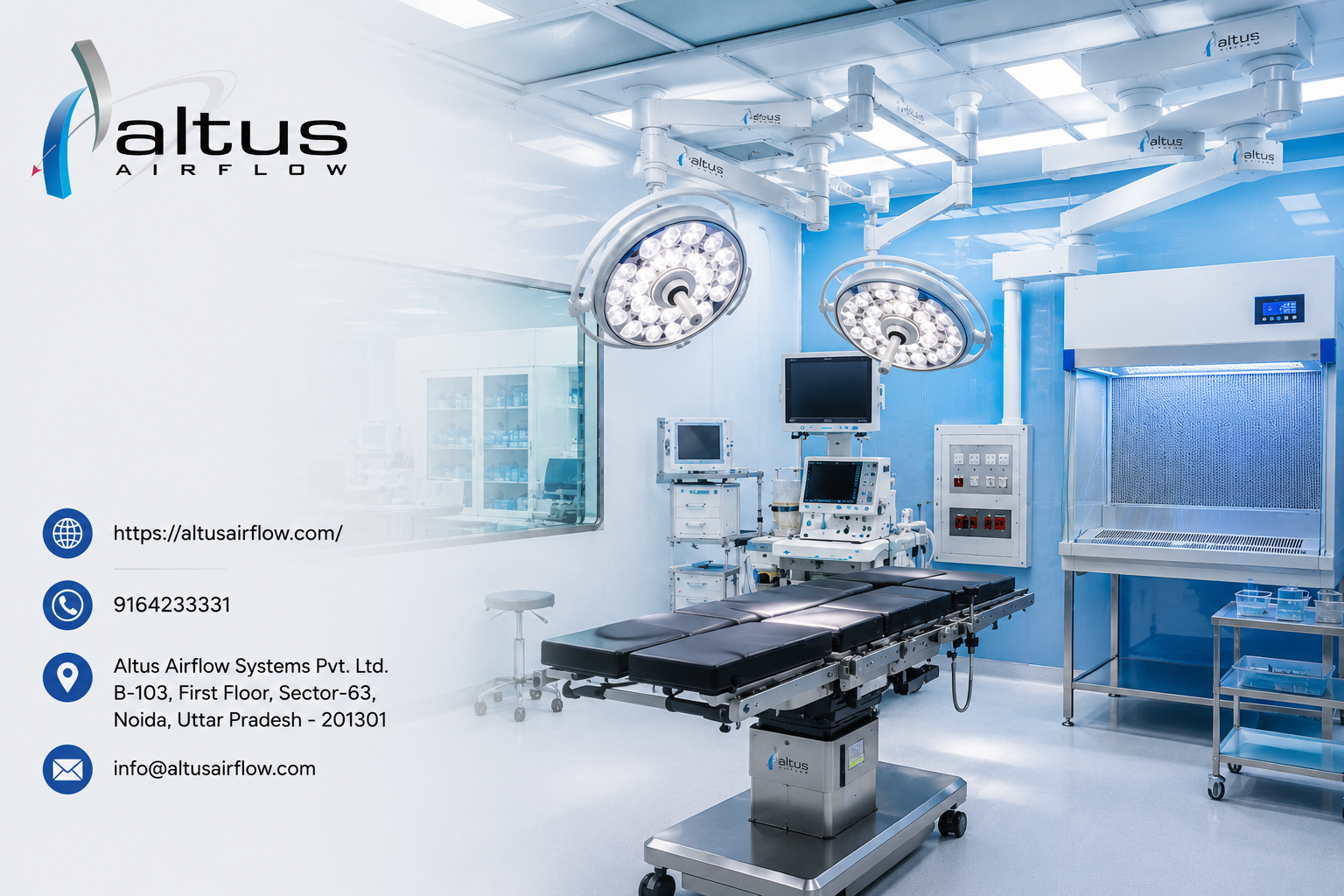
Introduction
Modern operation theatres require carefully engineered environments where construction quality, hygiene, airflow management, durability, and system integration work together. During production, Modular OT Manufacturers follow structured quality practices to ensure that modular walls, ceilings, doors, finishes, and associated components meet the technical requirements established for the project. Quality control begins with material selection and continues through fabrication, dimensional inspection, surface finishing, component assembly, and final verification. A systematic production process helps reduce manufacturing defects and supports accurate installation at the hospital site.
Material Quality And Selection
The quality of a modular operation theatre begins with the materials used for manufacturing. Materials should be selected according to the intended application and project specifications.
Common considerations include:
- Durability
- Cleanability
- Surface finish
- Corrosion resistance
- Structural performance
- Compatibility with healthcare environments
- Resistance to routine cleaning procedures
Using appropriate materials helps support the long-term performance of the OT enclosure.
Dimensional Accuracy
Dimensional accuracy is essential for modular construction because components need to fit together during installation.
Manufacturers may inspect:
- Panel length
- Panel width
- Panel thickness
- Door openings
- Window openings
- Ceiling dimensions
- Joint locations
Accurate fabrication reduces gaps and alignment problems during site assembly.
Panel Fabrication Quality
Modular wall panels are generally fabricated according to approved drawings and specifications.
Quality checks can include:
- Panel dimensions
- Surface condition
- Edge finishing
- Joint preparation
- Opening accuracy
- Structural integrity
Consistent fabrication helps create a uniform wall system after installation.
Surface Finish
The surface finish of OT panels is particularly important because healthcare areas require regular cleaning.
Quality inspections may examine surfaces for:
- Scratches
- Dents
- Uneven finishing
- Manufacturing marks
- Surface defects
- Inconsistent joints
A smooth and properly finished surface can support cleaning and routine maintenance.
Joint Quality
Panel joints should be fabricated and finished accurately.
Poorly formed joints may affect:
- Appearance
- Room sealing
- Cleanability
- Air leakage
- Long-term durability
Manufacturers can inspect joint profiles and connection details before components leave the production facility.
Ceiling Component Quality
The modular ceiling is another major component of an operation theatre.
Production checks may focus on:
- Panel dimensions
- Alignment
- Surface finish
- Supporting components
- Access provisions
- Openings for integrated services
Ceiling components must also accommodate systems such as lighting, HVAC, HEPA modules, and equipment supports where specified.
Door Manufacturing Standards
OT doors require accurate manufacturing because they form part of the room enclosure.
Quality checks can cover:
- Door dimensions
- Frame dimensions
- Hardware
- Sealing arrangements
- Surface finish
- Opening and closing operation
Correct fabrication helps ensure proper integration with the modular wall system.
Viewing Window Quality
Where observation windows are required, their dimensions and installation interfaces should correspond with the approved design.
Checks may include:
- Frame dimensions
- Glass specifications
- Panel opening
- Sealing
- Surface condition
Proper coordination reduces installation difficulties.
Drawing And Specification Verification
Production should follow approved technical drawings.
Before fabrication, the manufacturing team may verify:
- Room dimensions
- Panel layouts
- Door positions
- Window locations
- Service openings
- Ceiling arrangements
- Equipment interfaces
This review helps reduce discrepancies between the design and fabricated components.
Quality Control During Fabrication
Quality control should occur throughout the manufacturing process rather than only at the final stage.
Typical checkpoints may include:
- Raw material inspection
- Cutting verification
- Panel assembly inspection
- Dimensional checking
- Surface inspection
- Hardware verification
- Final component inspection
Multiple checkpoints make it easier to identify and correct issues early.
HEPA And HVAC Integration
Operation theatres may incorporate controlled airflow and filtration systems. Their interfaces need to be considered during modular production.
Panel and ceiling components may require openings or interfaces for:
- HEPA modules
- Supply-air systems
- Return-air systems
- HVAC connections
- Access panels
These openings should correspond accurately with the approved mechanical layout.
Electrical Integration
Electrical requirements also influence modular component production.
Wall panels may need provisions for:
- Power outlets
- Switches
- Control panels
- Data points
- Equipment connections
Correct positioning and dimensions help electrical components integrate properly during installation.
Medical Gas Integration
Medical gas outlets can be incorporated into modular wall systems according to the approved layout.
Production planning may consider:
- Outlet positions
- Service openings
- Mounting arrangements
- Panel interfaces
Accurate fabrication helps prevent unnecessary modifications during installation.
Structural Compatibility
Some OT components require additional structural support.
This can apply to:
- Surgical lights
- Equipment booms
- Ceiling-mounted equipment
- Specialized installations
Manufacturers coordinate the modular components with the required support arrangements so that different systems can be installed appropriately.
Quality Of Hardware
Hardware such as handles, hinges, locks, seals, fasteners, and other accessories should be inspected for suitability.
Quality checks can consider:
- Correct specifications
- Dimensional compatibility
- Functional operation
- Material quality
- Corrosion resistance
Reliable hardware contributes to the performance of doors and other movable components.
Cleanability Considerations
OT surfaces must support routine cleaning and hygiene procedures.
During production, manufacturers may consider:
- Smooth surfaces
- Proper joint construction
- Reduced unnecessary projections
- Appropriate sealing
- Compatible finishing materials
These characteristics can make routine cleaning more manageable.
Environmental Compatibility
Materials used within an operation theatre should be suitable for the expected environmental conditions.
Factors can include:
- Temperature
- Humidity
- Cleaning agents
- Frequent use
- Airflow conditions
Material selection should reflect the intended application and project specifications.
Quality Documentation
Production quality should be supported by appropriate documentation.
Records may include:
- Material specifications
- Inspection reports
- Dimensional checks
- Product information
- Approved drawings
- Test certificates where applicable
Documentation provides traceability and helps project teams verify compliance with specified requirements.
Factory Inspection
Before components are dispatched, a final factory inspection can be performed.
The inspection may review:
- Panel condition
- Dimensions
- Openings
- Doors
- Ceiling components
- Hardware
- Accessories
- Surface finish
Final inspection helps identify issues before transportation to the project site.
Packaging And Transportation
Quality control does not end after fabrication.
Modular components should be appropriately protected during transportation to reduce the possibility of:
- Scratches
- Dents
- Moisture exposure
- Edge damage
- Surface contamination
Proper packaging helps preserve manufacturing quality until installation.
Pre-Installation Verification
Once components reach the site, they can be checked against the approved drawings and component schedules.
Verification may confirm:
- Correct component identification
- Dimensions
- Quantity
- Surface condition
- Required accessories
- Installation locations
This provides another opportunity to identify discrepancies.
Installation Precision
Manufacturing quality and installation accuracy are closely connected.
Precisely fabricated components make it easier for installation teams to achieve:
- Correct alignment
- Consistent joints
- Accurate openings
- Proper door installation
- Correct ceiling levels
This can reduce site modifications and rework.
Testing And Commissioning
After installation, the complete OT can undergo appropriate testing and commissioning.
Depending on project requirements, checks may include:
- Airflow measurements
- Pressure verification
- HEPA integrity testing
- Electrical checks
- Medical gas testing
- Environmental measurements
These activities help verify the performance of integrated systems.
Continuous Quality Improvement
Quality management should continue throughout different projects.
Feedback from:
- Production teams
- Installation teams
- Engineers
- Hospital representatives
- Testing personnel
can help identify opportunities for process improvement.
Continuous review can improve manufacturing consistency over time.
Importance Of Quality Standards
Quality standards provide a structured approach to manufacturing and inspection. However, the exact standards and specifications applicable to an OT depend on the project, location, facility requirements, and applicable healthcare regulations.
Manufacturers should therefore work according to approved specifications and relevant requirements rather than applying a single approach to every project.
Conclusion
Quality during modular operation theatre production involves much more than checking the finished panels. It includes material selection, dimensional accuracy, fabrication control, surface finishing, joint quality, door manufacturing, ceiling coordination, service integration, hardware inspection, packaging, and final verification. Proper quality procedures help ensure that modular components are manufactured consistently and can be integrated with HVAC, filtration, electrical, medical gas, lighting, and equipment systems. Factory inspections and site verification provide additional quality checkpoints before the completed OT enters operation. A structured production process ultimately supports reliable installation, maintainability, and the intended performance of the healthcare environment.
FAQs
1. What quality standards do Modular OT Manufacturers follow during production?
Modular OT Manufacturers follow project specifications and applicable requirements covering material quality, dimensional accuracy, panel fabrication, surface finishing, joint construction, component compatibility, and inspection procedures.
2. Why is dimensional accuracy important in modular OT production?
Dimensional accuracy ensures that wall panels, ceilings, doors, windows, and service openings fit correctly during installation and reduces the need for modifications at the project site.
3. How is the quality of modular OT panels checked?
Panels can be inspected for dimensions, surface finish, edge quality, joint preparation, openings, structural condition, and compliance with approved production drawings.
4. Are HVAC and electrical requirements considered during manufacturing?
Yes. Required openings, interfaces, mounting provisions, and service locations can be incorporated into modular components according to the approved HVAC, electrical, and equipment layouts.
5. What happens after modular OT components are manufactured?
Components can undergo final factory inspection, protective packaging, transportation, site verification, installation, and appropriate testing and commissioning before the OT is handed over.



 Crypto.
 Über
Über
 Passport
 Conference call
 send money
 Bedingungen
 Datenschutz
 Sierra market