Crypto.
 Σχετικά
 Passport
 Conference call
 send money
 Όρους
Όρους
 Ιδιωτικότητα
 Sierra market
Real Estate Tokenization: What Makes a Tokenized Property Market Actually Tradeable?
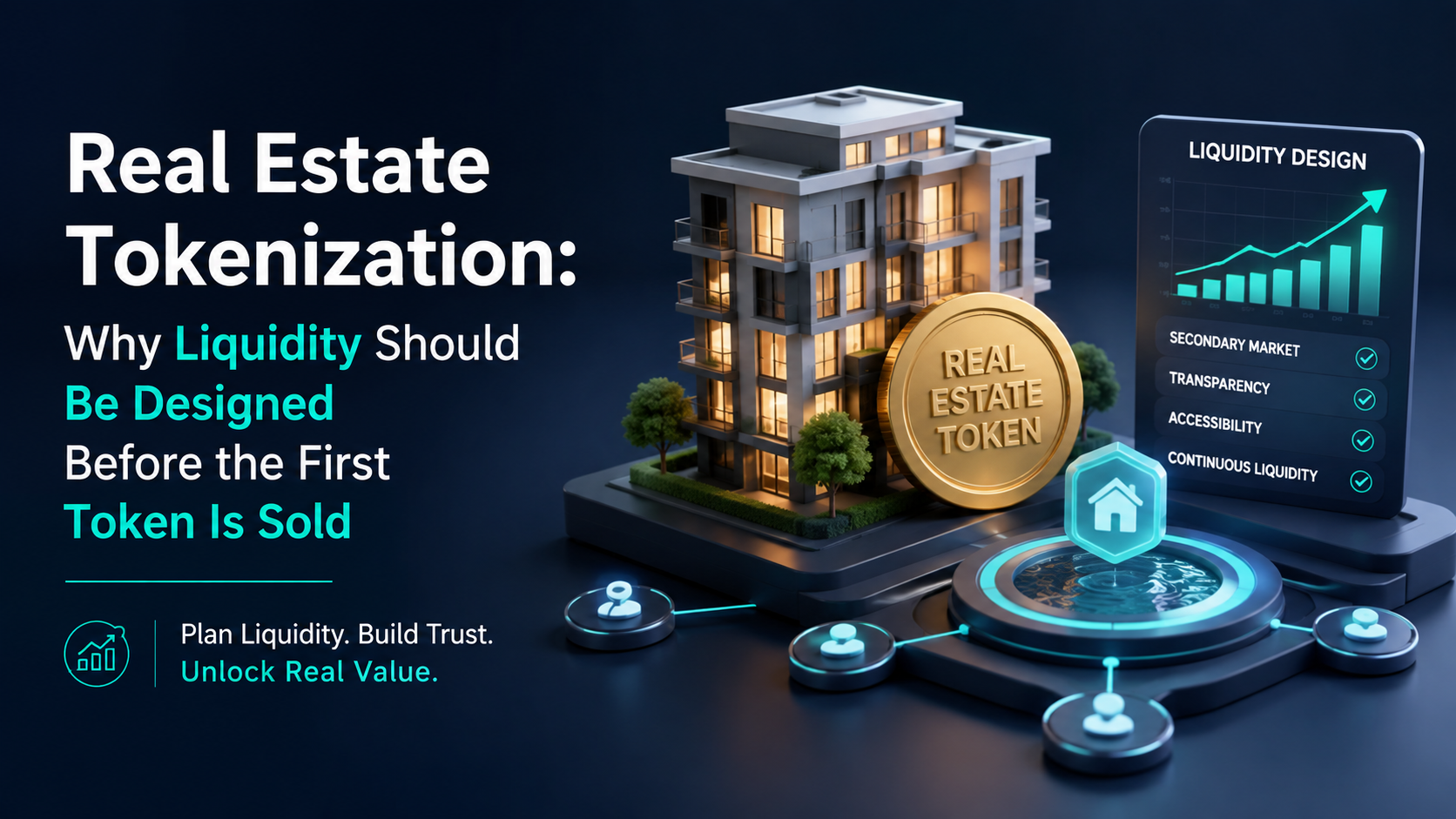
Real estate tokenization is often discussed as a way to represent property ownership through blockchain-based tokens. But creating tokens is only one part of the process. A property can have digital tokens associated with it and still fail to develop an active market. Tradeability depends on what happens around the token after issuance, including investor onboarding, legal ownership structures, pricing, settlement, custody, compliance, liquidity, and secondary market access.
A tokenized property market becomes useful when investors can understand what they are buying, acquire tokens through a reliable process, hold them securely, receive relevant property information, and potentially sell their holdings under defined market rules. This requires coordination between property owners, legal entities, blockchain infrastructure, investors, custodians, payment providers, and marketplace operators.
For businesses considering real estate tokenization, the main question should therefore go beyond how to issue property tokens. The more important question is how those tokens will function in a market where buyers and sellers can interact. This article examines the methods that can make a tokenized property market more tradeable and commercially practical.
Method 1: Define What the Property Token Represents
The first step is deciding exactly what an investor receives when purchasing a property token. The token could represent fractional ownership in a legal entity that owns the property, an economic interest in rental income, a debt claim, or another legally defined right.
This distinction matters because the token itself does not automatically create property rights. A legal structure must connect the blockchain asset with the underlying real estate interest. Investors also need to understand voting rights, income distribution, redemption rules, transfer restrictions, and potential exit conditions before purchasing.
A real estate asset tokenization company usually works with legal and financial specialists to establish this relationship. The objective is to create a structure where the digital token and the legal agreement supporting it have a consistent relationship.
Method 2: Select Properties That Can Support Market Activity
Not every property is suitable for tokenized trading. Property selection has a direct effect on investor interest, pricing, income potential, and future resale opportunities.
Commercial buildings, residential portfolios, hospitality properties, student housing, industrial facilities, and income-generating rental assets may attract different investor groups. Location, occupancy, valuation, debt obligations, rental income, operating expenses, property condition, and expected holding period should be reviewed before token issuance.
A real estate tokenization company can assess the asset from both an investment and tokenization perspective. A property with understandable financial performance and accessible documentation may be easier for investors to evaluate than an asset with uncertain income or complicated ownership arrangements.
Method 3: Create a Reliable Legal and Compliance Framework
Tradeability requires rules. Investors need to know who can purchase the tokens, where they can trade, what restrictions apply, and what happens when ownership changes.
Know Your Customer and Anti-Money Laundering procedures are commonly included in regulated tokenized property markets. Depending on the jurisdiction and structure, securities regulations, investor eligibility requirements, transfer restrictions, tax obligations, reporting duties, and licensing requirements may also apply.
During real estate tokenization platform development, compliance logic can be incorporated into investor onboarding and token transfers. For example, a transfer may be restricted if the buyer has not completed identity verification or does not meet the eligibility requirements for a particular offering.
Method 4: Design Tokens for Secondary Market Transfers
Issuing tokens does not automatically create liquidity. A tokenized property market needs a mechanism through which investors can potentially sell their holdings after purchasing them.
Secondary trading can take place through a dedicated marketplace, exchange environment, peer-to-peer mechanism, or another legally permitted structure. The market design should define how orders are placed, matched, settled, and recorded.
A real estate tokenization platform development company may incorporate order management, wallet connectivity, investor verification, asset information, transfer restrictions, and settlement functions into the marketplace architecture.
The important consideration is that secondary trading should follow the legal status of the token. A token cannot simply be made freely transferable when regulations or contractual agreements restrict its movement.
Method 5: Provide Reliable Property Data
Investors need information before they purchase or sell a token. A marketplace with limited property information can make price discovery difficult because buyers have little basis for deciding what a token may be worth.
Property data can include valuation reports, rental income, occupancy rates, operating costs, debt information, distribution history, property photographs, ownership documentation, financial statements, and relevant updates.
The information should be presented in a format that investors can understand. Regular updates also matter because property conditions change over time. A tokenized property market can become more useful when investors have access to current information rather than relying only on data published at the original token launch.
Method 6: Establish a Practical Pricing Mechanism
Price discovery is another major factor in tradeability. If the initial token price is disconnected from the underlying property value, investors may hesitate to participate in the secondary market.
Property valuation can provide a starting point, but market pricing may change based on rental performance, interest rates, local property conditions, investor demand, distribution expectations, and broader market conditions.
A platform can display indicative asset values, recent transactions, rental performance, and other relevant metrics. However, the market should distinguish between an estimated property value and the actual price at which investors are willing to trade tokens.
This distinction becomes especially important when developing a marketplace through real estate tokenization development. The platform should provide sufficient market information without presenting estimates as guaranteed values.
Method 7: Make Investor Onboarding Simple and Structured
A tradeable market needs participants. If opening an account, completing verification, funding a wallet, or purchasing tokens is unnecessarily complicated, investor participation can remain low.
Investor onboarding can include account creation, identity verification, accreditation or eligibility checks where applicable, wallet setup, payment configuration, risk disclosures, and acceptance of investment agreements.
A real estate tokenization development company can integrate these functions into a single investor journey. The objective is not to remove compliance requirements, but to organize them so investors understand what information is required at each stage.
Method 8: Support Multiple Payment and Settlement Options
A marketplace also needs a dependable way to move money and assets. Depending on the platform structure, investors may use bank transfers, fiat payment systems, stablecoins, or other approved payment methods.
Settlement procedures should define when payment is considered complete, when tokens are transferred, how failed transactions are handled, and how records are maintained.
Blockchain-based settlement can reduce manual reconciliation in some structures, but it still needs to operate alongside banking systems, custody arrangements, accounting processes, and legal ownership records.
This is one area where real estate tokenization platform development requires careful coordination between blockchain components and traditional financial infrastructure.
Method 9: Provide Secure Wallet and Custody Infrastructure
Tradeable property tokens require secure ownership management. Investors may hold assets through self-custody wallets, managed wallets, institutional custody solutions, or other arrangements supported by the platform.
Wallet infrastructure should address transaction authorization, recovery procedures, access control, asset transfers, and transaction monitoring. If investors lose access to their wallets or encounter unclear custody procedures, confidence in the marketplace can decline.
A real estate asset tokenization company may therefore consider custody design at the beginning of the project rather than treating it as a separate feature added after token issuance.
Method 10: Create Liquidity Support Without Artificial Trading
A tokenized property market can have technically functional trading while still having very little liquidity. If there are only a few buyers and sellers, investors may struggle to exit their positions at a reasonable price.
Some platforms may use market-making arrangements, scheduled trading windows, buyback mechanisms, liquidity providers, or other approaches permitted by applicable regulations and offering documents.
However, liquidity should not be confused with artificial trading volume. A credible market requires genuine investor participation and appropriate pricing. Businesses should establish realistic expectations about how quickly property tokens can be sold.
This is also why claims about the Top real estate tokenization companies or Best real estate tokenization companies should not be based solely on the number of tokens issued. Market participation, compliance practices, property quality, investor activity, and secondary trading arrangements provide a more meaningful basis for comparison.
Method 11: Connect Token Ownership With Property Operations
A tokenized property market cannot operate independently from the underlying asset. Rent still needs to be collected, maintenance still needs to be managed, taxes still need to be handled, and financial reports still need to be prepared.
Property servicing therefore becomes an important part of the overall system. Rental income may need to be calculated and distributed according to token ownership. Expenses and property-level liabilities also need to be reflected in financial reporting.
A real estate tokenization platform can connect property management data with investor dashboards so that token holders can monitor relevant financial activity. This connection helps keep the digital investment experience linked to the physical asset.
Method 12: Design Real Estate Tokens for Future Integrations
Real estate token development should consider what the asset may need after launch. A token may eventually interact with lending systems, portfolio applications, investment dashboards, compliance services, custodians, marketplaces, or other financial infrastructure.
For example, an investor could potentially use eligible tokenized assets within a lending arrangement if the legal and financial structure permits it. Such use cases require additional compliance, valuation, custody, and risk controls.
The technical design should therefore leave room for integrations without making unsupported assumptions about future financial products.
Method 13: Monitor Trading and Property Performance
A tradeable marketplace needs continuous monitoring. Platform operators should track trading activity, failed transactions, investor activity, property income, distributions, compliance events, and changes in the underlying asset.
Market data can help identify whether investors are actively participating or whether a particular property has limited demand. Property performance data can also provide context for changes in token pricing.
Monitoring should cover both blockchain activity and traditional property operations. Looking only at on-chain transactions would provide an incomplete picture of a tokenized real estate market.
What Separates Token Issuance From a Tradeable Market?
The difference comes down to infrastructure and participation. Token issuance creates a digital representation of an investment interest. Tradeability requires a much wider system.
A functioning market needs legally recognized rights, suitable properties, investor access, compliance procedures, pricing information, custody, payment processing, secondary transfer mechanisms, property servicing, and actual buyers and sellers.
Businesses evaluating a real estate tokenization development company should therefore examine more than its ability to create smart contracts. The development partner should understand marketplace architecture, investor workflows, compliance requirements, property data, token economics, and post-launch operations.
Real estate tokenization platform development is ultimately a combination of property finance, legal structuring, software engineering, blockchain infrastructure, and market operations. Each layer affects whether investors can realistically participate in the market.
Conclusion
Real estate tokenization becomes genuinely tradeable when the digital token is connected to a legally defined property interest and supported by the systems required for buying, holding, selling, settling, and monitoring that investment. Property selection, compliance, investor verification, pricing, secondary trading, custody, payment processing, property servicing, and market participation all contribute to the result. Businesses should therefore evaluate real estate tokenization as a complete market infrastructure rather than simply a real estate token development exercise. The long-term value of a tokenized property platform depends on how well its blockchain layer works with legal, financial, and property operations. Blockchain App Factory provides Real estate tokenization development services that can help businesses plan and develop platforms around these requirements, from token creation and investor management to marketplace and property-related functions.
FAQs
1. What makes a tokenized property tradeable?
A tokenized property needs more than a blockchain token. Legal ownership rights, investor eligibility, compliance procedures, custody, payment systems, pricing information, and a permitted secondary trading mechanism are needed to support practical trading.
2. Does tokenization automatically create liquidity?
No. Tokenization makes digital transfer possible within the rules of the platform, but liquidity depends on actual buyer and seller participation. Market demand, asset quality, pricing, and secondary market arrangements all influence liquidity.
3. What does a real estate token represent?
A real estate token can represent different rights depending on its legal structure. It may represent an interest in an entity holding property, rights to income, debt exposure, or another legally defined investment interest.
4. Why is compliance important for tokenized property markets?
Compliance determines who can participate, how tokens can be transferred, what information must be collected, and which activities are permitted. Requirements vary according to the jurisdiction and legal structure.
5. What role does blockchain play in real estate tokenization?
Blockchain can record token ownership, process programmed transfers, maintain transaction records, and support certain settlement functions. It does not by itself establish legal ownership of the underlying property.
6. Can tokenized properties be traded on secondary markets?
They can be, when the token structure and applicable regulations permit secondary transfers. The marketplace must follow restrictions related to investor eligibility, jurisdiction, ownership, and securities or other applicable laws.
7. How does real estate tokenization platform development support investors?
A platform can bring together investor onboarding, identity verification, property information, token purchases, wallet functions, transaction records, distributions, and permitted secondary trading within one environment.
8. What should businesses look for in a real estate tokenization company?
Businesses should assess experience in blockchain development, property-related legal structures, investor workflows, compliance requirements, token design, marketplace infrastructure, custody, payment processing, and ongoing platform support.
9. Is real estate token development enough to launch a property investment marketplace?
No. Token development is one component of a wider platform. A functional marketplace also requires property onboarding, legal structuring, investor management, payment and settlement systems, compliance controls, custody, and market operations.
10. Why is property servicing important after token issuance?
The physical property continues operating after tokens are issued. Rent, expenses, maintenance, valuations, taxes, distributions, and reporting still need to be managed. These activities provide important information for investors holding the associated tokens.
Bub
Do?

Κατηγορίες
Διαβάζω περισσότερα
Netflix Expands Partnership with French Comedy Icon Gad Elmaleh In an exciting development for comedy fans worldwide, Netflix has announced a significant expansion of its collaboration with renowned French comedian Gad Elmaleh. The streaming giant will exclusively release Elmaleh's first original series "Huge in France," alongside an English-language stand-up special. "Huge in France" draws...

This weekend, a remarkable celebration unfolded in London as the cast of the acclaimed film Emilia Pérez gathered to mark a historic milestone. The ensemble, led by Karla Sofía Gascón, Zoe Saldaña, Selena Gomez, and Adriana Paz, received their first in-person awards for the Cannes Best Actress honor, a recognition that traditionally honors an individual performer...
There are 16 legendary animals scattered across Red Dead Redemption 2’s map, each guarding a rare pelt that can be exchanged at the Trapper in Saint Denis for unique outfits and accessories. The hunt begins in Chapter 2 with the Bharati Grizzly Bear during the mission “Exit Pursued By a Bruised Ego,” but the remaining creatures are discovered as optional side activities....
Dofus World Series Summer 2017 La Dofus World Series Summer Edition 2017 a rassemblé huit des meilleures équipes de l'univers Ankama pour une compétition intense qui s'est déroulée sur une période de sept semaines. Parmi les participants, des formations telles qu'Allister Zoo, Badgones, XNRJX, TeamJBZZ, ainsi que des équipes invitées comme...
When a relationship starts feeling uncertain, it can leave both partners anxious, frustrated, and emotionally drained. You may find yourself wondering whether the bond can be repaired or if you’re simply growing apart. Miscommunication, repeated arguments, lack of intimacy, or even silent resentment can slowly weaken even the strongest connection. If you’re feeling confused about...