


 Crypto.
 О нас
О нас
 Passport
 Conference call
 send money
 Условия использования
 Конфиденциальность
 Sierra market
Biomass Energy Market Driven by Solid Fuel Dominance and Anaerobic Digestion Growth

The Biomass energy market is experiencing significant growth, driven by the dominance of solid biomass and the rapid expansion of anaerobic digestion technology. According to Market Research Future, the market is essential for providing dispatchable renewable power, heat, and sustainable fuels from organic feedstocks, leveraging established supply chains and mature conversion technologies. Solid biomass, particularly wood pellets, remains the backbone of the industry due to its deep integration with existing power infrastructure. Simultaneously, the deployment of modular anaerobic digesters is accelerating, driven by waste diversion mandates and the production of renewable natural gas. This convergence is positioning biomass energy as a key enabler of a circular, decarbonized energy system.
Key Market Statistics
Insights from Market Research Future reveal that the Biomass Energy market is on a strong growth path. The broader Bioenergy Market is projected to grow from USD 155.9 Billion in 2026 to USD 241.9 Billion by 2035, at a 5.0% CAGR. By type, Solid biomass accounted for 62.0% in 2025, underpinned by established pellet supply chains and co-firing retrofits. Biogas is the fastest-expanding segment at a 10.9% CAGR. By technology, Combustion retained 78.5% of installed capacity, but Anaerobic Digestion is forecast to grow at a 12.7% CAGR, reflecting rapid deployment of modular biogas units. By application, Heat Generation holds the largest share at 53.5%, while Transportation Fuel is the fastest-growing at 10.15% CAGR. Asia-Pacific commands roughly 40.0% of the market, while Europe holds 28.5%.
Industry Trends and Technological Evolution
The Biomass Energy market is being shaped by several key trends. Solid biomass dominance is a primary driver, with international pellet trade reaching approximately 26 million tonnes in 2024. Solid biomass benefits from deep integration with existing coal boiler infrastructure, which can be converted to fire wood pellets. Anaerobic digestion growth is another major trend, with modern digesters achieving methane yields above 65% and producing nutrient-rich digestate. Modular biogas units are being deployed rapidly in response to food-waste diversion mandates.
Declining levelized cost of electricity for biomass is improving project economics. Net-zero legislation and carbon pricing are making biomass competitive with natural gas. Agricultural and forestry residue mobilization is a key driver, with Asia-Pacific losing an estimated 480 million tonnes of crop residues annually. Sustainable aviation fuel scale-up is creating new demand for biomass feedstocks. Negative-emission revenue via BECCS deployment is an emerging opportunity.
The shift towards advanced conversion technologies like gasification and torrefaction is improving efficiency and expanding feedstock options. Digital feedstock platforms are reducing procurement costs. Industrial heat decarbonization is creating high-value applications. The focus on sustainable feedstock certification is ensuring environmental integrity. The use of combined heat and power (CHP) is maximizing efficiency. The development of hybrid biomass-solar systems is an emerging trend. The growth of pellet exports from North America to Europe and Asia is a major trade flow.
Challenges Facing the Market
The Biomass Energy market faces challenges that could moderate its growth. Feedstock price volatility and logistics are significant restraints, with transport costs being 35–50% of delivered feedstock price. Sustainability certification complexity under RED III adds administrative costs. Public opposition to large-scale biomass plants can delay projects. Competition for feedstocks with other industries (e.g., pulp and paper) can affect supply.
Land-use concerns and indirect land-use change (ILUC) risks require careful management. High capital costs for advanced conversion and BECCS can be a barrier. Technical challenges in scaling up gasification and torrefaction persist. The need for long-term off-take contracts to secure financing can be challenging. Supply chain risks for imported pellets can affect project viability. The complexity of integrating biomass with existing infrastructure can be a hurdle. The need for workforce training on new technologies is a growing concern.
Future Outlook
Analysis suggests that the Biomass Energy market will continue to expand, with opportunities emerging from technology and market trends. Expansion of BECCS deployment will turn biomass plants into carbon sinks. Growth of anaerobic digestion in emerging markets will address waste management and energy access. Development of advanced solid biofuels (e.g., torrefied pellets) will improve logistics and efficiency.
Partnerships between biomass producers and industrial heat users will create new value. Integration of biomass with carbon capture will unlock negative emissions. Focus on sustainable feedstock certification will ensure market access. By 2035, the market is expected to be robust, driven by solid fuel dominance and anaerobic digestion growth.
Conclusion
According to Market Research Future, the Biomass Energy market is poised for significant growth, driven by solid fuel dominance and anaerobic digestion growth. The market's evolution is defined by a shift towards more efficient, sustainable, and technologically advanced solutions. While challenges related to feedstock logistics, certification, and public perception persist, the long-term outlook remains positive. The continued focus on advanced conversion technologies, BECCS, and feedstock diversification will create significant opportunities for stakeholders. The Bioenergy Production Market will be essential for enabling a circular and decarbonized energy system.
Uncover future growth patterns with expert-driven reports:
Cased Hole Logging Service Industry
Chad Oil & Gas Upstream Industry
Geothermal Power Infrastructure Industry
Big Data In Oil & Gas Exploration and Production Industry
Alternate Marine Power Industry
Bub
Do?

Категории
Больше
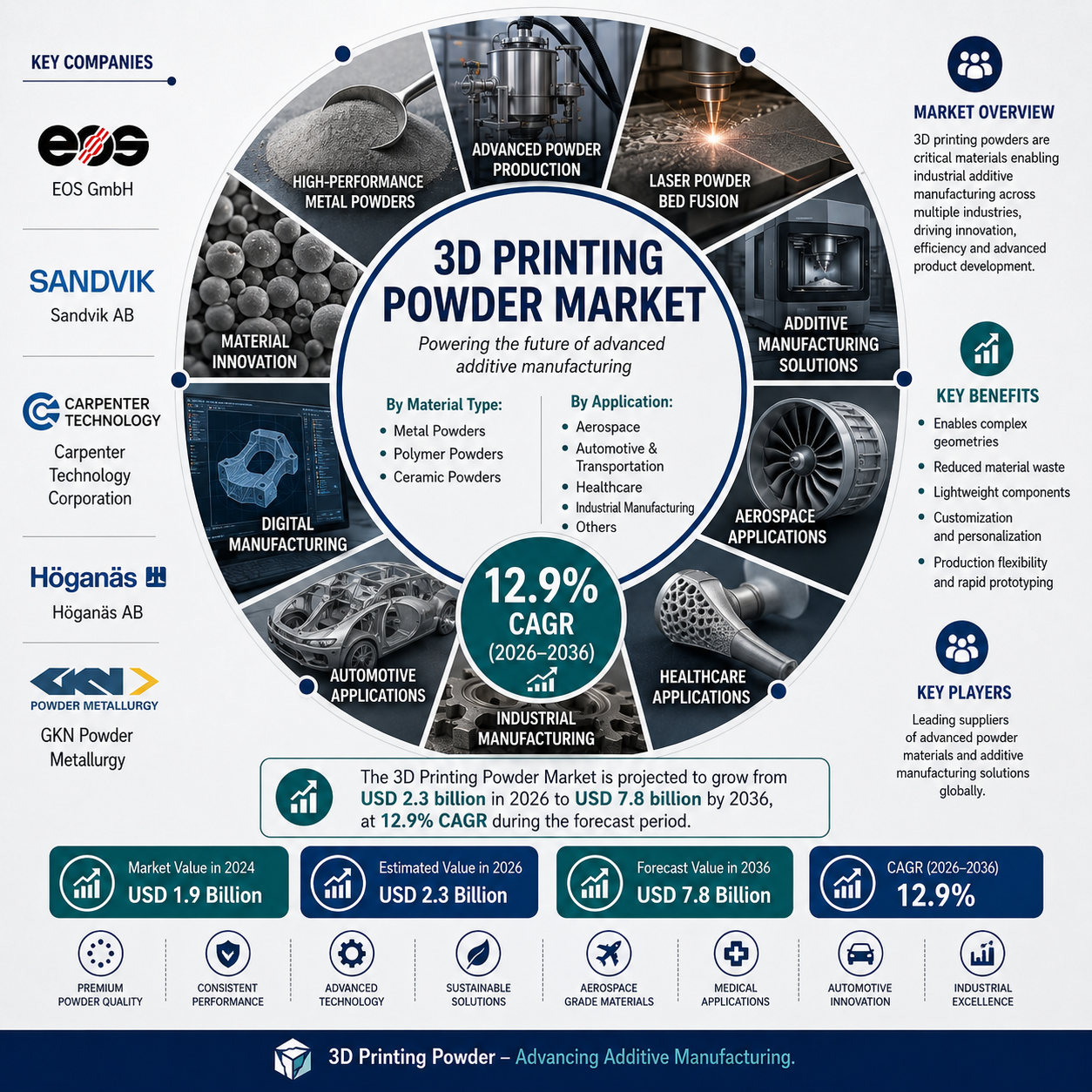
August 29, 2026 — The global 3D printing powder market is projected to grow from USD 2.3 billion in 2026 to USD 7.8 billion by 2036, expanding at a 12.9% CAGR, according to Fact.MR. The market was valued at USD 1.9 billion in 2024 and is estimated at USD 2.1 billion in 2025. Fact.MR forecasts that the industry will add nearly USD 5.5...
Panduan Keamanan Digital untuk Pengguna Internet Modern Pentingnya Menjaga Keamanan Digital Perkembangan teknologi telah membawa banyak kemudahan dalam kehidupan sehari-hari. Berbagai aktivitas seperti bekerja, belajar, berbelanja, hingga berkomunikasi kini dapat dilakukan secara online. Di balik kemudahan tersebut, pengguna juga perlu memahami pentingnya menjaga keamanan digital agar data...

Netflix Announces New Comedy Series Featuring Drew Barrymore and Timothy Olyphant In an exciting development for comedy fans, Netflix has revealed plans to launch "Santa Clarita Diet," a new original series starring Hollywood veterans Drew Barrymore and Timothy Olyphant. The show, created by Victor Fresco of "Better Off Ted" fame, will be available exclusively on the streaming platform...
The Pack Palooza Program provides MLB 26 Diamond Dynasty players with a valuable opportunity to earn new cards, expand collections, and improve their rosters through consistent gameplay. Unlike relying only on random pack openings, this program rewards players who complete objectives, manage resources carefully, and make strategic choices throughout the progression path. Using MLB The Show 26...
Achieving a healthy weight is not about following extreme diets or searching for overnight results. Long term success comes from building habits that support physical health, emotional wellbeing, and daily balance. Many people begin their wellness journey by exploring trusted resources such as https://samenslimafvallen.nl/ to learn practical strategies that encourage lasting progress...
