Crypto.
 Environ
 Passport
 Conference call
 send money
 Conditions générale de vente
 Confidentialité
 Sierra market
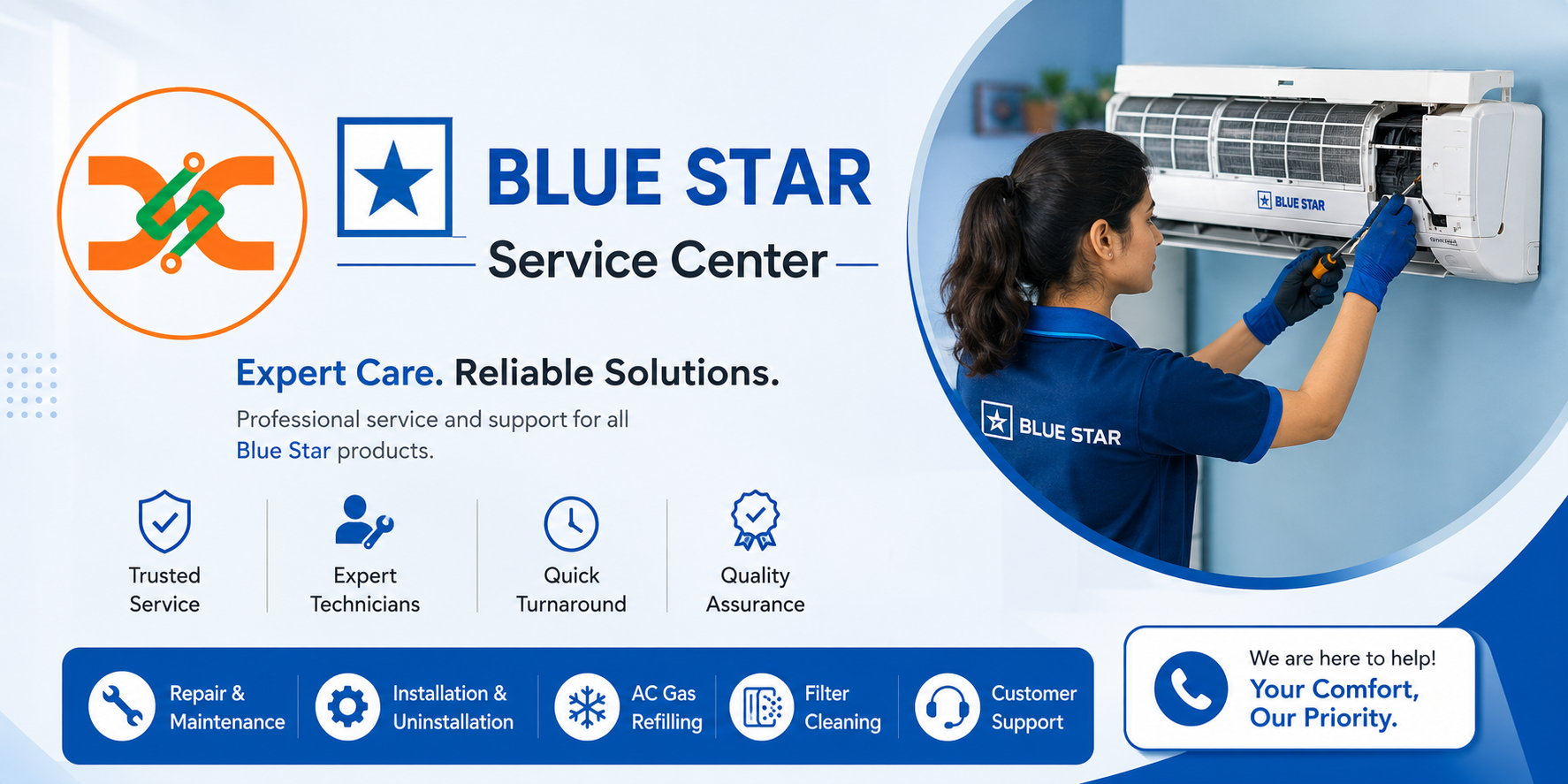
What AC repair and maintenance services are available at a Blue Star Service Center?
Introduction
Air conditioners need regular servicing to maintain efficient cooling, proper airflow, and reliable operation. When an AC starts making unusual sounds, leaking water, cooling slowly, or consuming more electricity, professional inspection can help identify the underlying cause. A Blue Star Service Center can provide different repair and maintenance services for compatible Blue Star AC models, including cleaning, performance checks, electrical diagnosis, cooling-related troubleshooting, and component inspection.
A systematic service process helps technicians determine whether an AC problem is caused by blocked filters, poor airflow, electrical faults, refrigerant-related issues, drainage problems, fan problems, or other components. Regular maintenance can also help reduce the likelihood of sudden breakdowns and maintain consistent cooling performance.
AC Cleaning and General Maintenance
Regular cleaning is one of the most important parts of AC maintenance. Dust and dirt can accumulate on filters, coils, blowers, and other accessible areas, reducing airflow and affecting cooling efficiency.
A maintenance visit may include:
- Air filter cleaning
- Indoor unit cleaning
- Outdoor unit inspection
- Coil cleaning
- Drain-line inspection
- Airflow checks
- General performance testing
Clean components allow air to circulate more effectively and can help the AC operate without unnecessary strain.
AC Not Cooling Properly
Poor cooling is one of the most common reasons customers request AC service. However, insufficient cooling does not always mean that refrigerant needs to be added.
A technician may check the air filters, indoor and outdoor coils, airflow, thermostat settings, fan operation, and electrical supply. Refrigerant pressure and the cooling circuit may also be inspected when appropriate.
If refrigerant is low, the technician should investigate whether a leakage or another issue is responsible before recommending further refrigerant work. Simply adding refrigerant without identifying the cause may not provide a lasting solution.
Refrigerant and Leakage Inspection
Refrigerant plays an important role in the cooling cycle. A low refrigerant level can result in reduced cooling, longer operating cycles, or unusual performance.
A professional inspection can include checking the system for signs of leakage and assessing the refrigerant circuit. If a leak is detected, the appropriate repair should be considered before recharging the system.
Refrigerant-related work should be performed by trained technicians using suitable equipment and procedures.
Water Leakage and Drainage Repair
Water dripping from an indoor AC unit can indicate a blocked drain pipe, dirty drain tray, improper drainage, or another issue affecting condensation removal.
Technicians can inspect the drain line, tray, and related components to determine why water is accumulating. Cleaning the drainage system may resolve minor blockages, while damaged components or installation-related problems may require additional repair.
Customers should not ignore repeated water leakage because moisture can damage nearby walls, furniture, flooring, or electrical components.
AC Electrical and Power Repairs
An AC that does not turn on, switches off unexpectedly, or repeatedly trips a circuit breaker may have an electrical or component-related issue.
A technician can inspect:
- Power supply
- Wiring and connections
- Capacitors
- Control components
- Circuit boards
- Safety switches
- Indoor and outdoor unit connections
Electrical faults should not be handled without appropriate technical knowledge. If an AC produces a burning smell, sparks, or repeated electrical tripping, it should be switched off safely and professionally inspected.
Fan and Airflow Problems
Weak airflow can reduce cooling even when the compressor and refrigerant system are functioning correctly. Dirty filters, blocked coils, blower problems, fan motor issues, or obstructions can affect airflow.
During maintenance, the technician can inspect the indoor blower, outdoor fan, filters, and airflow path. Cleaning or component repair may restore proper air circulation depending on the diagnosis.
Unusual AC Noise
Rattling, buzzing, grinding, clicking, or unusual vibration can indicate a mechanical or electrical problem.
The technician may inspect the fan, blower, motor, mounting points, panels, and other moving components. Loose parts may sometimes be corrected through adjustment, while worn motors or damaged components may require replacement.
Addressing unusual sounds early can help prevent a minor mechanical issue from becoming more serious.
Compressor Inspection
The compressor is an important part of the AC refrigeration cycle. Problems involving the compressor can result in poor cooling, unusual electrical behaviour, overheating, or repeated shutdowns.
Before concluding that the compressor needs replacement, technicians can check electrical readings, operating conditions, refrigerant-related factors, and other components that could produce similar symptoms.
A detailed diagnosis is especially important because compressor replacement can be a major repair compared with routine maintenance.
Thermostat and Temperature Problems
An AC may fail to maintain the desired room temperature because of incorrect settings, sensor problems, airflow restrictions, or other system faults.
Technicians can review the temperature settings and inspect relevant sensors and controls. If the temperature sensor is not functioning correctly, the AC may cycle incorrectly or provide inconsistent cooling.
Blue Star Service Center in Ashapur
Customers looking for a Blue Star Service Center in Ashapur can seek assistance with compatible Blue Star AC repair and maintenance requirements.
Common concerns may include poor cooling, water leakage, unusual noise, weak airflow, electrical problems, and general servicing. The technician can begin by checking the AC's symptoms and operating condition before determining whether cleaning, adjustment, component repair, or further diagnosis is required.
Routine maintenance can also include checking filters, airflow, drainage, and the overall condition of indoor and outdoor units.
Blue Star Service Center in Asuran Chowk
Customers searching for a Blue Star Service Center in Asuran Chowk can request troubleshooting and repair assistance for suitable Blue Star AC models.
Technicians may inspect cooling performance, airflow, drainage, electrical connections, fan operation, and other relevant components. If the AC is not cooling properly, the diagnosis can help determine whether the problem is associated with cleaning, airflow, refrigerant-related conditions, electrical components, or another fault.
A proper inspection can help avoid unnecessary replacement of components that are still functioning correctly.
Blue Star Service Center in Ambad
Customers looking for a Blue Star Service Center in Ambad can seek support for compatible Blue Star AC servicing and repair requirements.
Common services may involve AC cleaning, cooling troubleshooting, drainage inspection, fan-related issues, electrical diagnosis, and component checks. Customers should explain the symptoms clearly, including when the problem occurs and whether the AC has recently shown unusual sounds, water leakage, or reduced cooling.
The technician can then perform relevant tests and recommend the most appropriate servicing or repair option.
Importance of Regular AC Servicing
Regular maintenance can help identify developing problems before they cause a complete breakdown. Dirty filters and coils, for example, can reduce airflow and cooling efficiency when they are not cleaned regularly.
Maintenance can also provide an opportunity to inspect drainage, electrical connections, fans, and other operating components. The appropriate servicing frequency depends on usage, environment, AC condition, and manufacturer recommendations.
Homes or workplaces exposed to substantial dust may require more frequent cleaning than environments with relatively clean indoor air.
How Technicians Diagnose AC Problems
A professional AC diagnosis generally follows a structured process:
1. Understand the Complaint
The technician first identifies the main symptom, such as poor cooling, leakage, unusual noise, or failure to start.
2. Perform a Visual Inspection
Indoor and outdoor units are checked for visible dirt, damage, loose connections, blocked airflow, and drainage concerns.
3. Test Performance
Cooling, airflow, temperature behaviour, and operating performance are evaluated.
4. Check Relevant Components
Depending on the symptoms, the technician may inspect electrical components, fans, sensors, drainage, refrigerant-related conditions, and control systems.
5. Recommend a Repair
After identifying the likely cause, the technician can explain whether cleaning, adjustment, repair, or component replacement is appropriate.
Safe Checks Customers Can Perform
Before requesting professional service, customers can perform a few basic checks:
- Confirm that the AC has power.
- Check the thermostat and operating mode.
- Clean or inspect accessible filters according to the appliance instructions.
- Make sure indoor and outdoor airflow areas are not blocked.
- Check whether the remote control is functioning.
- Observe whether water is leaking or unusual sounds are present.
- Note any error codes displayed by the AC.
Customers should not open electrical panels, handle refrigerant lines, or attempt electrical repairs themselves.
Repair or Replacement of AC Components
Not every AC problem requires replacing a major component. A professional diagnosis can determine whether cleaning, wiring repair, drainage maintenance, or another minor correction is sufficient.
For more serious problems involving motors, circuit boards, compressors, sensors, or other components, replacement may be considered when repair is not practical.
The decision should take into account the AC's age, overall condition, repair cost, and availability of compatible components.
Testing After AC Repair
After repair or maintenance, the AC should be tested under normal operating conditions. Cooling performance, airflow, temperature response, drainage, fan operation, and unusual sounds can be checked.
For electrical repairs, the system should also be checked for stable operation and abnormal tripping. A final performance test helps confirm that the original complaint has been addressed.
Preventive AC Care
Simple maintenance habits can help keep an AC operating efficiently. Clean accessible filters regularly, keep airflow areas clear, and avoid blocking the indoor or outdoor unit.
Pay attention to early warning signs such as reduced cooling, unusual sounds, water leakage, unpleasant odours, or repeated shutdowns. Addressing these symptoms early can prevent some problems from becoming more complicated.
Conclusion
A Blue Star Service Center can provide a range of AC repair and maintenance services, including cleaning, cooling diagnosis, drainage inspection, electrical troubleshooting, fan and airflow checks, refrigerant-related inspection, and component-level repair. A structured diagnostic process helps identify the actual cause instead of relying only on visible symptoms.
Customers in Ashapur, Asuran Chowk, and Ambad can seek appropriate Blue Star AC servicing and repair assistance based on their specific requirements. Dial Service Centre can help customers understand reported AC problems and choose a suitable servicing or repair approach.
Frequently Asked Questions
1. What AC services are available at a Blue Star Service Center?
Services can include cleaning, cooling troubleshooting, drainage inspection, airflow checks, electrical diagnosis, fan inspection, and repair or replacement of suitable components.
2. Can a Blue Star Service Center fix an AC that is not cooling?
A technician can diagnose poor cooling by checking filters, airflow, coils, temperature controls, refrigerant-related conditions, fans, and other relevant components.
3. Can AC water leakage be repaired?
Yes. Water leakage can be investigated by checking the drain pipe, drain tray, airflow, and other condensation-related components. The appropriate repair depends on the cause.
4. How often should a Blue Star AC be serviced?
The ideal servicing frequency depends on usage, environmental conditions, dust levels, and the AC's condition. Regular cleaning and maintenance are recommended according to usage and manufacturer guidance.
5. What should I do if my AC makes an unusual noise?
Turn the AC off if the noise is severe or accompanied by burning smells or electrical symptoms, and seek professional inspection. Unusual sounds can originate from fans, motors, loose parts, or other components.
Read Our Previous Blog-----—>How can a Videocon Service Center help resolve common TV display and sound problems?
Bub
Do?

Catégories
Lire la suite
The renewable energy sector is witnessing rapid expansion, driven by the global transition toward sustainable power generation. As Per Market Research Future, the Wind Turbine Gearbox Market Growth is fueled by increasing wind power installations, technological advancements, and rising demand for reliable energy infrastructure. Wind turbine gearboxes are critical components that transfer...

Freiheits-Blues für Anomalie-Kontrolle Das Zenless Zone Null Freedom Blues-Set ist speziell dafür konzipiert, die Fähigkeiten im Umgang mit Anomalien zu verbessern. Beim Sammeln von zwei Teilen erhöht sich die Anomalie-Kompetenz um 30 Punkte. Wenn alle vier Teile getragen werden, tritt ein besonderer Effekt in Kraft: Die Anomalie-Aufbau-Resistenz eines Ziels wird für 20...

The field of respiratory support equipment is dominated by a select group of Mechanical Ventilators Top Companies that continuously drive innovation, set clinical standards, and possess the global manufacturing capacity necessary to equip health systems worldwide. These influential entities are typically large medical technology corporations with deep expertise in critical care, possessing...

Funcom has released a hotfix for Dune: Awakening that significantly expands the PvE area of the Deep Desert while rebalancing risk and reward between PvE and PvP zones. The change, which went live on June 26, extends the PvE region to cover the entire southern half of the Deep Desert map. Imperial Testing Stations, caves, and similar points of interest in that area are now PvE, allowing players...
In an era where many action RPGs lean toward high fantasy or heroic spectacle, Path of Exile remains committed to a darker vision. The world of Wraeclast is not a place of grand adventures and noble quests. It is a land of exile, corruption, and moral decay, where every victory comes with cost and every character carries the weight of past sins. The tone of Path of Exile, established in its...