


 Crypto.
 Sobre
Sobre
 Passport
 Conference call
 send money
 Termos
 Privacidade
 Sierra market
Postpartum Nutrition High Protein Khapli Atta New Mother Guide
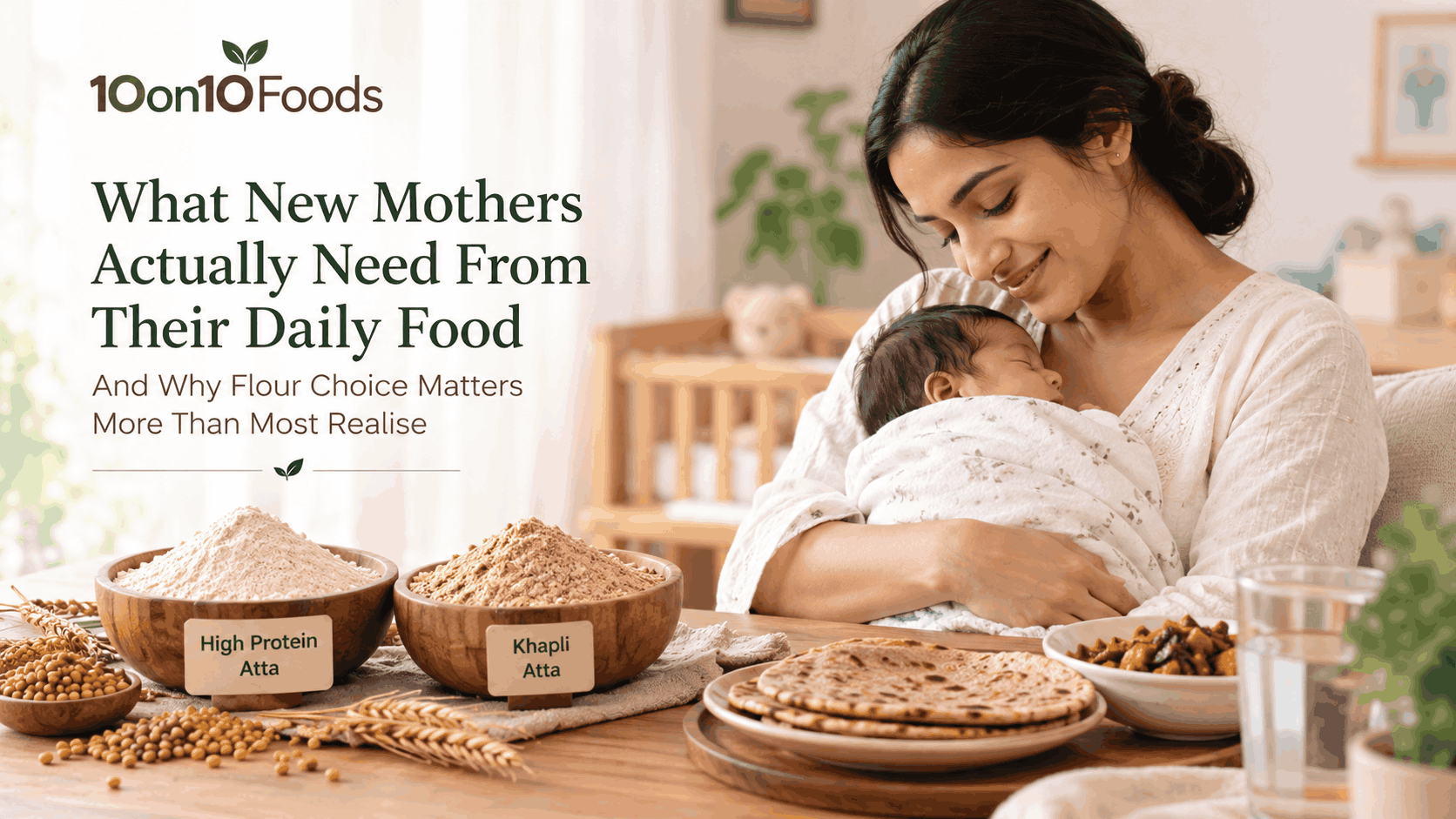
What New Mothers Actually Need From Their Daily Food — And Why Flour Choice Matters More Than Most Realise
The postpartum period places more simultaneous nutritional demands on a woman's body than almost any other life stage. Tissue repair after delivery — whether vaginal or caesarean — requires elevated protein. Lactation, if breastfeeding, increases caloric and protein requirements significantly above pre-pregnancy levels. Iron replenishment after the blood loss of delivery is critical for the energy levels that new motherhood requires. And the immune system's recovery from the physiological stress of pregnancy and delivery needs sustained micronutrient support across the months that follow.
The traditional Indian postpartum food culture — with its emphasis on ghee, jaggery, specific grains, and warming foods in the weeks after delivery — reflects centuries of accumulated food wisdom about what new mothers need. But urban postpartum nutrition often loses this wisdom in the transition to modern food patterns, replacing the traditional grains and preparation methods with the same commercial refined wheat flour that the rest of the family eats daily — a flour that serves the specific nutritional demands of postpartum recovery considerably less well than the alternatives.
The flour choices that a new mother eats daily, across every roti and preparation in the weeks and months after delivery, are among the most consistent and high-volume nutritional inputs she receives. Getting these choices right — specifically, choosing flour products that address the elevated protein, mineral, and digestive needs of the postpartum period — is one of the most practical dietary interventions available during a life stage when dietary planning capacity is limited by the demands of newborn care.
The Protein Requirement After Childbirth
Postpartum protein needs are elevated relative to non-pregnant adult requirements for two primary reasons. First, tissue repair — the healing of the birth canal, perineal tissues, or caesarean wound — is a protein-dependent process. The body rebuilds damaged tissue using amino acids from dietary protein, and inadequate protein intake during the healing period slows recovery and increases infection risk.
Second, lactation is nutritionally expensive in protein terms. Breast milk is a complete nutritional product that the mother's body manufactures from dietary inputs, and its protein content is maintained at the expense of the mother's own protein reserves when dietary intake is insufficient. A breastfeeding mother who doesn't consume adequate protein is drawing on her own muscle tissue to maintain milk protein content — a process that contributes to the muscle mass loss and fatigue that many new mothers experience and attribute to "just having a baby" rather than to the nutritional inadequacy of their diet during lactation.
High Protein Atta addresses this elevated protein requirement through the most consistently consumed food in most Indian mothers' daily diet. The legume-enhanced protein content of a quality high protein atta — 18-20 grams or more per 100 grams of flour — delivers meaningful protein at every roti meal without requiring the new mother to plan, source, or prepare separate high-protein dishes during a period when the bandwidth for elaborate dietary management simply isn't available.
The amino acid completeness of legume-wheat protein combinations is particularly valuable in this context. Breast milk requires all essential amino acids for complete protein synthesis, and the complementarity of legume and wheat amino acid profiles produces a more complete protein source through the high protein flour than wheat alone provides.
Why Khapli Atta Serves Postpartum Digestive Recovery
Postpartum digestive recovery is a dimension of new mother health that receives less attention than breastfeeding or wound healing but is experienced acutely by most women in the weeks after delivery. Constipation — often severe in the immediate postpartum period due to the combination of delivery trauma, pain medication, reduced physical activity, and dietary changes — is one of the most uncomfortable and physically distressing aspects of early postpartum recovery for a significant proportion of new mothers.
The fibre content of the daily flour is one of the most direct dietary variables affecting postpartum constipation risk. Standard refined commercial wheat atta's low fibre content — a consequence of the milling process that removes the bran — provides minimal digestive support during a period when the digestive system particularly needs it.
Khapli atta's intact bran layers provide meaningful dietary fibre that supports the bowel regularity that postpartum recovery requires. The ancient grain's different starch structure also produces less digestive inflammation than modern commercial wheat's high gluten content, which is beneficial during a period when the body's inflammatory response is already managing wound healing — reducing unnecessary gut inflammation from the daily flour choice frees inflammatory capacity for the healing processes that matter more urgently.
The lower modern gluten load of emmer wheat also makes khapli atta more comfortable for the digestive sensitivity that many women experience in the postpartum period as the body's hormonal environment adjusts and the gut microbiome rebalances from the changes of pregnancy.
Iron — Why Both Flours Contribute to a Critical Postpartum Mineral
Iron deficiency is the most common nutritional deficiency in postpartum women globally, and India's postpartum population is significantly affected. The blood loss of delivery — even a straightforward delivery involves meaningful blood loss, and caesarean or complicated deliveries substantially more — depletes iron stores that may already have been reduced during pregnancy when fetal iron demands drew on maternal reserves.
The fatigue, reduced cognitive function, and impaired immune response that iron deficiency produces are symptoms that new mothers commonly experience and commonly attribute to sleep deprivation — which is certainly a contributing factor, but iron deficiency's contribution to these symptoms is often underestimated and undertreated.
Both high protein atta and khapli atta contribute to iron intake through their whole grain and legume components. The legume additions in high protein atta carry plant-based iron. The intact bran of khapli atta's emmer wheat retains the iron that commercial refining removes. Together, the two flours make the daily roti a more meaningful contributor to iron intake than refined wheat atta provides — supporting the gradual iron recovery that the postpartum period requires through a food source the new mother is already eating multiple times daily.
Traditional Indian Postpartum Food Wisdom and These Flours
India's traditional postpartum food practices — the first forty days of specific dietary protocols that many families maintain — were developed around whole grain preparations, warming foods, and specific ingredients known for their lactation-supporting and recovery-promoting properties. The shift to refined commercial wheat atta represents a departure from this traditional wisdom rather than an improvement on it.
High protein atta and khapli atta both align more closely with the nutritional philosophy of traditional Indian postpartum food culture than refined commercial wheat does — whole grain, minimally processed, nutritionally dense rather than calorically empty. A family that wants to honour the spirit of traditional postpartum food practices while using products that are practically available in modern urban grocery channels finds both products more aligned with that spirit than the commercial refined atta that has replaced traditional grain choices in most urban households.
How 10on10 Foods Serves Postpartum Nutritional Needs
For the nutritional benefits of both flour choices to support the new mother's recovery, the products need to deliver their nutritional properties reliably — whole grain integrity preserved in the khapli flour, genuine legume-based protein elevation in the high protein atta, processing quality that reflects the care appropriate for a product being used during one of the most nutritionally sensitive periods of a woman's life.
10on10 foods has built its grain product range around processing integrity that makes these nutritional properties reliable — khapli atta from whole grain emmer wheat and high protein atta from genuinely legume-elevated flour blends. For families making these flour choices to support a new mother's postpartum recovery, the product quality ensures that the intention translates into nutritional reality.
The Food That Supports the Most Demanding Life Stage
The months after childbirth are among the most nutritionally demanding of a woman's life — and among the periods when the bandwidth for elaborate dietary management is lowest. The flour-based approach to postpartum nutrition works precisely because it delivers nutritional support through the food the new mother is already eating, without requiring additional planning, preparation, or effort during a period when simplicity in everything is the most valuable resource available.
Bub
Do?

Categorias
Leia Mais
Moving to another city often involves arranging household relocation, finding a new home, managing travel, and transporting a personal vehicle. Driving a car over a long distance may require several hours or days and can increase fuel costs, toll expenses, mileage, and vehicle wear. Professional car transportation services provide a convenient option for moving a car without...

Top VPNs for Netflix Ireland Struggling to access US Netflix content while in Ireland? Geographic limitations often restrict your viewing options to local libraries. A Virtual Private Network offers an effective solution to bypass these barriers. VPNs mask your actual location by routing connections through remote servers. Selecting an American server grants you a US IP address, tricking...

Keeping pets clean, comfortable, and well-groomed is an important part of responsible pet care. Regular grooming can help maintain a healthy-looking coat, reduce tangles, remove loose hair, and keep pets feeling comfortable. With so many grooming products available online, however, choosing the right items can sometimes feel overwhelming. From brushes and combs to shampoos, nail-care tools, and...
If you’re a Monopoly GO player, you already know how valuable Gold Stickers are—especially when it comes to completing albums, unlocking exclusive rewards, and dominating seasonal events. But with high demand and limited availability, many players wonder: Where is the best place to buy Monopoly GO Gold Stickers safely, quickly, and at a fair price? Below, we break down what matters...

Let’s talk about the real reason you haven't outsourced your back-office or customer support yet. It isn't just about the money. It’s about the absolute, paralyzing fear of losing control. You built your business from the ground up. You know how every single process works because you probably created it yourself. The idea of handing those processes over to a team sitting thousands...
