


 Crypto.
 Über
Über
 Passport
 Conference call
 send money
 Bedingungen
 Datenschutz
 Sierra market
Why RWA Token Development Could Become More About Asset Operations Than Token Creation in 2027
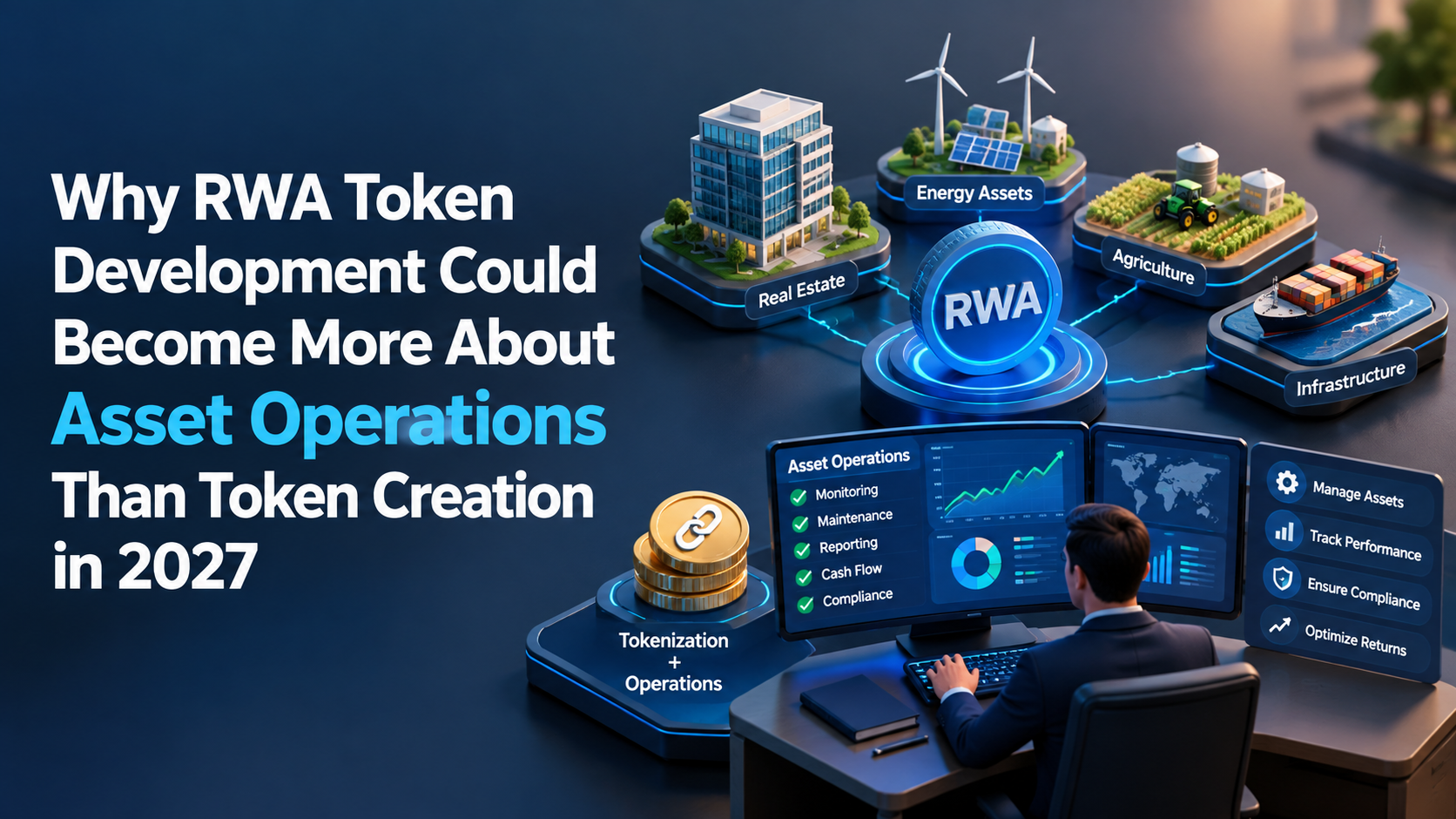
Real-world asset markets are moving toward a model where blockchain may play a role in much more than issuing digital tokens. In the early stages of RWA tokenization, much of the discussion focused on converting ownership or economic rights into blockchain-based tokens. By 2027, the discussion could shift toward what happens after those tokens are issued.
An RWA token has limited practical value if the asset behind it is not properly managed. A property still needs rent collection, maintenance records, valuations, ownership records, tax handling, investor reporting, and compliance checks. A private credit instrument still needs payment tracking, borrower information, interest calculations, and settlement processes. These activities sit outside the token itself, but they can determine how useful a tokenized asset becomes.
This could change the priorities for RWA token development. Instead of focusing mainly on token contracts and issuance portals, projects may place greater attention on asset servicing, data management, investor administration, compliance, reporting, and lifecycle management.
For an RWA tokenization development company, this creates a wider development scope. The platform may need to connect blockchain records with real-world business operations so that asset information remains useful throughout its lifecycle.
From Token Creation to Asset Lifecycle Management
Token creation is only one stage in an asset's digital lifecycle. Once an asset has been represented through tokens, several operational activities begin. These may include investor onboarding, ownership updates, income distribution, asset valuation, corporate actions, document management, and regulatory reporting.
Consider a tokenized commercial property. The property could generate rental income every month. Investors may hold different quantities of tokens, while their ownership records remain associated with verified identities. When rent is collected, the platform may need to calculate each investor's share and record the distribution.
The same process may apply to tokenized credit. The platform may need to monitor principal balances, interest payments, maturity dates, defaults, and repayment events. The token represents the financial interest, but operational systems keep that interest connected to the underlying asset.
This means RWA tokenization development may increasingly involve software that manages the asset after issuance rather than focusing only on the issuance event.
Why Asset Operations Could Become More Important in 2027
A token can be created relatively quickly compared with the years of administration that may follow. Real-world assets have continuing obligations. Their values can change, contracts can expire, payments can be delayed, ownership can change, and regulatory requirements can evolve.
This creates a practical question for RWA platforms: what happens to the token when the underlying asset changes?
A property token may need updated valuation information. A credit token may need a new payment status. A fund token may require information about portfolio holdings. A commodity token may need updated custody information.
The platform therefore needs mechanisms for recording these events and connecting them with the digital asset. This could make operational infrastructure a larger part of RWA token development projects in 2027.
Method 1: Connect Asset Records With Token Records
One approach is to create a system where the token remains connected to a structured asset record. The asset record could contain information such as property documents, valuation reports, payment schedules, ownership details, contracts, and service records.
The blockchain can maintain the relevant ownership or transaction information, while external systems can hold documents and operational data that do not need to exist directly on-chain.
For example, a real estate tokenization platform could connect each property token with information about the associated property. Investors could see relevant asset information through the platform while ownership events and selected transaction records are recorded on-chain.
This approach gives RWA tokenization a wider operational purpose. The token becomes one component of an asset management system rather than the entire product.
Method 2: Introduce Automated Payment Administration
Income-producing assets create recurring operational work. Rental properties may generate monthly income, while credit products may produce interest payments. Funds can have distributions based on predefined schedules.
An RWA tokenization company could develop payment administration systems that calculate investor entitlements based on token ownership and applicable agreements.
Smart contracts may handle certain distribution rules, while external financial systems can manage payment processing. A platform could record payment status, transaction history, deductions, and investor statements.
The practical benefit is that investors and asset managers can view the relationship between the asset's financial activity and the tokens representing economic rights.
Method 3: Add Continuous Valuation Management
Asset value does not remain fixed after token issuance. Property prices can change, credit quality can develop, and commodity prices can move. A tokenization platform therefore needs a process for updating valuation information.
An RWA token development project could include valuation data feeds, approval workflows, historical valuation records, and alerts when an asset requires reassessment.
For example, a property valued at $10 million when tokens are issued may receive a different valuation later. The platform could retain historical values while presenting the latest approved valuation to authorized users.
This does not mean the blockchain itself determines an asset's market value. Instead, blockchain records can provide an auditable history of relevant valuation events while approved data providers or asset managers supply the underlying information.
Method 4: Manage Compliance Throughout the Asset Lifecycle
Compliance is not limited to the token issuance stage. Investor eligibility, identity verification, transaction restrictions, jurisdictional rules, and reporting obligations may continue throughout the asset lifecycle.
A RWA tokenization platform development company may therefore focus on compliance workflows that remain active after investors receive tokens.
For instance, a platform could check whether an investor remains eligible to hold a particular asset. Transfer rules could be applied before a transaction is processed. Investor records could also be linked with ownership records so that asset managers have a consistent view of who holds the digital rights.
The exact requirements will depend on the jurisdiction, asset category, investor type, and legal structure.
Method 5: Bring Servicing Data Into the Platform
Asset servicing may become one of the most important areas for RWA tokenization development. Servicing refers to the ongoing activities required to administer an asset or financial product.
For real estate, this can include rent collection, property expenses, maintenance records, insurance information, tax records, and lease updates.
For credit assets, servicing can involve payment collection, interest calculations, borrower reporting, delinquency tracking, and maturity management.
For funds, it may include subscription records, redemption processing, portfolio reporting, and distribution administration.
An RWA tokenization platform can connect these activities with the digital ownership layer. This creates a relationship between what happens to the real asset and what investors see through their token holdings.
Method 6: Create Investor Reporting Around Asset Activity
Investors may need more information than a token balance. A dashboard showing only the number of tokens held may provide limited insight into the asset's performance and status.
A more operational RWA platform could present information such as current asset valuation, income received, distributions, expenses, payment history, ownership percentage, important documents, and upcoming events.
For example, an investor holding tokens linked to an income-producing property could view rental income received during a period and distributions associated with their holdings.
This approach could make investor reporting a regular component of RWA tokenization rather than an additional service handled outside the platform.
Method 7: Use Event-Based Asset Management
Real-world assets generate events throughout their lifecycle. A lease may begin or end. A loan payment may arrive. A property may be sold. A fund may announce a distribution. A valuation may be updated.
RWA token development can incorporate event-based workflows to record these changes and initiate relevant actions.
An event could trigger a smart contract function, create an internal task, update an investor dashboard, or request approval from an authorized administrator.
This model can make the platform more responsive to asset activity. Instead of treating token issuance as the main event, the system can treat the asset lifecycle as a sequence of operational events.
RWA Platforms May Become More Like Asset Operating Systems
The term "RWA platform" may eventually describe a broader product than a token issuance application. It could include asset onboarding, legal documentation, investor verification, token management, payment processing, valuation management, reporting, compliance, custody connections, and secondary transaction administration.
This could affect the role of an RWA tokenization development company. Development teams may need knowledge across blockchain engineering, financial technology, asset management workflows, identity systems, data infrastructure, and compliance technology.
The result could be platforms where token creation is only one feature among many.
What This Means for Real Estate Tokenization
Real estate provides a useful example because properties have long operating lifecycles. A tokenized property does not stop generating expenses, rent, maintenance requirements, tax obligations, or valuation changes after tokens are issued.
A real-world asset tokenization company working with property assets may therefore need systems that connect property management information with token ownership.
For example, when rental income is received, the platform could calculate distributions. When a lease changes, authorized users could update the property's records. When a valuation report is approved, the platform could retain the new valuation alongside previous records.
This could make real estate tokenization less about selling digital representations and more about managing the relationship between property operations and digital ownership.
The Role of Smart Contracts Could Also Change
Smart contracts are commonly associated with token issuance, transfers, and ownership rules. In 2027, their role could extend further into asset administration.
A smart contract might contain rules for distribution dates, transfer restrictions, voting rights, redemption conditions, or other contractual events. However, not every operational activity should necessarily happen directly on-chain.
External systems may still be required for documents, banking processes, valuation information, identity data, and other information that requires privacy or specialized infrastructure.
This creates a hybrid architecture where blockchain handles selected ownership and transaction functions while external systems manage operational information.
What RWA Developers May Need to Prioritize
The development priorities for RWA projects could change as the market matures. Token standards and smart contracts will remain important, but they may represent only one portion of the technical work.
Developers may also need to consider asset data models, API connections, payment systems, identity verification, document management, valuation feeds, compliance workflows, investor dashboards, administrative controls, and reporting systems.
Security also remains important because RWA platforms may deal with valuable assets, financial information, investor records, and ownership data.
For businesses entering this market, selecting an RWA tokenization platform development company may therefore involve reviewing its ability to address the full asset lifecycle rather than checking only its token creation capabilities.
Could Asset Operations Define the Next Phase of RWA Tokenization?
The future of RWA tokenization may depend less on whether another asset can be represented by a token and more on what happens after that representation exists.
Token creation can establish a digital ownership record, but asset operations give that record continuing relevance. Valuations, payments, documents, compliance events, investor activity, and asset changes all need to be managed over time.
This could make RWA token development increasingly connected with financial operations and asset administration. Businesses may begin evaluating platforms based on how well they manage an asset from onboarding through ongoing servicing and eventually redemption or sale.
The concept does not remove the importance of tokenization. Instead, it places tokenization within a larger operational process.
Conclusion
By 2027, RWA tokenization could increasingly move toward managing what happens throughout an asset's lifecycle rather than focusing mainly on the moment a token is created. Property, credit, funds, commodities, and other real-world assets continue to generate financial, legal, operational, and reporting activities after issuance, creating demand for systems that connect these activities with digital ownership records. RWA tokenization development may therefore include valuation management, payment administration, investor reporting, compliance workflows, asset servicing, document management, and event-based processes alongside smart contracts and token infrastructure. For businesses entering this space, an RWA tokenization company may need to provide more than token issuance software, while an RWA tokenization platform development company may increasingly work across blockchain and asset operations. As this model develops, the relationship between real-world asset activity and digital ownership could become an important part of the industry's direction. Blockchain App Factory provides RWA tokenization development services.
FAQs
1. What is RWA token development?
RWA token development refers to creating blockchain-based tokens that represent ownership, rights, claims, or economic interests connected to real-world assets. The process can include smart contracts, investor management, compliance systems, asset records, and supporting platform infrastructure.
2. Why could asset operations become more important for RWA platforms?
Asset operations continue after token issuance. Properties still generate rent and expenses, credit products require payment monitoring, and funds require reporting and distributions. Managing these activities can become an important part of operating a tokenized asset.
3. What can an RWA tokenization platform manage?
Depending on its design, an RWA tokenization platform can manage asset onboarding, investor verification, token issuance, ownership records, payments, distributions, valuation information, compliance processes, reporting, documents, and selected secondary transactions.
4. How can smart contracts support RWA asset operations?
Smart contracts can apply predefined rules for ownership, transfers, distributions, voting, redemption, and other contractual events. External systems may still handle banking, documents, identity information, valuations, and other operational data.
5. Why is valuation management important in RWA tokenization?
Real-world asset values can change after token issuance. A valuation management system can maintain historical valuations, record new approved valuations, and present relevant information to authorized investors and administrators.
6. What does an RWA tokenization development company provide?
An RWA tokenization development company may provide services covering smart contracts, token platforms, investor dashboards, asset management systems, compliance workflows, payment functions, APIs, and other components required for a tokenized asset ecosystem.
7. Could real estate benefit from operational RWA platforms?
Yes. Real estate has continuing activities such as rent collection, property expenses, leases, maintenance, valuations, and investor distributions. Connecting these activities with token ownership can create a broader digital management model for tokenized property.
8. Will token creation remain important in 2027?
Token creation is likely to remain an important component of RWA projects. The potential change is that it may become one part of a larger system covering the full lifecycle of the underlying asset.
Bub
Do?

Kategorien
Mehr lesen
The Business Process Outsourcing Services Market growth is expanding rapidly as organizations increasingly outsource critical business operations to improve operational efficiency, reduce costs, and enhance customer experiences. Business Process Outsourcing Services Market was estimated at 299.1 USD Billion in 2024. The Business Process Outsourcing Services industry is projected to grow...

Starting July 13th, Riot Games will begin collecting voice chat data within Valorant across North America as part of their new initiative to curb disruptive conduct. According to an update on the official Valorant website, the company has revised its privacy policies and terms of service to permit the recording and review of in-game voice communications. Riot emphasizes that these recordings...
The application of Artificial Intelligence in Animal Health extends directly into the daily lives of companion animals through the rise of sophisticated, AI-powered wearable technology and smart home monitoring systems. Devices like smart collars or in-home cameras equipped with sensors and microphones continuously collect data streams related to an animal's heart rate, respiratory patterns,...
Découvrez les chemins menant aux succès secrets de Nod-Krai. Parcourez les terres pour accomplir ces défis uniques. Les quêtes mondiales renferment des récompenses cachées pour les explorateurs assidus. Voici les sentiers à suivre pour chaque accomplissement. Les Couleurs du Vide vous appellent près des frontières de Snezhnaya. Le...
In Black Myth: Wukong, players encounter a formidable optional adversary early in their journey—the Wandering Wight. This imposing figure, characterized by an unusually large head and lanky frame, presents a significant challenge that surprises many. Despite its odd proportions, the Wandering Wight is no pushover. It unleashes relentless combos, including a rapid triple shockwave created...
