Crypto.

 Passport
 Conference call
 send money
 الشروط
 الخصوصية
 Sierra market
Plumbing Emergency in Edmonton? Start Here
Emergency Plumber Edmonton: Your Complete Guide to Fast, Reliable Help
It's 2 a.m. in January, it's -28°C outside, and you hear water running somewhere it shouldn't be. Or it's a heavy spring melt and your basement floor drain is gurgling. Or you smell gas near the furnace.
Plumbing emergencies rarely happen at a convenient time, and in Edmonton our climate makes them more likely. Freeze-thaw cycles, older housing stock, and heavy seasonal runoff all put stress on home plumbing systems.
This guide covers how to tell whether you have a true plumbing emergency, what to do in the first ten minutes, how to choose a trustworthy emergency plumber in Edmonton, and how to prevent the most common disasters. It also covers backwater valves, Poly-B pipe replacement, gas line work, sump pumps, and hot water tanks, which are the jobs that most often turn into after-hours calls.
What Counts as a Plumbing Emergency in Edmonton?
Not every plumbing problem needs a midnight call-out. A dripping faucet or a slow drain can wait until morning. These situations, however, should be treated as emergencies:
-
A burst or leaking pipe that you can't control with the shut-off valve
-
Sewage backup through floor drains, toilets, or tubs
-
No hot water combined with a leaking tank, especially if water is pooling
-
A suspected gas leak (a rotten-egg smell or a hissing sound near an appliance or gas line)
-
A failed sump pump during heavy rain or snowmelt
-
Frozen pipes that have stopped water flow or show visible cracks or bulging
-
A completely blocked main drain that affects the whole house
The rule of thumb: if the problem is causing active property damage, creating a health or safety risk, or leaving your home without essential water or heat, call an emergency plumber immediately.
Your First 10 Minutes: What to Do Before the Plumber Arrives
What you do before help arrives can significantly limit the damage. Here's a practical checklist.
1. Shut Off the Water
Find your main water shut-off valve, usually near the water meter or where the main line enters the home. Turn it fully clockwise. Every household member should know where it is before an emergency happens.
2. Turn Off Electricity if Water Is Near Outlets or Panels
If water is pooling near electrical outlets, appliances, or your panel, and you can reach the breaker safely without standing in water, turn off power to that area. If you can't do this safely, stay out and tell the plumber and, if needed, an electrician.
3. If You Smell Gas, Leave Immediately
Do not turn lights on or off, use a lighter, or operate any switches. Get everyone, including pets, out of the house, then call 911 and your gas utility's emergency line from outside. A gas leak is not a DIY situation.
4. Contain the Water
Use buckets, towels, and a wet/dry vacuum to limit spread. Move valuables and electronics away from the affected area.
5. Document Everything
Take photos and videos of the damage before you clean up. Your home insurer will likely ask for them, and a good plumber will also give you a written description of the cause and the repair.
How to Choose a Trustworthy Emergency Plumber in Edmonton
Emergencies make homeowners vulnerable. When you're stressed and rushed, it's easy to hire the first name that appears in a search. Before you agree to any work, check these points.
Licensing and certification. In Alberta, plumbing and gas work must be done by properly certified tradespeople, such as journeyperson plumbers and gas fitters. Ask for credentials. A legitimate company will provide them without hesitation.
Permits. Many jobs, including gas line installations, backwater valve installs, and water heater replacements, require permits under Alberta's safety codes system. A professional will handle this. If someone suggests skipping the permit to "save you money," walk away. Unpermitted work can create insurance and resale problems.
Transparent pricing. Ask about the after-hours call-out fee, the hourly rate or flat-rate pricing, and whether there's a charge for diagnosis. Get the estimate in writing (a text or email counts) before work starts.
Genuine 24/7 availability. Some companies advertise around-the-clock service but only take messages overnight. Ask directly: "If I call at 3 a.m., will a technician actually be dispatched?"
Reviews and local reputation. Read recent reviews on Google and other platforms, and look for patterns in how the company handles problems, not just star ratings.
Insurance and warranty. Confirm the company carries liability insurance and ask about warranties on both parts and labour.
Common Emergency Plumbing Problems in Edmonton (and Their Long-Term Fixes)
An emergency repair stops the immediate problem. A good plumber will also tell you whether an underlying issue needs a permanent fix. Here are the situations Edmonton homeowners most often face.
Sewage Backup and Backwater Valve Edmonton Homeowners Should Know About
When the municipal sewer system is overwhelmed by heavy rain or rapid snowmelt, wastewater can flow backward into a home through the lowest drains, usually in the basement. The result is unsanitary, expensive to clean, and stressful.
A backwater valve in Edmonton homes is a one-way valve installed on the sewer line that lets wastewater flow out but closes automatically if flow reverses. It's one of the most effective ways to protect a basement from sewer backup.
Points to keep in mind:
-
Backwater valves need periodic inspection and cleaning to work reliably. A valve that's clogged with debris or stuck open won't protect you.
-
Installation typically requires a permit, and the work should be done by a licensed plumber.
-
The City of Edmonton has offered subsidy programs for eligible homeowners in the past. Programs and eligibility change, so check the City's website for current details before you book.
-
Many insurers offer better coverage terms or require a backwater valve for sewer backup coverage. Call your provider to confirm.
If you've had one backup, or your home is in an older neighbourhood with combined or aging sewer infrastructure, ask an emergency plumber whether a valve is appropriate for your property.
Poly-B Pipe Failures: When to Consider Poly-B Replacement Edmonton Homes Need
Polybutylene (Poly-B) piping was widely installed in Canadian homes from roughly the late 1970s to the mid-1990s. Over time, it can become brittle and fail, especially at fittings, because of reactions with chlorine and other oxidants in municipal water. Failures can be sudden and can cause serious water damage, often inside walls or ceilings, where leaks go unnoticed.
Signs you may have Poly-B:
-
Grey, blue, or black flexible plastic piping near the water heater, main shut-off, or under sinks
-
A home built between the late 1970s and mid-1990s
-
Markings such as "PB2110" printed on the pipe
If you find it, consider Poly-B replacement in Edmonton as a planned project rather than waiting for a burst. Replacement with PEX or copper is usually done in stages, and a planned job costs less and is far less disruptive than emergency damage repair. Some insurers also ask about or surcharge Poly-B, so it's worth a phone call.
Gas Line Emergencies and Gas Line Installation Edmonton Residents Should Trust to Professionals
Natural gas is safe when installed and maintained correctly. But gas work is not a place for shortcuts. Whether you're adding a gas range, a BBQ line, a fireplace, or a garage heater, gas line installation in Edmonton should only be done by a certified gas fitter, with a permit and inspection.
Warning signs that need immediate attention include:
-
A rotten-egg (mercaptan) smell
-
A hissing sound near pipes or appliances
-
Dead vegetation near a buried gas line
-
Pilot lights that keep going out
-
Unexplained headaches or dizziness indoors (this can also indicate carbon monoxide; make sure you have working CO detectors)
If you suspect a leak, leave the home and call 911 and your gas utility from a safe distance.
Flooded Basements and Sump Pump Replacement Sherwood Park Homeowners Rely On
Homes in Sherwood Park and across the Edmonton region often depend on sump pumps to keep groundwater out of basements, especially during spring melt and summer storms. Sump pumps typically last around 7–10 years, and they tend to fail when they're working hardest.
Signs it's time for sump pump replacement in Sherwood Park or elsewhere:
-
The pump is over eight years old
-
It runs constantly or cycles erratically
-
It makes grinding or rattling noises
-
The float switch sticks
-
You see rust, or the pit doesn't drain fully
Consider a battery backup or a water-powered backup as well. Storms that overload the pump often knock out power at the same time.
Water Heater Failure and Hot Water Tank Replacement Sherwood Park and Edmonton Homes Face
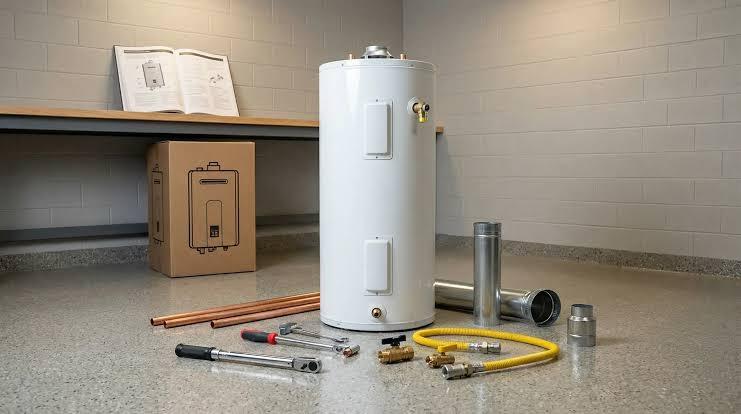
Most conventional tanks last about 8 to 12 years. As a tank ages, sediment builds up and the steel liner corrodes. A failing tank can leak or, in worse cases, rupture.
Warning signs:
-
Water pooling around the base of the tank
-
Rusty or discoloured hot water
-
Rumbling or popping noises (sediment buildup)
-
Inconsistent water temperature
-
A tank older than 10 years
If you're weighing hot water tank replacement in Sherwood Park or Edmonton, ask your plumber about options such as standard tanks, high-efficiency models, and tankless units. The right choice depends on your household size, gas or electric supply, and venting setup.
Frozen and Burst Pipes
Edmonton winters are hard on plumbing. Pipes in exterior walls, unheated crawl spaces, garages, and poorly insulated areas are the most vulnerable.
If a pipe freezes but hasn't burst, keep the tap slightly open and gently warm the pipe with a hair dryer or warm towels. Never use an open flame. If a pipe has burst, shut off the main immediately and call a plumber.
Real-Life Scenarios (Illustrative Examples)
The following are composite examples based on common situations, not specific client cases.
Scenario 1: The spring melt backup. A homeowner in an older Edmonton neighbourhood notices water bubbling up from the basement floor drain during a heavy rain. They shut off water use, call an emergency plumber, and the plumber finds no backwater valve on the sewer line. After cleanup, they install a permitted valve and confirm coverage with their insurer. They avoid a repeat.
Scenario 2: The hidden Poly-B leak. A family in a 1980s home discovers a stained ceiling. The plumber traces it to a failed Poly-B fitting in the wall. After the emergency repair, the family schedules a phased replacement of the rest of the system, which costs far less than a second flood.
Scenario 3: The aging water heater. A homeowner in Sherwood Park notices a small puddle beside a 13-year-old tank. Because they call promptly, the tank is replaced before it fails completely.
The common thread in all three is quick action and a permanent fix, not only a temporary patch.
Pros and Cons of Calling an Emergency Plumber vs. Waiting
|
Calling immediately |
Waiting until business hours |
|
✅ Limits property damage |
✅ Usually lower after-hours fees |
|
✅ Reduces health and safety risks |
✅ More time to compare quotes |
|
✅ Faster insurance documentation |
❌ Damage can worsen overnight |
|
❌ Higher call-out rates |
❌ Risk of mould, structural damage, or gas hazards |
Bottom line: for active leaks, sewage, gas, or flooding, the cost of waiting almost always exceeds the after-hours premium. For minor issues, shut off the affected fixture and book a regular appointment.
Preventing the Next Emergency: A Simple Home Checklist
-
Know your shut-offs. Locate and test the main water valve twice a year.
-
Winterize. Insulate exposed pipes, disconnect outdoor hoses, and shut off exterior taps before freezing weather.
-
Test your sump pump each spring by pouring water into the pit.
-
Flush your water heater annually to reduce sediment.
-
Inspect for Poly-B and other aging pipes.
-
Maintain your backwater valve according to the manufacturer and plumber recommendations.
-
Install water leak detectors near the water heater, sump pit, and washing machine.
-
Schedule a yearly plumbing inspection, especially if your home is more than 25 years old.
Frequently Asked Questions
How much does an emergency plumber in Edmonton cost?
Costs vary with the time of day, the complexity of the job, and the parts needed. Expect an after-hours call-out fee on top of the repair. Always ask for a written estimate before work begins.
How fast can an emergency plumber arrive?
Response times depend on the company, your location, and how busy they are, particularly during cold snaps or storms. Ask for an estimated arrival time when you call.
Does home insurance cover plumbing emergencies?
It depends on the policy. Sudden and accidental water damage is often covered, but sewer backup usually requires additional coverage, and gradual leaks or neglect may be excluded. Review your policy or call your insurer.
Do I need a permit for a backwater valve, gas line, or water heater?
In many cases, yes. A licensed contractor will pull the permits and arrange inspections.
Should I replace Poly-B before it fails?
Many homeowners choose to, because planned replacement is usually cheaper and less disruptive than repairing a flood. A plumber can assess your specific system.
Can I fix a gas leak myself?
No. Leave the home and call emergency services and your gas utility. Repairs must be done by a certified gas fitter.
Conclusion: Be Prepared Before Disaster Strikes
Plumbing emergencies are stressful, but the right preparation makes them manageable. Know where your main shut-off is, recognize the true emergencies, and act quickly to limit damage. When you need help, choose a licensed, insured, and transparent emergency plumber in Edmonton who fixes the problem and also advises on lasting solutions such as a backwater valve, Poly-B replacement, a safe gas line installation, a reliable sump pump, or a new hot water tank.
Don't wait for the next cold snap or spring melt to find out what's lurking in your walls and under your basement floor.
Bub
Do?

الأقسام
إقرأ المزيد
Path of Exile 2 continues to surprise players with new mechanics and unexpected discoveries, and one of the latest crafting breakthroughs could completely reshape the game's high-end economy. Whether you're chasing mirror-tier gear or simply looking to optimize your build with POE2 Currency, understanding advanced crafting interactions has never been more valuable. A recently revealed technique...
Market Report Analysis The global pharmaceutical refining, advanced skincare compounding, commercial textile finishing, and specialty industrial solvent sectors are managing deeply integrated structural transitions aimed at maximizing chemical stabilization, increasing active ingredient bioavailability, and reducing process toxicity. As global healthcare watchdogs implement stricter criteria...

One of the most common questions we hear is: "Is this a scam?" Here’s a simple way to spot one: if someone demands payment exclusively through wire transfers, gift cards, or cash reload cards, it’s almost certainly a scam. Scammers often pressure you to pay using methods like iTunes cards, MoneyPak, Vanilla Reload, or Reloadit cards. They might claim it’s to claim a prize,...
Participants in our exciting ticket giveaway should note that the registration window opened at 12:00:01 am ET on October 15, 2024, and closed at 11:59:59 pm ET on October 25, 2024. Although entries are no longer being accepted, anticipation continues to build as we prepare to announce the lucky winner soon. Stay vigilant by checking your email for updates! Mark your calendar for an incredible...
Introduction An emotional support animal can provide comfort and companionship to people who experience emotional or mental health-related challenges. For individuals who may benefit from an emotional support animal, understanding how an ESA letter works is an important first step. Many people search for information about an emotional support animal letter, ESA registration, and ESA...