Crypto.

 Passport
 Conference call
 send money
 الشروط
 الخصوصية
 Sierra market
Understanding Fire Retardant Liquid Materials, Applications and Design
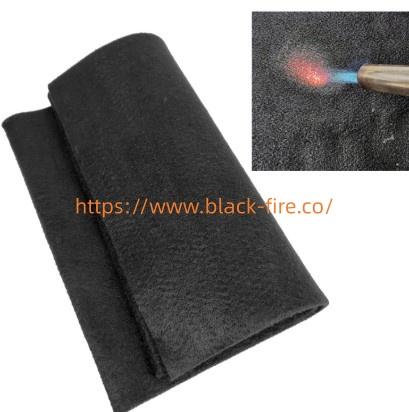
When selecting a liquid fire protection treatment, material compatibility should be considered first. Different substrates react differently to liquid treatments, and the intended application can influence whether a product is suitable for textiles, wood, plastics, interior materials, or other surfaces. A good purchasing process therefore begins with identifying the material that needs treatment and understanding how the liquid interacts with its surface and internal structure.
Formulation is another important consideration. Modern flame-retardant liquids can use different chemical or bio-based approaches to reduce ignition and flame propagation. BlackFire presents a bio-based formulation based on chitosan and nano-titanium dioxide, using a gas-phase condensation mechanism to create a protective film during combustion. The company positions this approach as an alternative to traditional formulations containing certain hazardous substances.
Material compatibility should also be considered together with the original appearance and physical characteristics of the treated product. For fabrics, users may want the treatment to preserve softness, flexibility, and drape. For interior materials, maintaining the original visual effect can be equally important. A treatment that changes the surface too dramatically may not be appropriate even if it provides the desired functional effect.
The purchasing process should therefore focus on the complete application rather than the liquid alone. Buyers can consider where the material will be used, how frequently it will be handled, whether it will be cleaned, and what environmental conditions it may encounter. Textile curtains, upholstery, automotive interiors, furniture surfaces, and industrial materials can all have different treatment requirements.
Application method is another practical factor. Liquid flame-retardant products can be applied through spraying, dipping, coating, or other treatment processes depending on the substrate and product formulation. BlackFire's product information describes spraying as a practical method for treating fabrics and other surfaces, allowing the treatment to be incorporated into existing material-protection processes.
The condition of the substrate before application can also affect the user experience. Surfaces should generally be clean and appropriately prepared so that the treatment can interact with the material as intended. Buyers working with industrial production lines may need to consider whether the application process can be integrated into existing finishing procedures without creating unnecessary handling steps.
Functional technology increasingly focuses on creating protection while maintaining material usability. A liquid treatment can form a protective layer on the surface or interact with the material during exposure to heat and flame. BlackFire describes its bio-based flame-retardant spray as using a gas-phase condensation mechanism that forms a protective film during combustion, helping to limit contact between the flame and oxygen.
Environmental considerations have also become part of product selection. Buyers may wish to understand the formulation, potential emissions, handling requirements, and environmental profile of a flame-retardant treatment. BlackFire states that its newer bio-based flame-retardant products avoid halogens, highly toxic phosphides, and antimony substances, while emphasizing environmental compatibility. Such claims should still be evaluated against the documentation and requirements relevant to the intended application.
User experience is closely related to application convenience. A treatment that can be incorporated into an existing spraying or finishing process may be easier for manufacturers and facility operators to adopt. For smaller applications, ready-to-use packaging can also make localized treatment more practical. BlackFire offers flame-retardant spray products intended for targeted protection and describes applications involving textiles, furnishings, automotive interiors, and public spaces.
Maintenance should be considered before purchasing. Washing, rubbing, moisture, cleaning agents, and repeated handling may influence how a surface treatment remains on a material. The actual maintenance conditions depend on the substrate and formulation, so users should obtain application and care guidance from the supplier rather than assuming that every treated material will behave in the same way.
BlackFire has also published information discussing how washing can affect sprayed flame-retardant treatments on textiles. The company notes that repeated cleaning and physical handling may gradually influence how a surface-applied treatment remains distributed across a textile. This makes maintenance guidance an important part of responsible product selection.
Design and appearance are particularly relevant when the treatment is applied to visible materials. Furniture coverings, curtains, automotive interiors, decorative textiles, and other finished surfaces need to retain an appearance appropriate for their surroundings. A suitable treatment should therefore be evaluated not only for its fire-related function but also for its influence on texture, surface feel, color, and overall presentation.
For textile manufacturers, appearance and performance need to be considered together. A treatment that preserves the original character of the fabric can be easier to incorporate into finished products. Where a protective coating changes the surface, designers can consider whether the new texture or finish is compatible with the intended product.
Customization can become useful when standard liquid treatments do not fully match a specific application. Industrial users may need to discuss the substrate, production process, application method, environmental conditions, and maintenance requirements with the manufacturer. Early technical communication can help determine whether a liquid treatment or an inherently flame-resistant material would be more appropriate.
BlackFire's wider product portfolio includes flame-retardant fabrics, Carbonlene fiber, Carbonlene fabric, flame-retardant materials, and fireproof felt. This broader material range provides context for comparing surface treatments with materials that incorporate fire-related properties into their basic construction.
For manufacturers and purchasing teams, supplier quality control is another consideration. BlackFire states that its textile quality-management system includes incoming material inspection, production-process control, performance testing, and comprehensive testing before finished products are released. Such processes can provide useful information when buyers are evaluating consistency and documentation alongside the product itself.
A thoughtful selection process can therefore connect formulation, substrate compatibility, application technology, environmental considerations, maintenance, user convenience, and appearance. Instead of treating a flame-retardant liquid as an isolated chemical product, manufacturers can evaluate how it fits into the complete lifecycle of the material being protected.
Zhejiang Taizhou BlackFire Technology Co., Ltd. focuses on research and development and industrial applications involving fire-prevention and flame-retardant materials. Its product portfolio and technical information cover liquid treatments as well as textile-based protection, providing different approaches for manufacturers working across industrial, transportation, building, textile, and other applications.
For more information about Zhejiang Taizhou BlackFire Technology Co., Ltd., its flame-retardant materials, liquid fire protection products, Carbonlene fabrics, and related solutions, visit https://www.black-fire.net/product/.
Bub
Do?

الأقسام
إقرأ المزيد
Marvel Rivals is now available across four different platforms, with cross-play enabled between all of them. However, players face limitations when switching platforms, as doing so requires creating a new account, resulting in the loss of all progress and cosmetic items. Fortunately, Netease is addressing this issue in Season 5 by introducing cross-progression. Starting with this update,...

Cesares Fury Event Overview The threat posed by the Cesares endangers our security and demands urgent action. In Kingshot, the Cesares Fury occurs once every month. This event tasks players with locating and overcoming NPCs known as Cesares Rebels. Participants have the option to confront these foes alone with a solo march or collaborate with their alliance members to launch a rally attack....
Electronic systems deployed in aerospace, satellite communications, and high-altitude defense applications operate under extreme environmental stresses, including intense cosmic radiation, heavy ions, and severe thermal cycles. Standard commercial Static Random-Access Memory devices are highly susceptible to Single Event Upset events when hit by energetic particles, which can flip saved bits...
Two Daughters Entertainment welcomes a seasoned leader as Josh Berger joins its board. ' His arrival marks a strategic shift as the company evolves from television success toward feature films and global intellectual property. ' The upcoming animated feature "The Land of Sometimes" heralds this new phase, boasting a cast including Ewan McGregor and creative contributions from Oscar winner Tim...
The GMP Testing Service Market has witnessed significant advancements as pharmaceutical companies worldwide emphasize regulatory compliance and high-quality production standards. With increasing demand for biologics, vaccines, and complex drug formulations, GMP testing services have become critical in ensuring product safety and efficacy. The market is driven by stringent regulatory frameworks,...