


 Crypto.
 Sobre
Sobre
 Passport
 Conference call
 send money
 Termos
 Privacidade
 Sierra market
How to Improve Digital Transformation and Customer Experience
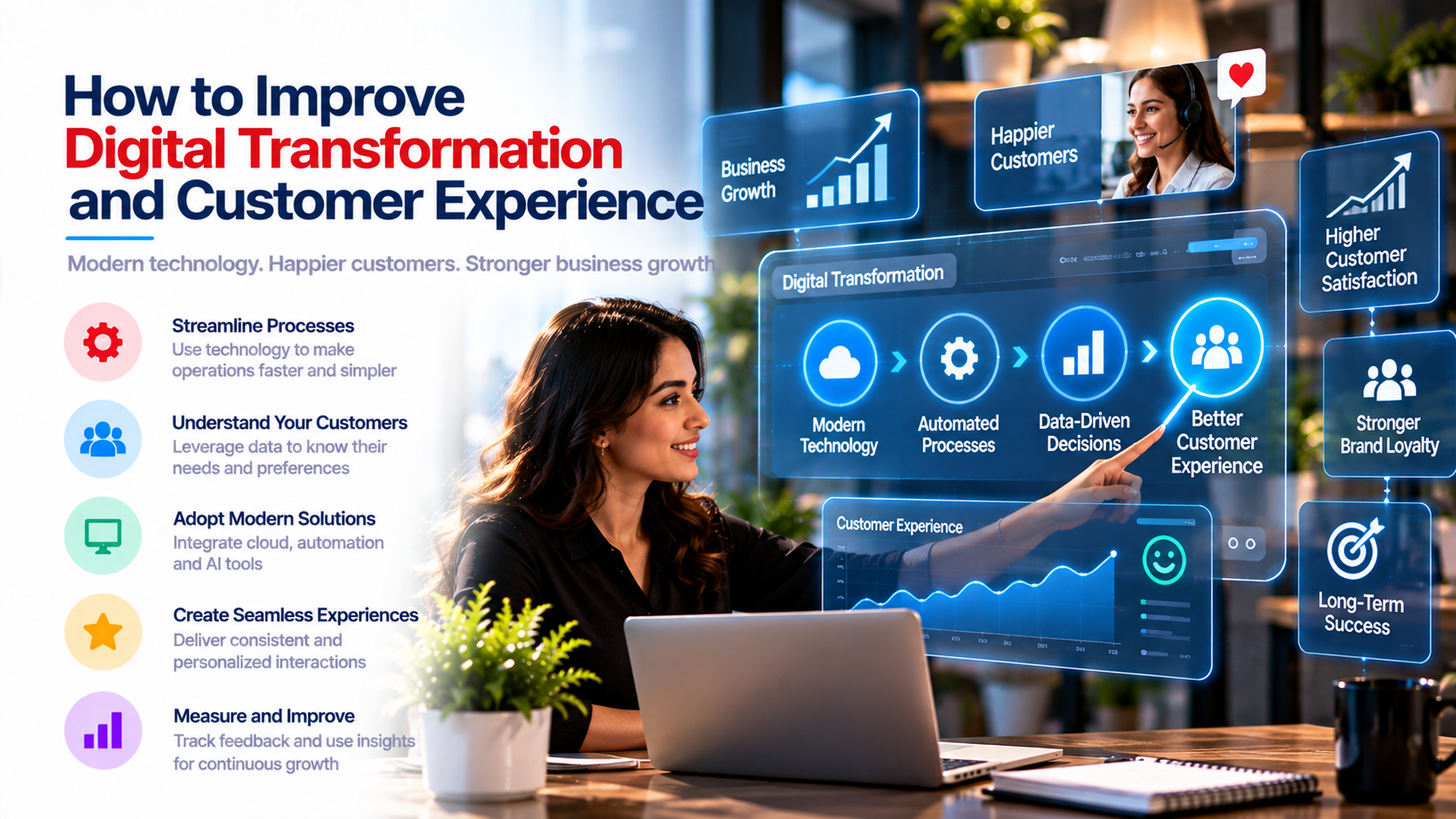
Imagine a customer visiting your website to purchase a product. They find what they need, but the checkout process is confusing. The website loads slowly, customer support takes too long to respond, and the experience becomes frustrating. They leave. Simple as that.
This is where digital transformation and customer experience become closely connected. Businesses are no longer competing only through products or pricing. Customers also expect convenience, speed, personalized communication, and reliable digital services.
Digital transformation helps companies improve these interactions by using modern technology, automation, data analytics, and connected systems. However, adopting new technology alone is not enough. The real goal is to make every customer interaction easier and more valuable.
Understanding the Connection Between Digital Transformation and Customer Experience
Digital transformation refers to integrating digital technologies into business operations, services, and decision-making processes. It changes how organizations operate and deliver value to customers.
Customer experience, on the other hand, includes every interaction a person has with a business, from discovering a brand to receiving after-sales support.
When these two areas work together, companies can create smoother customer journeys. For example, a retail business might introduce an online ordering system connected with inventory management. Customers receive accurate product availability, faster order processing, and timely delivery updates.
That is a practical example of technology improving everyday experiences.
1. Understand Customer Needs Before Implementing Technology
One common mistake businesses make is investing in digital tools without understanding what customers actually need. A new application may look impressive, but if it does not solve a real problem, customers will probably ignore it.
Start by examining customer feedback, support requests, website behavior, and purchasing patterns. These details help identify where customers experience difficulties.
For instance, if customers frequently contact support about order tracking, introducing an automated tracking portal could reduce frustration. Small improvements can make a noticeable difference.
Businesses should also create customer journey maps to understand how people interact with different departments and digital platforms.
2. Create a Seamless Omnichannel Customer Experience
Modern customers use several communication channels. They might discover a company through social media, browse its website, contact support through WhatsApp, and complete a purchase using a mobile application.
The experience should feel connected across all these touchpoints.
A disconnected system creates unnecessary friction. Customers may need to repeat information, explain previous complaints, or wait while employees search for records.
An integrated customer relationship management system can help businesses maintain consistent customer information across departments. This allows support teams to understand previous interactions and provide more relevant assistance.
A consistent experience builds confidence. And confidence encourages customers to return.
3. Use Data Analytics to Personalize Customer Interactions
Customer expectations are different. Some prefer detailed product information, while others want quick recommendations and straightforward purchasing options.
Data analytics helps businesses understand these preferences through browsing activity, purchase history, feedback, and customer engagement patterns.
With this information, companies can provide personalized recommendations, relevant offers, and more useful communication.
However, personalization should be handled responsibly. Businesses must respect customer privacy and explain how information is collected and used.
The objective is not to overwhelm customers with advertisements. It is to make their experience more relevant.
4. Improve Website Performance and Mobile Accessibility
Your website is often the first interaction customers have with your business. If it loads slowly or becomes difficult to navigate on mobile devices, visitors may leave before exploring your services.
A successful digital transformation strategy should include website optimization, responsive design, accessible navigation, and secure payment systems.
Businesses should regularly test their websites across different devices and internet connections. This is especially important when serving customers who use mobile networks or older smartphones.
Simple navigation, readable content, and clear calls to action can significantly improve usability.
Technology should remove barriers, not create new ones.
5. Automate Repetitive Tasks Without Losing Human Support
Automation can improve customer service by handling routine requests quickly. Chatbots, automated notifications, appointment scheduling, and self-service portals allow customers to access information without waiting for an employee.
For example, a customer might use a chatbot to check business hours or track an order. Meanwhile, complicated complaints can be transferred to a human support representative.
This balance matters.
Automation should c best rackspace email in lahore teams rather than replace meaningful human interaction. Customers still need empathy, understanding, and clear communication when dealing with sensitive or complicated issues.
6. Invest in Reliable Technology Transformation Services
Behind every smooth digital experience is a reliable technology infrastructure. Businesses need systems that can support increasing demand, protect customer information, and maintain consistent performance.
Professional technology transformation services can help organizations modernize legacy applications, integrate business platforms, improve cloud infrastructure, and introduce automation.
For companies managing complex software environments, DevOps practices can also improve deployment speed and system reliability.
Businesses exploring DevOps services in Lahore may consider solutions such as continuous integration, automated testing, cloud deployment, and infrastructure monitoring.
These improvements help reduce technical disruptions that directly affect customer satisfaction.
7. Strengthen Security and Build Customer Trust
Customers expect businesses to protect their personal and financial information. A single security incident can damage trust and create long-term reputational problems.
Digital transformation should therefore include cybersecurity as a core consideration rather than an afterthought.
Organizations should implement secure authentication, regular software updates, access controls, data encryption, and backup procedures.
Employees also need security awareness training because human mistakes can expose sensitive information.
A secure digital environment supports customer confidence and makes online interactions more dependable.
8. Measure Customer Experience and Continuously Improve
Digital transformation is not a one-time project. Customer expectations, technology, and business requirements continue to change.
Companies should regularly evaluate customer satisfaction through feedback surveys, support response times, customer retention, conversion rates, and website engagement.
These measurements help identify whether digital improvements are delivering meaningful results.
For example, if a new self-service portal reduces support requests but customer satisfaction also declines, the business should investigate whether customers are struggling to find human assistance.
Numbers provide direction, but customer feedback explains what those numbers mean.
Conclusion
Improving digital transformation and customer experience requires more than purchasing modern software. Businesses need to understand customer expectations, connect digital channels, personalize interactions, improve website performance, and maintain reliable technology infrastructure.
Automation, analytics, cybersecurity, and continuous improvement all contribute to a smoother customer journey.
For businesses planning their next stage of growth, Chromeis provides technology-focused solutions that support digital modernization, operational efficiency, and better customer experiences. By combining the right strategy with practical technology, organizations can create digital services that customers find useful, accessible, and dependable.
Frequently Asked Questions (FAQs)
1. What is the relationship between digital transformation and customer experience?
Digital transformation improves customer experience by using technology to simplify interactions, automate repetitive processes, personalize services, and make business operations more efficient.
2. How can small businesses improve customer experience through digital transformation?
Small businesses can begin with a mobile-friendly website, customer relationship management software, automated appointment reminders, online payment options, and responsive customer support.
3. Why is customer experience important in digital transformation?
Customer experience helps businesses evaluate whether technology investments are solving real problems. A successful transformation should make services easier to access and improve customer satisfaction.
4. What technologies help improve customer experience?
Common technologies include CRM platforms, artificial intelligence, data analytics, cloud computing, chatbots, automation tools, and integrated customer support systems.
5. How do technology transformation services support business growth?
Technology transformation services help businesses modernize applications, improve infrastructure, integrate systems, strengthen security, and automate workflows. These improvements can support scalability and more consistent customer service.
Bub
Do?

Categorias
Leia Mais
What is Digital Signage Software? Definition and Core Concept Let’s start simple. Digital signage software is the brain behind those screens you see in malls, restaurants, airports, hospitals, and offices. It controls what content appears on digital displays—videos, images, menus, announcements, promotions, dashboards, and more. Think of it as a remote control for...

You jump, you fall, and for a few seconds it's just wind noise and panic. Then you hit dirt with a sidearm and whatever plan you lied to yourself about on the way down. If you're trying to level fast or keep up with mates who no-life it, Battlefield 6 Boosting is something people talk about for skipping the worst of the early grind, but in the match you've still gotta do the basics: land smart,...

" Exactitude Consultancy That Adds Flavour To Your Success" Terahertz Technology Market analysis. THz imaging and spectroscopy for non-destructive testing, security, and healthcare diagnostics. The global Terahertz Technology Market is projected to reach USD 0.85 Billion in 2026 and USD 4.12 Billion by 2033, growing at a 25.3% CAGR. If you're looking for insights into the...

Emergen Research’s latest market research report focuses on the global Postpartum Health Supplement market, and the report provides in-depth analysis of each of its major segments. Reports about the global Postpartum Health Supplement market provide a comprehensive overview of the market, including market size, revenue growth rate, industry statistics, revenue shares among regional...

Accessing Neon Streaming Service When Outside New Zealand Traveling abroad but don't want to miss your favorite shows on Neon? This guide will help you maintain access to this New Zealand-exclusive streaming platform no matter where you are in the world. Why Can't You Access Neon Outside New Zealand? Neon implements geographical restrictions due to content licensing agreements. When you travel...
