


 Crypto.
 Sobre
Sobre
 Passport
 Conference call
 send money
 Termos
 Privacidade
 Sierra market
Exploring Materials, Technology and Handling in Spring Compression Tools
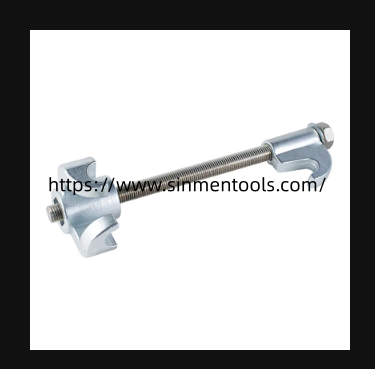
Coil springs are closely connected with vehicle suspension assemblies, and maintenance work can require controlled compression before related components can be serviced. Choosing a Coil Spring Compressor involves more than identifying a tool designed for spring work. Material quality, gripping structure, force transmission, positioning, handling, and overall construction can influence how naturally the tool fits into a suspension repair process. Taizhou Xinming Technology Co., Ltd. develops automotive repair tools and offers several spring compressor designs for different maintenance situations.
Material selection is a key consideration because spring compression tools must maintain their structural integrity while working against stored spring force. Steel and alloy-based materials are commonly used for load-bearing tool components because they provide a solid foundation for mechanical structures. The material should be considered together with forming and treatment processes, since the finished properties of a tool depend on more than the raw material alone.
Surface treatment also has a practical role. Coated, treated, or finished metal surfaces can help protect exposed areas from workshop conditions while creating a consistent appearance. For tools that are regularly handled with oily or dusty hands, a suitable surface can also make cleaning and visual inspection more convenient. Buyers should therefore examine the relationship between structural material and surface finishing instead of treating them as separate purchasing details.
The gripping arrangement is another important selection factor. Different spring compressor designs may use different claw or hook configurations to engage the spring. The contact points should correspond naturally with the spring structure and provide a stable position during operation. Xinming's product range includes two-claw, flat-claw, and four-claw spring compressor designs, showing how contact structures can be adapted to different working conditions.
Working space should be considered before selecting a particular design. Suspension components are often surrounded by other vehicle parts, which can limit how a technician positions a tool. A compressor intended for use around a wheel arch, for example, needs a structure that can be placed without unnecessary interference from nearby components. Xinming specifically describes some of its spring compressor designs as being suitable for limited space beneath the wheel arch.
The mechanical principle behind the tool is equally important. A spring compressor needs to transform the user's input into controlled movement of the gripping components. Threaded mechanisms can provide gradual adjustment, allowing the user to observe the changing position of the spring during the process. Other designs may introduce different approaches to force application. Buyers can compare these operating principles according to the type of suspension work and the working environment in which the tool will be used.
The relationship between the gripping components and the central operating mechanism deserves particular attention. If these parts are well coordinated, movement can remain more predictable as the tool is adjusted. The alignment of the compressor around the spring is also important because the tool should remain properly positioned rather than shifting unnecessarily during use. This makes structural design an important part of both function and operating confidence.
Manufacturing processes can influence the consistency of these mechanical relationships. Forging, machining, heat treatment, surface finishing, assembly, and inspection may all contribute to the final quality of a spring compressor. Taizhou Xinming Technology Co., Ltd. states that it maintains production and testing capabilities and has an R&D team supporting the development and customization of hardware tools.
User experience begins before the tool is actually operated. A technician needs to identify the correct gripping points, position the compressor, and understand the direction of adjustment. Clear structural relationships can make these steps easier to follow. Handles, hooks, threaded components, and support sections should work together in a way that makes the tool's intended operation easy to understand without unnecessary complexity.
Handling comfort also matters during repeated maintenance work. A tool that is awkward to position can increase physical effort and make setup more frustrating. Accessible operating areas, smooth adjustment, and a balanced overall structure can help technicians work more naturally. These considerations become particularly noticeable when suspension components are positioned in areas where hand movement is already restricted.
Maintenance should be considered as part of the ownership experience. After use, the compressor may need cleaning to remove grease, dust, and other workshop residue. Threads and moving sections should remain free from unnecessary contamination, while gripping surfaces can be inspected for damage or deformation. Appropriate storage can also help protect the tool from moisture and accidental impact between repair tasks.
The appearance of a spring compressor can communicate its mechanical purpose. Clearly defined claws, visible adjustment sections, and orderly structural connections can help users understand how the tool is assembled and positioned. Surface treatments can provide a consistent industrial appearance while making it easier to notice dirt, wear, or surface changes during routine inspection.
For distributors and professional tool buyers, product design can also influence how a spring compressor fits into a broader automotive-tool portfolio. Different claw arrangements, operating mechanisms, packaging approaches, and surface treatments may be considered according to the needs of different markets. Xinming supports product development, manufacturing, sales, and customization, allowing buyers to discuss tool configurations and related requirements with the manufacturer.
When evaluating spring compression equipment, buyers can therefore look beyond the basic purpose of compressing a spring and examine material selection, gripping structure, working-space compatibility, mechanical control, handling, maintenance, and visual construction together. This approach can help connect the selected tool more closely with actual suspension maintenance practices and workshop conditions. Further information about Taizhou Xinming Technology Co., Ltd. and its automotive repair tools and spring compressor products is available at https://www.sinmentools.com/
Bub
Do?

Categorias
Leia mais
Game Overview Count Master is an engaging game that appeals to math enthusiasts and fans of casual mini-games alike. It transforms simple arithmetic into an exciting competition where players aim to outscore opponents. The core gameplay revolves around solving quick math problems by maneuvering your units across the screen, making strategic choices to maximize points. Each round presents a...

Introduction About Marek Hamšík Marek Hamšík is renowned for his exceptional vision and creativity on the football pitch, consistently demonstrating his ability to influence the game from the central attacking midfield position. His technical skills, combined with a keen sense of positioning, have enabled him to orchestrate play and provide vital assists for his...
Prediksi HK, which usually identifies Hong Kong prediction examination, has changed into a extensively reviewed matter between folks enthusiastic about lottery styles, amount examination, and also statistical styles. Several lovers followprediksi hk in order to examine earlier final results, investigate achievable amount combining, and also comprehend diverse techniques found in prediction...
Blizzard has unveiled the first hotfix for Diablo 4's seventh season. The Season of Witchcraft is now live, bringing new mysteries to explore. Our team at Maxroll has promptly refreshed all the essential build guides for Season 7. This is merely the initial phase of our coverage. We will continue to expand and update our resources throughout the season. The Mantle of Mountain's Fury now...
The integration of Artificial Intelligence (AI) and Machine Learning (ML) is a defining technological trend, positioning AI-powered chatbots and virtual companions as front-runners in the India Mental Health Apps Market. AI-driven tools offer immediate, 24/7 support, which is often a user's first and most non-threatening interaction when experiencing distress. These AI companions, such as the...
