


 Crypto.
 About
About
 Passport
 Conference call
 send money
 Termini e Condizioni
 Privacy
 Sierra market
What Are the Benefits of Using Barcode Labels for Returnable Packaging?
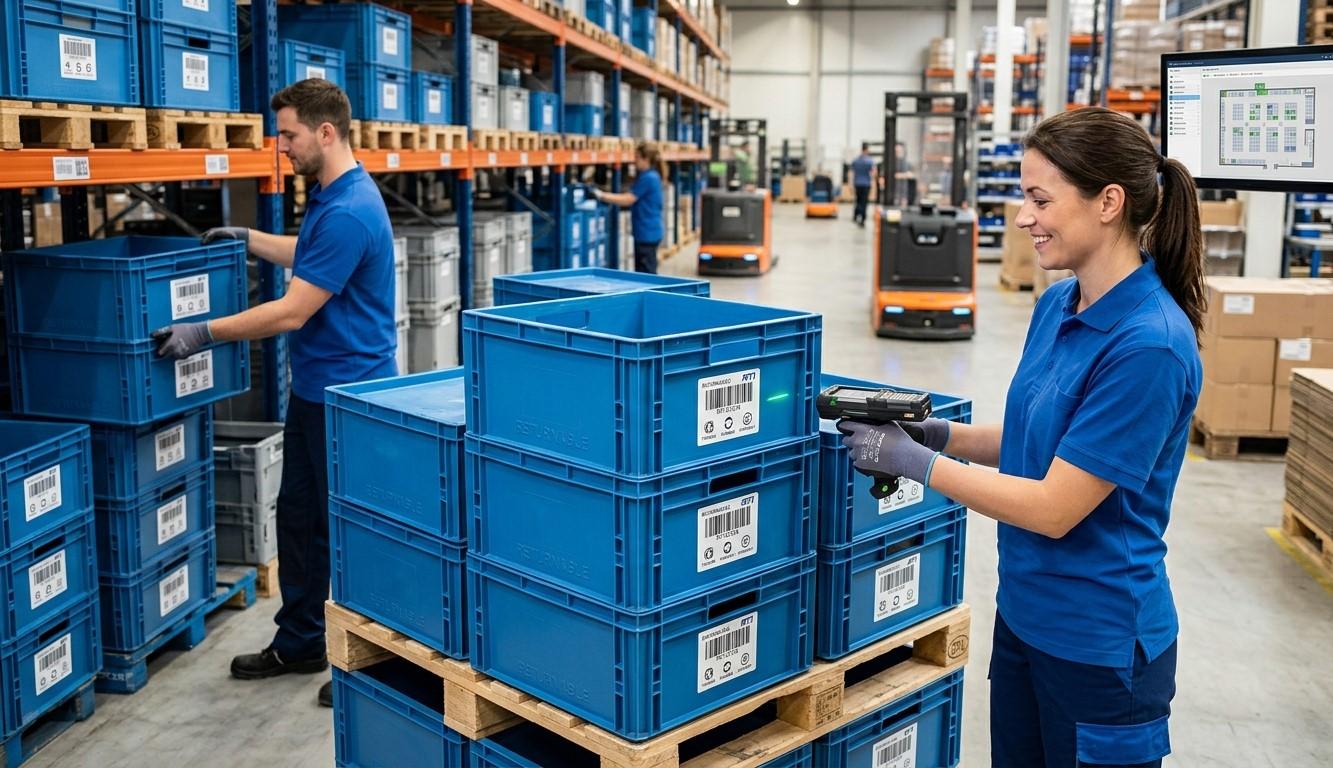
Returnable packaging helps businesses transport, store, and handle products using containers, crates, pallets, totes, and other reusable packaging materials. Unlike single-use packaging, these items are designed to be used repeatedly, making them valuable for businesses seeking to improve operational efficiency and reduce packaging waste.
However, managing reusable packaging can become challenging when businesses cannot easily track its location, usage, condition, or return status. Barcode labels provide a practical way to identify individual packaging items and record their movement throughout the supply chain.
By combining barcode labels with scanners and inventory management software, businesses can improve visibility, reduce losses, and manage returnable packaging more efficiently. Pointus Solutions helps businesses explore barcode printing solutions, while Shop Barcode offers access to relevant Printing Products for different operational requirements.
Table of Contents
- What Is Returnable Packaging?
- Why Is Tracking Returnable Packaging Important?
- 8 Benefits of Using Barcode Labels for Returnable Packaging
- How Do Barcode Labels Work in Returnable Packaging Systems?
- Best Practices for Barcode Labeling Reusable Packaging
- Common Challenges and How to Avoid Them
- Frequently Asked Questions
- Conclusion and Call to Action
1. What Is Returnable Packaging?
Returnable packaging refers to containers and packaging materials designed for repeated use. Businesses commonly use it to transport products between manufacturers, suppliers, warehouses, distribution centers, and customers.
Examples include:
- Reusable plastic crates and totes.
- Shipping pallets and bulk containers.
- Industrial bins and component trays.
- Returnable transport packaging.
- Reusable containers used in automotive and manufacturing operations.
Although reusable packaging can reduce the need for disposable materials, businesses must manage these assets carefully. Without a reliable tracking process, containers may be misplaced, returned late, damaged, or left unused at another facility.
Barcode labels help businesses identify these items and connect them to digital records.
2. Why Is Tracking Returnable Packaging Important?
Returnable packaging often moves between multiple locations and business partners. Each movement creates an opportunity for tracking errors or asset loss if records are incomplete.
For example, a manufacturer may send hundreds of reusable crates to a supplier. If the crates are not tracked properly, the manufacturer may struggle to determine how many are still with the supplier, which have been returned, and which need inspection.
A barcode-based tracking system can record when packaging is dispatched, received, transferred, returned, or removed for maintenance.
This gives businesses a clearer picture of packaging availability and helps employees make better decisions about replenishment and asset utilization.
3. 8 Benefits of Using Barcode Labels for Returnable Packaging
1. Improved Packaging Visibility
Barcode labels allow businesses to assign identification codes to reusable packaging items. Employees can scan these codes to retrieve information about an item's identity, status, or recorded location.
For example, a reusable tote can receive a unique barcode that links it to a database record. When the tote moves between a warehouse and a production facility, employees scan it at the relevant checkpoints.
This improves visibility into packaging movement and helps businesses determine which assets are available, in transit, or awaiting return.
2. Reduced Packaging Losses
Reusable packaging represents an investment. When containers, pallets, or crates disappear from circulation, businesses may need to purchase replacements.
Barcode tracking can help reduce losses by recording dispatches, receipts, transfers, and returns. If packaging is overdue, employees can review transaction records to identify its last recorded movement and follow up with the responsible location.
Although barcode labels cannot physically prevent loss, they make it easier to identify missing assets and investigate discrepancies.
3. Better Return Management
Businesses often need to ensure that packaging returns promptly after products have been delivered or used.
A barcode system can record the date packaging was sent, its destination, and whether it has been returned. When connected to suitable software, these records can support overdue-return reports and reminders.
This helps businesses improve turnaround times and keep more reusable packaging available for upcoming shipments.
4. Improved Inventory Accuracy
Manually counting reusable containers and recording their movements can be time-consuming and error-prone.
Barcode scanning simplifies the process by allowing employees to register packaging transactions quickly. Each scan can update the relevant record, depending on the system configuration.
Businesses can use this information to monitor:
- Total packaging quantities.
- Available and unavailable containers.
- Packaging at different facilities.
- Items awaiting cleaning or repair.
- Packaging currently assigned to shipments.
More accurate records can help prevent unnecessary purchases and improve planning.
5. Lower Administrative Workload
Without barcode tracking, employees may need to enter identification numbers manually, update spreadsheets, and reconcile records from multiple locations.
Barcode scanning reduces repetitive data entry and helps standardize transaction recording.
When integrated with inventory or warehouse management software, it can also streamline receiving, dispatching, stock counting, and return processing.
Employees can spend less time maintaining records and more time completing operational tasks.
6. Better Maintenance and Condition Tracking
Reusable packaging may experience wear and tear after repeated use. Crates can crack, pallets can break, and containers may require cleaning before being reused.
A barcode identifier can link each packaging item to its inspection and maintenance history. Employees can record damage, cleaning status, repair requirements, and inspection dates.
This helps businesses identify packaging that should be repaired or removed from circulation before it is reused.
For industries with specific hygiene or handling requirements, condition tracking can be particularly important.
7. Improved Supply Chain Coordination
Returnable packaging frequently moves between suppliers, manufacturers, logistics providers, and customers. Each party may need accurate information about the packaging it receives or returns.
A standardized barcode system can help different teams record movements using consistent identifiers and procedures.
When the tracking system is shared or integrated appropriately, businesses can improve coordination, investigate delays, and reduce disagreements about packaging quantities.
Successful coordination also requires clear responsibilities, compatible systems, and agreed procedures between participating organizations.
8. Support for Sustainability Goals
Returnable packaging can help reduce reliance on single-use packaging when it is reused effectively over its intended service life.
Barcode tracking supports this approach by helping businesses locate reusable assets, monitor their circulation, and identify packaging that requires maintenance or replacement.
Better asset utilization may reduce unnecessary packaging purchases and losses. However, the overall environmental benefit depends on factors such as packaging durability, cleaning, transportation, and the number of successful reuse cycles.
4. How Do Barcode Labels Work in Returnable Packaging Systems?
Implementing barcode tracking involves more than attaching a barcode to a container. Businesses need a consistent process for identifying packaging and recording its movement.
Step 1: Assign a Unique Identification Code
Give each packaging item a unique identifier when individual tracking is required. This allows the business to distinguish one container from another, even when both have the same size and design.
Step 2: Print and Apply the Barcode Label
Print a barcode that represents the assigned identifier. Apply the label in a visible, accessible location where it is less likely to be damaged during handling.
For packaging exposed to moisture, abrasion, outdoor conditions, or frequent cleaning, select suitable label materials and adhesives.
Step 3: Connect the Barcode to a Digital Record
Register the identifier in an inventory, warehouse, or asset management system. The record may include packaging type, ownership, current status, inspection history, and other relevant details.
Step 4: Scan Packaging During Movement
Scan the packaging when it is dispatched, received, transferred, returned, or inspected. Each scan should record the appropriate transaction and update the item's status.
Step 5: Review Reports and Exceptions
Use system reports to identify missing packaging, overdue returns, damaged items, and packaging that is not being used efficiently.
This process creates a practical foundation for managing returnable packaging throughout its lifecycle.
5. Best Practices for Barcode Labeling Reusable Packaging
Choose Durable Label Materials
Reusable packaging may experience repeated handling, friction, moisture, temperature changes, and cleaning. Choose label materials and adhesives designed for these conditions.
In some applications, a durable label or a directly marked identifier may be more suitable than a standard paper label.
Ensure Reliable Scanning
Use sufficient barcode contrast, appropriate dimensions, and correct placement. Test labels with the scanners that employees will use in everyday operations.
Standardize Identification Rules
Establish clear rules for assigning identifiers, replacing damaged labels, and managing retired packaging. Avoid duplicate codes that could cause tracking errors.
Maintain Equipment and Supplies
Clean and maintain printers and scanners according to manufacturer recommendations. Select compatible Printing Products to help maintain consistent barcode quality.
Train Employees
Make sure employees understand when packaging must be scanned and how to handle missing, damaged, or unreadable labels.
Businesses evaluating barcode equipment and supplies can explore Shop Barcode through Pointus Solutions to identify options suited to their packaging environment.
6. Common Challenges and How to Avoid Them
Damaged labels: Use durable materials and place labels away from high-friction areas.
Unreadable barcodes: Inspect print quality, maintain equipment, and test labels under normal operating conditions.
Missed scans: Establish mandatory scanning checkpoints and train employees to follow the process.
Duplicate identifiers: Use controlled code generation and validate new identifiers before assigning them.
Inaccurate location records: Update packaging status whenever it moves between facilities or responsible parties.
Poor system integration: Confirm that barcode scanners, printers, and tracking software work together before implementation.
Addressing these issues helps businesses establish a more dependable returnable packaging program.
7. Frequently Asked Questions
1. What types of returnable packaging can use barcode labels?
Barcode labels can be used on reusable crates, pallets, totes, bins, industrial containers, and other returnable transport packaging, provided the selected identification method suits the item's surface and operating environment.
2. Can barcode labels help prevent reusable packaging from getting lost?
They can help reduce losses by improving movement records and making it easier to investigate missing items. However, effective tracking also requires employees to scan packaging consistently and maintain accurate records.
3. Should every reusable container have a unique barcode?
Unique identification is useful when businesses need to track individual items, returns, or maintenance history. For simpler operations, identifying packaging by type or batch may be sufficient. The choice depends on the required level of visibility.
4. Which labels are best for returnable packaging?
The best labels depend on exposure to moisture, abrasion, chemicals, temperature changes, and cleaning processes. Durable synthetic materials and suitable adhesives may be appropriate for demanding environments.
5. Can barcode tracking improve packaging return rates?
Barcode tracking can improve visibility into dispatches, receipts, and overdue returns. When combined with clear responsibilities and follow-up procedures, it can help businesses manage returns more effectively.
6. Is barcode tracking suitable for small businesses?
Yes. Small businesses can begin with barcode labels, a compatible scanner, and basic inventory software. The system can expand as packaging volumes and tracking requirements increase.
7. What equipment is needed to track returnable packaging?
Depending on the workflow, businesses may need barcode printers, durable labels, scanners, and inventory or asset management software. The appropriate setup depends on packaging volume, environmental conditions, and the level of tracking required.
8. Conclusion and Call to Action
Barcode labels provide businesses with a practical way to improve the visibility, tracking, and management of returnable packaging. By identifying reusable containers and recording their movement, businesses can reduce packaging losses, improve inventory accuracy, manage returns, and maintain better records of packaging condition.
The best results come from combining durable labels, reliable printing equipment, compatible software, and consistent scanning procedures. With the right approach, businesses can make better use of reusable packaging while supporting efficient operations and sustainability goals.
Ready to improve your returnable packaging tracking? Explore Pointus Solutions for barcode printing options, visit Shop Barcode, and discover relevant Printing Products to support your business's packaging identification and asset tracking needs.
Bub
Do?

Categorie
Leggi tutto
Турнирным оператором сезона Mobile Legends: Bang Bang в СНГ выступит компания Electronic Mushroom – партнер разработчика Moonton в регионе с 2019 года. Сезон организован по трехдивизионной системе: регулярные рейтинговые турниры, любительская лига и профессиональная лига. Эта структура предоставляет командам прозрачный путь от любительских матчей до международной арены. Структура сезона...

Three acclaimed actresses - Toni Collette, Merritt Wever, and Kaitlyn Dever - have signed on for roles in the upcoming series "Unbelievable." The show draws inspiration from the Pulitzer Prize-winning investigative journalism piece "An Unbelievable Story of Rape," published collaboratively by The Marshall Project and ProPublica. In the series, Collette and Wever will portray detectives whose...
Introduction: Claudia Pina Wins POTM For those considering adding a new player to their squad, Claudia Pina’s recent recognition as Liga F Player of the Month brings an enticing SBC opportunity in FC 26. With her reputation already established as a formidable presence in the game, this special card could further solidify her influence throughout the current cycle. Before jumping in and...
Running a business in the United Arab Emirates offers great rewards. The country boasts a booming economy, a strategic location, and excellent infrastructure. However, the legal landscape is constantly evolving. Business owners must stay informed to avoid heavy fines or operational disruptions. Recent years have brought major changes to the region. The government introduced new corporate tax...

Body by Raven Tracy reflects a fitness-focused approach centered on movement, strength, consistency, and personal development. With more people looking for practical ways to stay active, structured fitness routines can provide direction and help turn exercise into a regular lifestyle habit. The goal is not simply to complete individual workouts but to develop a routine that supports physical...
