Crypto.
 About
About
 Passport
 Conference call
 send money
 Termeni
 Confidențialitate
 Sierra market
Plastic Hair Extension Bags: Packaging Types, Benefits and Tips for Hair Businesses
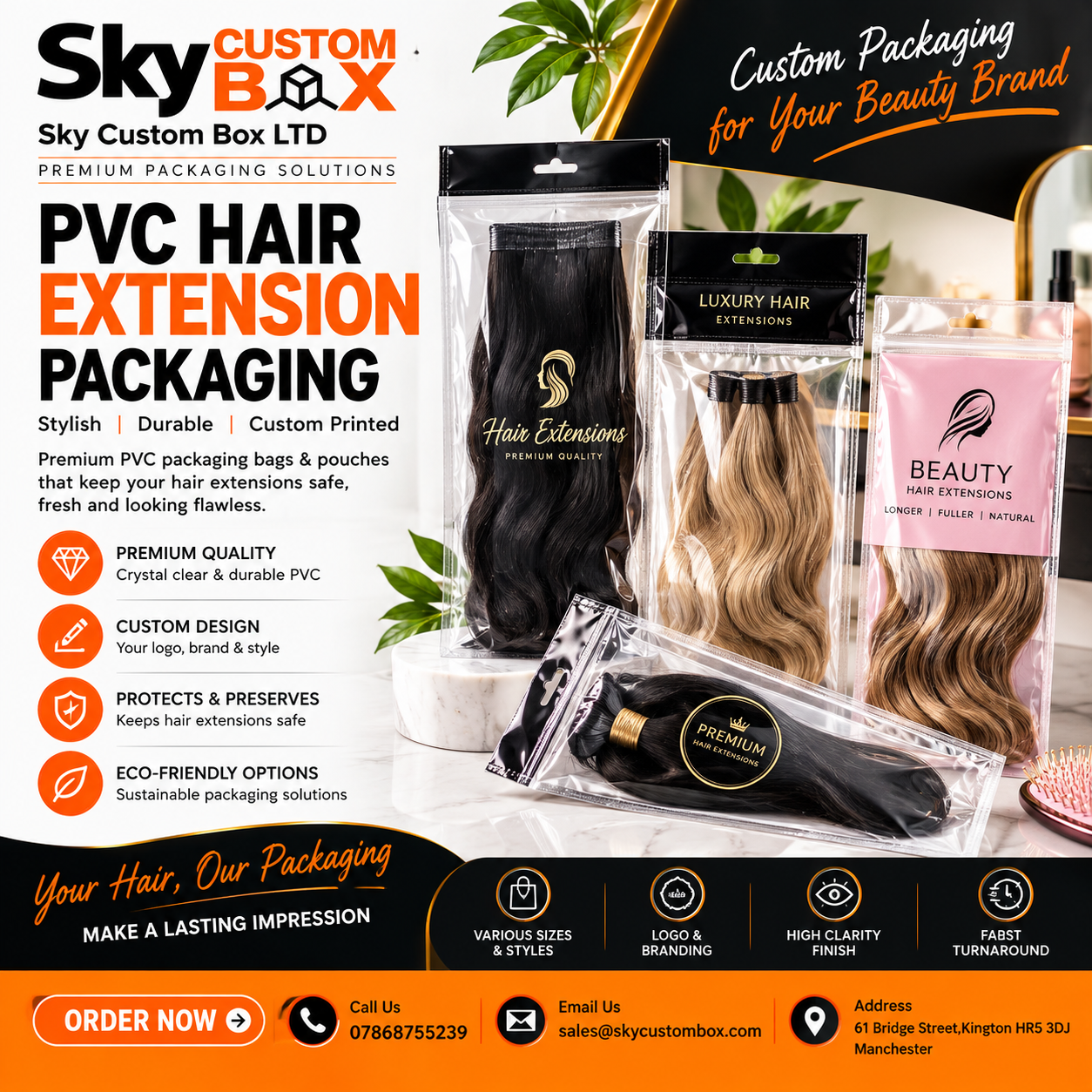
The hair extension industry relies on packaging that protects products, maintains presentation quality, and helps businesses build customer trust. Whether a company sells human hair extensions, synthetic wigs, clip-in extensions, or professional salon supplies, the right packaging can make a significant difference to product storage, transportation, and retail presentation.
Plastic hair extension bags are widely used because they offer a lightweight and practical way to contain hair products while helping protect them from dust, moisture, tangling, and handling during distribution. However, choosing the right bag involves more than selecting a transparent pouch. Businesses must consider material thickness, closure type, bag dimensions, product visibility, branding, and environmental impact.
For hair extension manufacturers, online retailers, wholesalers, and beauty salons, understanding these factors can help create a packaging system that balances product protection, customer experience, and operating costs.
1. Why Hair Extension Packaging Matters
Hair extensions are valuable beauty products that require careful handling. Human hair extensions, synthetic hairpieces, ponytails, and clip-in sets can become tangled, dusty, or difficult to organise if they are not stored correctly.
Suitable packaging helps maintain product condition between manufacturing, warehousing, shipping, and final sale.
Protecting Hair Products During Storage and Delivery
Plastic packaging can provide a physical barrier against dust, splashes, and routine handling. When properly sized and sealed, it also helps keep individual hair bundles organised.
Common applications include:
-
Human hair extension bundles
-
Clip-in hair extension sets
-
Ponytail extensions
-
Synthetic hairpieces
-
Wigs and hair toppers
-
Salon hair products and accessories
The packaging should accommodate the product without compressing it excessively. Long extensions may need elongated bags, while curly or voluminous hairpieces may require wider pouches to prevent unnecessary pressure on the fibres.
It is also important to remember that a plastic bag does not automatically protect hair from every environmental condition. Prolonged exposure to heat, direct sunlight, or unsuitable storage conditions can affect packaging and, potentially, the product itself.
Improving Organisation and Product Presentation
Transparent packaging allows customers and warehouse staff to see the product without opening the bag. This can make stock identification easier, particularly when a business manages multiple hair colours, lengths, textures, and styles.
For retailers, consistent packaging can also create a more organised display. Labels showing product length, colour, style, or SKU can help reduce picking errors and make inventory management more efficient.
Read More:
2. Choosing the Right Plastic Hair Extension Bags Packaging
Different hair products require different packaging formats. Material selection should reflect the product's dimensions, weight, storage requirements, and intended sales channel.
Clear Polyethylene Bags
Polyethylene bags are commonly used for general product containment. Depending on their grade and construction, they can offer flexibility, transparency, and resistance to moisture.
They may be suitable for hair bundles, accessories, and products that need straightforward protective packaging.
Businesses should compare material thickness and strength carefully. A bag that is too thin may tear during handling, while unnecessarily thick material can increase costs and plastic consumption.
Resealable Zip-Lock Bags
Resealable bags allow customers or staff to open and close packaging without immediately replacing it. They can be useful for hair accessories, smaller extension sets, and products that may need to be inspected after delivery.
Their advantages include:
-
Convenient opening and closing
-
Easier product organisation
-
Reduced exposure to dust between uses
-
Clear visibility of the contents
-
Practical storage for individual products
The closure should be tested to ensure it works reliably and does not snag delicate hair fibres.
Hanging Bags and Gusseted Pouches
Some retailers prefer bags with hanging holes or reinforced sections that support display on retail hooks. These formats can be useful for salon supplies and selected hair extension products.
Gusseted bags have expandable sides or bases, allowing them to accommodate products with greater volume. They may work well for thicker bundles or larger hairpieces that do not fit comfortably into flat bags.
When choosing a format, businesses should consider whether products will be displayed on shelves, hung in stores, packed into mailers, or shipped directly to customers.
3. Custom Plastic Hair Bags Enclosures and Branding Options
Packaging can serve both a protective and a branding function. For hair extension businesses, a consistent packaging design can help customers recognise a company and distinguish its products from competing ranges.
Plastic Hair Bags Enclosures can be adapted with printed branding, labels, product information, and closure features, depending on the material and manufacturing process.
Custom Printing and Product Identification
Printed bags can display a company logo, website, care instructions, or other relevant information. Where direct printing is unsuitable for a particular material or order quantity, adhesive labels and printed inserts may provide a more flexible alternative.
Useful information to include may be:
-
Brand name and logo
-
Hair type or product category
-
Hair length and colour
-
Product reference or SKU
-
Care and storage instructions
-
Relevant material or recycling information
Information should be easy to read and positioned so that it does not obscure the product unnecessarily.
For businesses offering several extension types, colour-coded labels or a consistent labelling system can make stock management easier without requiring a completely different bag design for every item.
Read More:
https://www.skycustombox.com/blog/
Creating a Professional Customer Experience
A polished package does not always require expensive printing. A clear bag, well-designed label, neat product arrangement, and consistent brand colours can create a professional appearance.
Premium hair extension brands may choose more elaborate packaging, while high-volume wholesalers may prioritise durability, easy packing, and low per-unit costs.
The best approach depends on the target customer and the way the product is sold. A salon supplying professional stylists, for example, may have different packaging requirements from a direct-to-consumer online store.
4. Sustainability, Material Selection and Cost Management
Plastic packaging remains common in the beauty industry because it can be lightweight, flexible, and practical. Nevertheless, businesses increasingly need to consider packaging waste, material efficiency, and recycling options.
Evaluating More Sustainable Packaging Choices
Where suitable for the application, businesses can investigate packaging made with recycled plastic content or materials designed for established recycling streams.
However, sustainability claims should be assessed carefully. Recyclability depends on the specific material, bag construction, local collection facilities, and the presence of incompatible components such as mixed-material laminates or certain labels.
Practical measures include:
-
Selecting bags that fit products without excessive unused material.
-
Avoiding unnecessary secondary packaging.
-
Checking whether recycled-content options meet strength requirements.
-
Providing accurate disposal information.
-
Reviewing local recycling guidance before making environmental claims.
-
Considering paper-based or reusable alternatives where they offer adequate protection.
Hair products must still arrive in acceptable condition. Replacing plastic with another material without testing its performance could create new problems, such as inadequate protection from moisture or increased product damage.
Understanding the Cost of Packaging
The cost of plastic hair extension bags depends on bag dimensions, material type, thickness, closure style, printing, order quantity, and manufacturing requirements.
Custom printing may involve setup charges or minimum order quantities. Ordering larger quantities can reduce the unit price, but excessive inventory can tie up cash and create storage challenges.
Businesses can manage costs by standardising a small number of bag sizes, comparing supplier specifications, requesting samples, and reviewing the complete packaging cost per product.
A slightly stronger bag may be more economical if it reduces tearing, repacking, or damaged deliveries. Cost comparisons should therefore include product protection and handling efficiency, rather than focusing solely on the price of an individual bag.
Read More:
5. Common Packaging Challenges and Practical Solutions
Hair extension businesses often encounter packaging problems as their product ranges and order volumes expand.
Preventing Tangling and Product Damage
A bag that is too narrow or short may force hair extensions into an unsuitable position. This can increase creasing, tangling, or pressure on the product.
Measure the product in its intended packed arrangement and leave enough room for natural movement. For curly extensions, avoid unnecessary compression, and consider an inner wrap or suitable product support where required.
Managing Multiple Colours and Lengths
Businesses selling many variations can experience stock identification errors. Clear product labels, barcodes, SKU references, and consistent bag dimensions can simplify warehouse processes.
It is also useful to check labels against the product before sealing each package, particularly when several similar shades or lengths are sold.
Balancing Presentation With Shipping Requirements
Retail packaging may look attractive but offer insufficient protection during courier handling. Conversely, excessive outer packaging can increase shipping dimensions and material use.
A practical solution is to separate the functions of the inner product bag and the outer shipping package. The inner bag keeps the extensions organised, while a suitable mailer or shipping carton provides additional protection during transit.
Businesses researching packaging suppliers can consider providers such as Sky Custom Box when comparing customised packaging formats and specifications. Supplier selection should be based on material suitability, product dimensions, print quality, order quantities, and delivery requirements.
Conclusion
Choosing the right plastic hair extension bags involves balancing product protection, presentation, convenience, cost, and environmental considerations. Clear polyethylene bags, resealable pouches, hanging bags, and gusseted formats each serve different purposes, depending on the type of hair product and how it reaches customers.
Well-planned plastic hair extension bags packaging can improve product organisation, simplify inventory management, and create a consistent brand experience. Businesses can achieve these benefits by selecting appropriate bag dimensions, testing closure quality, using clear product labels, and avoiding unnecessary material.
CONTACT US:
ABOUT US:
Social Media:
Bub
Do?

Categorii
Citeste mai mult
Free Fire’s OB51 update is set to introduce Nero, the game’s 65th character, who features an active skill that requires manual activation. Currently available on the advance server, the update’s official release is scheduled after October 28, with final values subject to change based on player feedback. Nero’s Cryo Mind Ability Nero’s active ability, Cryo Mind,...

North America Air Defense Radar Market focuses on advanced systems that help identify and track aircraft, missiles, drones, and other airborne threats. Increasing emphasis on integrated defense networks supports the adoption of modern radar solutions. The Air Defense Radar Market is experiencing steady growth as countries continue to strengthen their air surveillance and missile...
Achieving a sculpted physique is a goal for many, yet targeted fat loss remains one of the most common challenges. How to Lose Butt Fat for Men? When it comes to stubborn areas, the gluteal region often proves to be the most resistant to conventional diet and exercise. Understanding the underlying physiology is the first step toward effective change. Many individuals search for How to...
Maintaining your vehicle is essential to ensure safety, performance, and longevity, especially in a busy city like Dubai. Car owners often look for trusted service providers that offer comprehensive solutions for all types of vehicles. Two key services in demand are car garage repair near me and specialized dodge repair dubai. These services cater to everyday maintenance, emergency...

Muscle tightness can develop after exercise, repetitive movements, workplace activities, or prolonged sitting. Tight muscles may limit flexibility, reduce range of motion, and make everyday tasks or physical activities less comfortable. When muscle tension continues for an extended period, it can affect how the body moves and functions. Dry Needling Therapy Edmonton is one treatment option that...