


 Crypto.
 About
About
 Passport
 Conference call
 send money
 Termeni
 Confidențialitate
 Sierra market
What Makes an Automotive Tool Useful Across Different Repair Tasks?
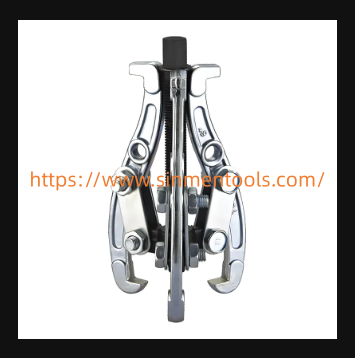
Vehicle maintenance depends on tools that help technicians work carefully around interconnected mechanical systems. A repair may involve loosening fasteners, separating joined components, adjusting linkages, or accessing parts hidden behind surrounding assemblies. An Auto Tool should therefore be evaluated according to its intended task, construction, handling characteristics, and compatibility with the vehicle being serviced. Rather than choosing equipment based only on appearance or the number of functions it claims to offer, buyers benefit from understanding how a tool fits into a real maintenance workflow.
Material selection provides an important foundation for dependable workshop equipment. Metal hand tools need suitable strength and toughness to withstand repeated contact with fasteners and mechanical components. The manufacturing process also influences the final result: forming, machining, and finishing must work together to create functional surfaces and consistent connections. For tools with moving joints, the fit between components affects handling and operation. Buyers should pay attention to manufacturing consistency, the quality of working edges, and the way parts connect, rather than assuming that a heavy or shiny product is automatically well made.
Protective finishes can contribute to the condition of tools used in demanding environments. Automotive workshops frequently expose equipment to lubricants, moisture, dust, and cleaning materials. Suitable surface treatments can help reduce corrosion and make routine cleaning easier. At the same time, finishes should be considered alongside the underlying material and construction. A coating cannot correct a poorly formed component or replace appropriate care. After use, tools should be cleaned, inspected for damage, and stored in a dry location. These basic practices help preserve working surfaces and make it easier to identify developing wear.
Purchasing decisions should begin with the intended users and the tasks they perform most often. A home mechanic may prioritize common hand tools and simple storage, while a professional workshop may need specialized equipment for suspension, steering, engine, or assembly work. Buyers should identify the vehicle types they service and review the manufacturer's maintenance procedures before selecting tools. Grip shape, access clearance, connection style, and intended application are often more useful considerations than a broad claim of universal compatibility. A carefully chosen collection of suitable tools can be more practical than a large kit containing many pieces that rarely serve a purpose.
Product information is another important part of the selection process. Clear descriptions should explain what a tool is designed to do, which components it works with, and what limitations users should understand. Instructions and maintenance guidance can help reduce uncertainty during setup and operation. For distributors and purchasing teams, consistent labeling and organized packaging simplify stock handling and product identification. It is also useful to ask about replacement parts, customization options, and customer support, particularly when equipment will be used regularly or supplied to multiple workshops.
Functional design determines how effectively a tool supports a specific repair. A wrench needs secure engagement with its fastener, while a separator or puller must maintain appropriate contact as components are moved apart. Tools with adjustable or articulated parts require stable connections and smooth movement. Their design should help users apply force in a controlled manner without placing unnecessary pressure on nearby surfaces. Before beginning a repair, technicians should confirm that the tool matches the task, that it is positioned correctly, and that the surrounding components are adequately supported. If a tool slips, deforms, or fails to engage securely, work should stop until the setup is reassessed.
User experience extends beyond the moment a tool is used. Comfortable grips, accessible adjustment points, and clearly distinguishable components can make repeated tasks easier to manage. Balanced handling may also help users maintain control when working in confined engine compartments or around awkwardly positioned assemblies. However, convenience should never come at the expense of safety. Appropriate protective equipment, vehicle support, and adherence to service instructions remain essential. Power-assisted equipment requires particular attention to compatibility and operating guidance, while manual tools also need regular inspection for worn edges, loose connections, or other signs of damage.
Appearance and storage design can influence workshop organization. Consistent finishes, clear markings, and easily recognized shapes help users identify tools and return them to the correct place. A well-arranged case can separate different tool categories, protect working surfaces from unnecessary contact, and simplify transport between service areas. For shared workshops, organized storage also makes missing items easier to notice before a job begins. Visual design is not a substitute for mechanical quality, but thoughtful presentation can support a professional working environment and make equipment easier to manage over time.
Taizhou Xinming Technology Co., Ltd. manufactures automotive maintenance tools, pullers, hydraulic tools, and tool sets for different repair and workshop applications. Buyers can discuss their intended maintenance tasks, preferred tool configurations, packaging needs, and product customization requirements with the company when evaluating suitable equipment. Understanding these practical needs helps connect product selection with the demands of actual service work. More information about its automotive tools and manufacturing capabilities is available at https://www.sinmentools.com/.
Bub
Do?

Categorii
Citeste mai mult
Pokémon TCG Pocket Overview A private event held in New York and Los Angeles unveiled fresh insights into Pokémon TCG Pocket, exclusively accessible to selected influencers and media outlets. Our summary distills only the details verified by multiple sources and official documentation. The soft launch is set for Thursday, September 26th, in New Zealand, with a worldwide release...

HoYoverse has officially confirmed that Snezhnaya will be the next major region in Genshin Impact, with a behind-the-scenes developer preview scheduled for April 24, 2026 at 8:00 AM UTC-4. The announcement was made across the game’s official social media channels, marking the first time the Cryo Nation will receive an official preview. While Nod-Krai served as a preliminary detour under...
For years, people have noticed a massive price difference when looking at medical and dental costs around the world. In Western countries like the United States, the United Kingdom, or Australia, going to the dentist or studying to become one can leave you with decades of debt. A simple procedure or a single semester of dental school often costs a small fortune. Meanwhile, China has emerged as...

The wait has finally come to an end following the major updates introduced in patch 2.4.0 and the launch of Season 10: the Season of Infernal Chaos! Explore our newly revised guide to the Infernal Hordes and get the latest strategies and insights now! In Diablo 4, the Infernal Hordes represent a challenging endgame activity set within the Burning Hells. This event features relentless waves of...
A novel report on global Adaptive Cruise Control market is published by Emergen Research, offering current developments and emerging trends of the market. The report offers a comprehensive overview of the market along with details about market size, market share, revenue growth, and top companies. The report covers all crucial and essential information related to global Adaptive Cruise...
