


 Crypto.
 About
About
 Passport
 Conference call
 send money
 Términos
 Privacidad
 Sierra market
Could More Accessible Television Change the Future of Broadcasting?
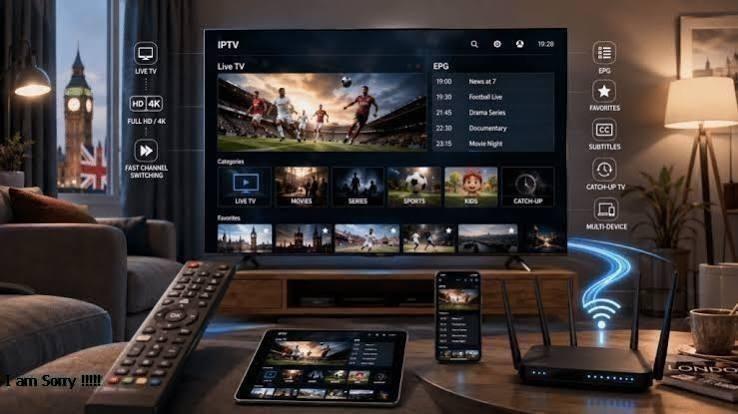
Television connects people with news, entertainment, education, sports, and important cultural events. However, not every viewer experiences television in the same way. People with hearing or visual impairments may encounter barriers when programs lack captions, audio descriptions, or accessible navigation. Older adults and viewers with temporary limitations can face similar challenges. As broadcasting technology continues to develop, improving accessibility could change how television content is created, distributed, and enjoyed.
Why Accessibility Matters in Modern Television
Accessible television aims to make programs and services easier to use for people with different abilities and needs. This involves more than adding a few optional features. It includes considering how viewers discover programs, navigate menus, understand dialogue, and interact with connected devices.
The wider adoption of inclusive broadcasting could help more people participate in shared cultural experiences without facing unnecessary barriers. When accessibility is considered from the beginning of production and service design, broadcasters can make content useful to a broader audience. These improvements may also benefit people watching in noisy environments, viewers learning a new language, or anyone who prefers additional ways to understand a program.
Captions Can Make Dialogue Easier to Follow
Captions display spoken dialogue as text on the screen and may also identify relevant sounds, speakers, or changes in tone. They are particularly important for viewers who are deaf or hard of hearing, allowing them to follow conversations and understand more of what is happening.
Captions can also help viewers in situations where turning up the volume is impractical, such as watching television in a shared household or public space. People learning a language may find them useful for connecting spoken words with written text.
For captions to be effective, they should be accurate, synchronized with the audio, and easy to read. Poor timing, spelling errors, or text that covers important visual details can make programs harder to follow. Improving caption quality should therefore be an ongoing priority for broadcasters and content distributors.
Audio Description Can Improve Visual Access
Many television programs communicate important information through visuals rather than dialogue alone. Facial expressions, scene changes, gestures, on-screen text, and physical actions can all contribute to a story. Without additional explanation, viewers with visual impairments may miss details that other audiences take for granted.
Audio description addresses this challenge by providing spoken explanations of relevant visual information during natural pauses in dialogue. It can help viewers follow films, television dramas, documentaries, and some live events more independently.
Producing useful audio description requires careful planning. Descriptions need to convey meaningful details without interrupting important dialogue or overwhelming the viewer. As tools and production workflows improve, broadcasters may find it easier to make this feature available across a wider range of programs.
Accessible Menus and Controls Matter Too
Accessibility does not end when a program begins. Viewers must first be able to find and select the content they want. Complicated menus, small text, low contrast, and poorly labelled buttons can create difficulties for people with visual, motor, or cognitive disabilities.
Television manufacturers and streaming platforms can address these issues through clearer interface design. Options such as adjustable text size, strong color contrast, voice navigation, readable labels, and simpler menu structures can make devices easier to use.
Remote controls should also be considered. Clearly differentiated buttons, consistent layouts, and accessible voice controls can reduce frustration for viewers who have difficulty using small or closely spaced controls.
When accessibility is built into the entire viewing process, people can move from searching for a program to watching it with fewer obstacles.
How Technology Could Expand Accessibility
New technology may make accessible television features easier to deliver. Automated speech recognition can help generate captions, while improvements in speech synthesis and content analysis may support certain accessibility workflows. These tools can reduce some production burdens and help services process large content libraries.
However, automation is not a complete solution. Captions generated automatically can misinterpret names, accents, or technical terms. Systems that describe visual scenes may also overlook context or produce inaccurate explanations. Human review remains important, especially for live broadcasts and content where accuracy is essential.
Connected televisions and internet-based platforms may also make it easier to customize accessibility preferences. A viewer could select preferred caption styles or audio description settings and have those preferences remembered across compatible devices. The availability of these features will depend on the platform and the content being watched.
Making Accessibility Part of Broadcasting Standards
Consistent accessibility depends on cooperation between broadcasters, producers, technology companies, regulators, and content distributors. If accessibility features are available only on certain programs or devices, viewers may struggle to know what they can access.
Clear information about caption availability, audio description, and accessible interfaces can help audiences make informed choices. Broadcasters can also involve people with disabilities in testing and evaluating services, ensuring that improvements address real-world needs rather than assumptions.
Accessibility should be considered throughout the production process instead of being added only after a program is finished. Early planning can make it easier to include the necessary resources, workflows, and technical support.
Conclusion
More accessible television could shape the future of broadcasting by making content easier to understand, navigate, and enjoy. Captions, audio description, clearer interfaces, and personalized accessibility settings can remove barriers and help more viewers participate in television experiences.
Technology will continue to create new opportunities, but meaningful progress requires accurate features, consistent availability, and input from the people who rely on them. By treating accessibility as a core part of broadcasting rather than an optional extra, the industry can build a more welcoming viewing environment for audiences with diverse needs.
Bub
Do?

Categorías
Read More
November 2025 Pokémon GO Events Get ready for an exciting lineup of events in Pokémon GO this November 2025! Throughout the month, players will encounter a variety of special Pokémon, including Mega Tyranitar, as well as Dynamax forms of Eevee and Toxtricity in both of their variations. The rotation of Mega Pokémon will keep the gameplay fresh and engaging all month...

In Fortnite's seventh season of its first chapter, players are introduced to a brand new world filled with exciting adventures and fresh mechanics. Although the season has been ongoing for some time, developers continue to roll out updates, with the season scheduled to conclude on March 4. During this period, players can explore new locations such as the golden coast by riding waves, take a...
Consumer credit rating bets a critical character many sections of advanced budgetary your life. Some credit status are able to determine the ways to access borrowing products, store cards, home, and various other budgetary assistance. credit repair huntington beach Each credit status possesses incorrect, unfinished, and / or older advice, the general public are able experienced program...
In the 1960s, American muscle cars were built for straight-line violence. Big V8s, two-door coupes, and quarter-mile bragging rights were the order of the day. Yet one machine refused to follow the usual script. The 1965 Shelby 427 Cobra took the delicate shape of a British roadster and dropped in Ford's thundering 427 FE big-block V8. It was an odd marriage, but it worked like a charm. The...
Théâtre de l’imaginarium Plongez dans l'univers captivant du Théâtre de l’imaginarium, une innovation majeure apportée par la mise à jour 4.7. Ce mode permanent vous invite à composer une équipe stratégique, incluant des remplaçants, pour surmonter des assauts ennemis répétés. Chaque premier du...
