


 Crypto.
 Σχετικά
 Passport
 Conference call
 send money
 Όρους
Όρους
 Ιδιωτικότητα
 Sierra market
I Tried Infinite Craft for Five Minutes and Accidentally Invented Chaos
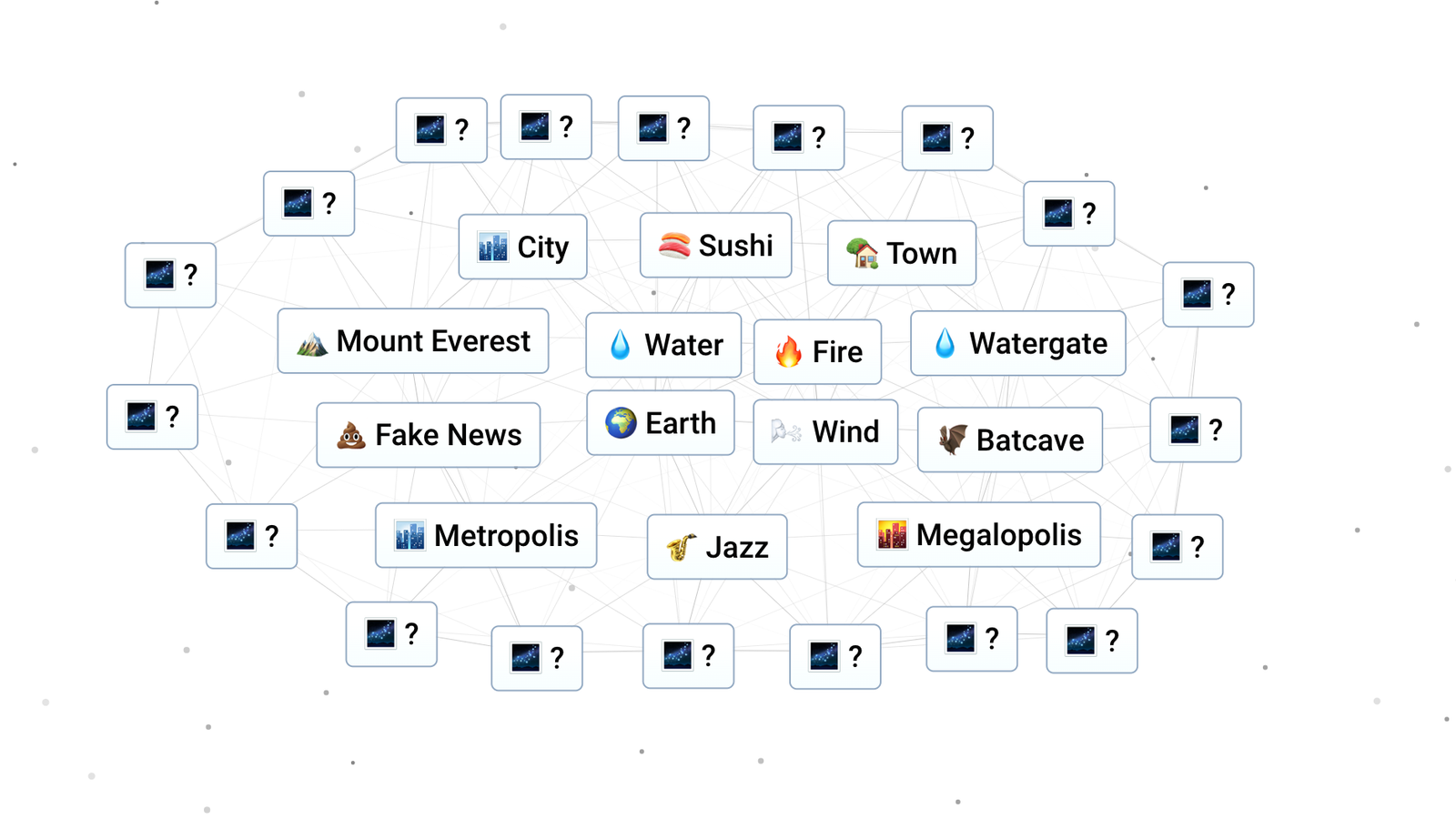
I told myself I would play Infinite Craft for exactly five minutes. You know, like a normal person. I was on my desktop, half paying attention to life, when I decided I deserved a tiny brain snack. The kind you eat, feel smarter for a second, and then return to your responsibilities.
Five minutes later, I was still there, staring at the screen like it might apologize for what it was doing to my sense of logic. Infinite Craft isn’t the sort of game where you “start” and immediately understand everything. It starts with four basic elements, just sitting there like they’re waiting for me to make a decision: Water, Fire, Earth, and Wind. Simple enough. Almost suspiciously simple. I dragged them around with the casual confidence of someone who totally understands how the universe works.
And then I combined things.
That’s when the whole experience clicked into place: this isn’t a crafting game that politely explains itself. It’s more like a discovery game where you poke the world and it pokes back. Infinite Craft turns element combinations into a chain reaction of curiosity. You make a guess, you get a result, and suddenly you’re wondering how you ever had the nerve to assume you were in control.
Four Elements, Zero Emotional Preparation
The browser experience on desktop is honestly part of why I got trapped. The drag and drop interaction is fast, like clicking through a website you already know, not loading a complicated game client that needs to “warm up.” I didn’t have to adjust settings or learn controls. I just moved elements, tried combinations, and watched what happened.
That immediacy matters, because every experiment feels low-stakes. I’d combine two elements that seemed completely logical on paper, like I was being responsible and scientific. Then the result would show up looking nothing like what I expected, and my first thought wasn’t even “that’s wrong.” It was, “Wait. Why would that be possible?” In a way, Infinite Craft makes you question your own assumptions in real time.
I also liked that not every combo behaved like a neat equation. Sometimes I felt like I was steering, and other times I felt like I was throwing spaghetti at an extremely patient wall and getting an interpretive dance back. It’s the unpredictability that keeps you leaning forward. One surprising discovery doesn’t just fill a space in the interface, it opens a doorway in your brain.
Because once you see a result you didn’t expect, your brain does what it always does: it starts narrating future experiments. If those two made something strange, then what about those two? If that was possible, what happens when I tweak the ingredients? Infinite Craft doesn’t punish you for curiosity. It rewards it by handing you more curiosity like it’s a renewable resource.
The Satisfying Trap of “One More Try”
At some point, I realized I wasn’t actually playing a “session.” I was running experiments. I’d find something interesting, then immediately want to test a new idea before I forgot it. I kept telling myself I was just confirming a theory, but my theories were basically vibes wearing a lab coat.
What surprised me most is how a simple combination can lead to more ideas than I have patience for. I’d get one fresh result, and suddenly I’m staring at the screen thinking, “Okay, but if that exists, then surely there’s a related thing.” My to-do list in another tab felt more and more fictional. I stopped hearing the usual internal alarm that says, “Time to be an adult.” Instead, I got stuck in the delighted discomfort of creative experimentation.
And there’s no traditional level progression or final boss to chase. No “beat the game” countdown. No victory screen that tells you to stop. Instead, Infinite Craft just keeps offering possibilities, which is either great design or a psychological prank. Either way, it’s hard to quit when the next attempt takes the same effort as the last one.
I caught myself laughing at my own approach too. I would try a combination and be genuinely smug for half a second, like, “Obviously this should work.” Then it wouldn’t. Or it would, but in a way that made me rethink everything I thought I knew. I’m not saying Infinite Craft made me humble, but it definitely made me less confident, which is close enough.
Why I Can’t Stop Experimenting
I think Infinite Craft is fun because it doesn’t feel like you’re following a script. You’re experimenting with element combinations, learning through trial, error, and surprise. It’s like doodling with chemistry. You don’t need to be good at it to get something out of it. You just need to be willing to ask the next “what happens if…” question.
Eventually, I looked up and realized a whole chunk of my evening was gone. Not in the dramatic way where you notice you’re late because something exploded. More like the quiet way where you realize you’ve been making tiny decisions for so long that time started behaving like it was also crafted out of Wind, Water, Fire, and Earth.
If you’re the kind of person who enjoys discovery game energy, creative experimentation, and laughing when the universe refuses to cooperate with your logic, try Infinite Craft . Make a couple combinations. Trust your curiosity. And when it pulls you into an increasingly strange chain of experiments, don’t fight it. Just accept that this browser game is doing exactly what it’s designed to do: make you want to keep going.
Bub
Do?

Κατηγορίες
Διαβάζω περισσότερα
The global construction and industrial maintenance sectors are undergoing a massive transformation, with structural safety, longevity, and operational efficiency taking center stage in modern engineering projects. Among the most critical innovations in high-performance protective coatings, the Polyurea Market is experiencing remarkable momentum. Polyurea is an advanced elastomer derived from...

The Data Governance Market forecasts highlight how enterprises are preparing for a future where trusted data underpins every digital interaction. Data Governance Market Size was estimated at 3.1 USD Billion in 2024. The Data Governance industry is projected to grow from 3.566 USD Billion in 2025 to 14.45 USD Billion by 2035, exhibiting a compound annual growth rate of 15.02% during the...

Artificial intelligence is transforming the way businesses create content, analyse information, automate tasks, and make decisions. As companies adopt AI-powered solutions, professionals with practical generative AI skills are becoming highly valuable. Enrolling in Generative AI Training In Hyderabad can help students, freshers, working professionals, and business owners understand this...

The demand for professional websites continues to grow as businesses prioritize digital presence, user experience, and conversion-driven design. For agencies, this demand creates both opportunity and operational pressure. Delivering multiple high-quality websites consistently requires significant resources, skilled developers, and ongoing project management. To address these challenges, many...

DABET la mot cai ten duoc nhieu nguoi quan tam trong linh vuc giai tri truc tuyen. Nen tang huong den trai nghiem don gian voi giao dien duoc sap xep theo cac danh muc ro rang giup nguoi dung de dang tim kiem thong tin va lam quen voi cac chuc nang co ban. dabet chu trong vao giao dien than thien va kha nang truy cap tren nhieu thiet bi. Nguoi dung co the su dung dien thoai may tinh bang hoac...
