


 Crypto.
 Environ
 Passport
 Conference call
 send money
 Conditions générale de vente
 Confidentialité
 Sierra market
EU Nuclear New-Build: Investment Opportunities Across the European Energy Landscape
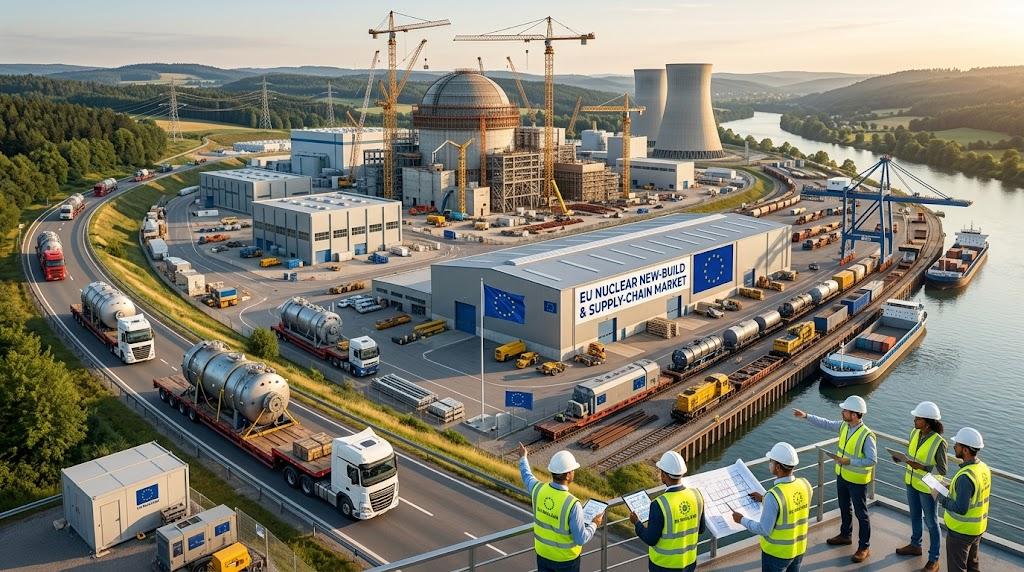
Competition, Partnerships, and Value Creation Across Europe’s Nuclear Supply Chain
Europe’s nuclear construction programmes create a complex commercial environment in which established suppliers, specialist manufacturers, engineering companies, and emerging technology providers compete for opportunities. Success depends not simply on technical expertise, but also on regulatory readiness, delivery reliability, financial resilience, and the ability to establish durable relationships with project developers.
How Suppliers Compete
Nuclear procurement is shaped by strict technical specifications and quality requirements. Suppliers must demonstrate that their products and processes are suitable for the intended application. Qualification requirements vary by component, project, and safety classification, creating different barriers to entry across the industrial ecosystem.
Established nuclear suppliers may benefit from recognised manufacturing procedures, experienced personnel, previous project references, and relationships with reactor vendors. These advantages can make them attractive partners when procurement schedules are demanding.
New entrants may differentiate themselves through specialised engineering, advanced manufacturing, digital solutions, or expertise in adjacent industrial sectors. However, innovation must be supported by documented quality systems, suitable testing, and compliance with applicable requirements.
Competitive strength therefore combines technical capability with operational reliability. A supplier that repeatedly meets specifications and delivery milestones can build trust, while weak documentation or inconsistent performance may jeopardise future contracts.
Strategic Partnerships and Supply Agreements
Partnerships can help companies access capabilities they cannot develop independently. Engineering firms may collaborate with equipment manufacturers, while local contractors can work alongside international reactor technology providers. Such arrangements can combine technical knowledge, regional experience, production capacity, and access to specialised personnel.
Partnership structures should establish responsibilities clearly. Companies need agreement on design ownership, quality assurance, documentation, intellectual property, delivery schedules, and management of technical changes. Without clear accountability, collaboration may introduce additional interfaces rather than reduce project risk.
Long-term supply agreements can also support manufacturing investment by improving demand visibility. Nevertheless, suppliers should examine payment terms, cancellation provisions, material price exposure, and minimum-volume commitments before expanding production capacity.
Assessing Commercial Opportunities
The EU Nuclear New-Build & Supply-Chain Market Share perspective can help decision-makers evaluate competitive positioning, procurement opportunities, and the distribution of activity across supplier categories. Actual participation depends on which projects proceed, how contracts are structured, and whether companies satisfy the required qualifications.
Market participation should not be confused with total project expenditure. A supplier's addressable opportunity depends on its specific products, services, geographic reach, manufacturing capabilities, and eligibility for procurement packages.
Businesses should analyse customer concentration, competitive alternatives, contract duration, and barriers to switching suppliers. They should also distinguish announced partnerships from executed contracts and planned investments from operating production capacity.
Managing Commercial and Operational Risks
Nuclear suppliers face risks related to cost escalation, production delays, subcontractor performance, workforce shortages, and changes in technical requirements. These challenges can affect margins even when order books appear strong.
Effective risk management begins with realistic costing. Companies should account for inspection requirements, documentation workloads, specialised training, material qualification, and contingency provisions. Contract teams must understand how schedule changes and customer modifications affect responsibilities and compensation.
Financial resilience is especially important where suppliers incur substantial upfront manufacturing costs. Businesses should evaluate working-capital needs and ensure that payment milestones support production commitments.
Building Workforce and Technical Capability
Qualified personnel are essential across engineering, fabrication, installation, inspection, and commissioning. Employers can strengthen their capabilities through structured training, apprenticeship programmes, professional development, and collaboration with technical institutions.
Knowledge retention also matters. Experienced employees carry practical understanding of manufacturing processes, quality expectations, and project coordination. Succession planning and documented procedures can help preserve this expertise as the workforce changes.
Digital systems can improve supplier visibility, documentation control, and collaboration. Their effectiveness depends on consistent implementation, cybersecurity, and clear responsibilities for maintaining accurate information.
Outlook for Nuclear Supply Chain Participants
European nuclear construction offers potential opportunities across equipment production, specialist services, engineering, project management, and supporting infrastructure. Yet the timing and distribution of demand will vary between national programmes and individual projects.
Companies should monitor regulatory approvals, financing decisions, tender releases, and construction milestones. They should prioritise verified opportunities over broad announcements and invest according to realistic demand expectations.
Long-term competitiveness will depend on quality, transparency, collaboration, and reliable execution. Suppliers that combine these strengths with disciplined financial management can position themselves to contribute to Europe’s nuclear infrastructure development while managing the operational and commercial risks associated with complex projects.
Bub
Do?

Catégories
Lire la suite
" Exactitude Consultancy That Adds Flavour To Your Success" Microencapsulation Market size. Controlled release technology for flavors, active pharma ingredients, and agrochemical delivery. Exactitude Consultancy has just launched its latest market research report, titled "Microencapsulation Market: Market Size, Share, Growth Outlook & Industry Analysis Report: Technology: Spray...

Call of Duty Mobile offers an adrenaline-pumping experience tailored for quick and intense combat on mobile devices. To foster fairness, the developers eliminated controller support, emphasizing skill-based gameplay through responsive touch controls and a selection of iconic maps borrowed from various entries in the Call of Duty franchise. Scorestreaks are integral to the strategic depth of...
Welcome to Rawalpindi Escort Agency. Enjoy the company of the most beautiful escorts who will accompany you during your visit to Rawalpindi. Rawalpindi is also known as the Pink City because much of it is painted pink. You will have a perfect holiday in Rawalpindi, where we provide you with first-class escorts. Now you have the opportunity to spend unforgettable moments with elegant ladies....

Finding the right products for your cat is an important part of responsible pet ownership. From nutrition and hygiene to comfort and entertainment, every item you purchase contributes to your cat’s overall wellbeing. As online shopping continues to grow, more pet owners are turning to digital platforms for convenience, wider product selection, and better access to premium-quality pet care...

Netflix's global expansion surges, adding over 3 million new subscribers in just one quarter. This growth surpasses the company's own forecasts, highlighting its accelerating international reach. While the U.S. contributed significantly, the majority of new members joined from abroad. Total subscribers now exceed 65 million, with paid memberships showing a substantial year-over-year increase....
