


 Crypto.

 Passport
 Conference call
 send money
 الشروط
 الخصوصية
 Sierra market
A Student's Guide to Choosing Assignment Help Services

When deadlines pile up, it's easy to type "make my assignment easier" into a search engine and click the first result. But assignment help services vary enormously, and the right choice for one student can be completely wrong for another. A first-year international student, a part-time student with a full-time job and a final-year student writing a dissertation all need very different kinds of support.
This guide helps you choose wisely by starting with your situation, then showing what to look for and what to avoid.
Step 1: Understand What You Actually Need
Before comparing any providers, be clear about your problem. Most students fall into one or more of these categories:
-
Understanding: the topic or question doesn't make sense
-
Structure: you know the content but can't organise it
-
Language: academic English or UK writing conventions feel unfamiliar
-
Skills: referencing, research or critical analysis need work
-
Time: you're managing too many commitments at once
Each need points to a different type of support, such as explanations, model answers, feedback on drafts or guidance on research and referencing.
Step 2: Check Your University's Free Options First
UK universities offer academic skills centres, library support, writing workshops, tutor office hours and wellbeing services. These are free and tailored to your course. If time is the main issue, ask about an extension or mitigating circumstances before the deadline. Many students find these options solve more than they expected.
Step 3: Match the Service to Your Situation
Different students should prioritise different features.
International Students
Prioritise: writers who understand UK academic conventions, clear explanations and help with academic style.
Look for support that explains why an argument is structured a certain way, not just what to write. Resources like the University of Manchester's Academic Phrasebank work well alongside expert guidance, and UKCISA offers wider advice for international students in the UK.
Working and Part-Time Students
Prioritise: flexible communication, realistic timelines and focused, efficient guidance.
With around 65% of full-time UK undergraduates now working during term time, according to Advance HE and the Higher Education Policy Institute, time is often the biggest pressure. Choose a provider that communicates clearly and can target the exact part of the assignment you're stuck on.
Students Returning to Education
Prioritise: patient explanations, help with research and referencing, and support at the right academic level.
Academic expectations may have changed since you last studied. A good assignment helper can show you what modern university work looks like and help you rebuild confidence quickly.
Students in Specialist Subjects
Prioritise: genuine subject expertise.
Law, nursing, engineering and statistics all have their own conventions. Make sure the writer has a relevant degree and understands your discipline's evidence, methods and referencing style.
Final-Year and Postgraduate Students
Prioritise: experience at your level, understanding of research methods and chapter-by-chapter support.
Expectations rise significantly at higher levels, so look for specialists with postgraduate qualifications who can engage with complex arguments and research design.
Step 4: Check the Essentials
Whatever your situation, a trustworthy provider should offer:
-
Qualified writers with relevant degrees
-
Work tailored to your brief, never generic content
-
Original, human-written work with an originality report
-
Direct communication with your writer
-
Free revisions within a clear time period
-
Transparent pricing and refund terms
-
Clear privacy policies, with no requests for your university login
Verify business details on Companies House, and check independent reviews on Trustpilot, focusing on recent, detailed feedback.
Step 5: Test Before You Commit
Send a short message describing your assignment and asking who would work on it, how they'd follow your marking criteria and how revisions work. Clear, specific answers are a good sign. Vague replies or pressure to pay immediately are not.
Ask for a sample in your subject, and check a few references on Google Scholar. If they can't be found, walk away.
Step 6: Use the Support Well
UK universities expect the work you submit to be your own, and the Quality Assurance Agency supports institutions in protecting academic integrity. The best way to use assignment help is as a learning tool:
-
Study model answers to understand structure and argument
-
Ask questions about the reasoning behind each choice
-
Use feedback to improve your own drafts
-
Write your final work in your own words
-
Reference carefully with Cite Them Right
Red Flags to Avoid
Walk away from any provider that:
-
Guarantees grades or "undetectable" work
-
Asks for your university login
-
Has no clear business details or policies
-
Encourages you to submit its work as your own
-
Pressures you with countdown timers or "today only" deals
Finding the Right Fit
The right provider depends on your needs, but every good one shares the same qualities: expertise, transparency and a focus on helping you learn. A reliable assignment writing service should match you with a qualified specialist and explain its process clearly. Tailored essay writing guidance can be particularly helpful if structure or academic style is your main challenge.
Final Thoughts
Choosing assignment help isn't about finding the cheapest or fastest option. It's about finding support that matches your situation. Understand your needs, use free university services first, match the provider to your circumstances, check the essentials, test before committing and use the support to build your own skills. Choose well, and the help you receive will make a lasting difference.
Bub
Do?

الأقسام
إقرأ المزيد
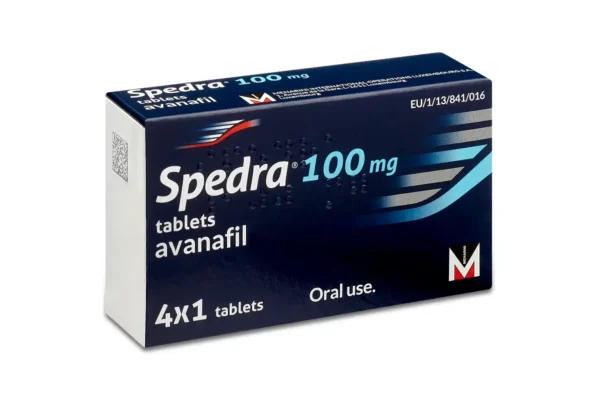
Erectile dysfunction can be frustrating, especially when it happens repeatedly. A man may notice that he can become aroused but struggles to get a firm erection, or that an erection does not last long enough for sexual activity. These changes can affect confidence and sometimes create anxiety around intimacy. The good news is that erectile dysfunction is a treatable condition in many cases....
Optimizing Game Settings Marvel Rivals stands out as an engaging third-person shooter combined with the excitement of a massively multiplayer online game. Its striking cel-shaded graphics pay homage to the comic book roots of its iconic characters, creating a visually rich experience. However, to enjoy smooth gameplay and optimal performance, some adjustments are necessary. The game comes...

That’s exactly what you’re gonna get!!! And if you love my photographs, you are gonna be amazed once you get a chance to meet me. The excitement for love that I have is going to leave you AMAZING!!!! If you love the mechanical kind, like the photographs, then please don’t lose out on the opportunity. I have great muscles, a beautiful frown, moist lips, a natural diffuser, pink...

Airborne Optronic Market is evolving as aerospace and defense industries continue adopting advanced technologies to improve aircraft intelligence, surveillance, and operational performance. Airborne optronic systems have become an important part of modern aviation platforms because they provide enhanced imaging, detection, and monitoring capabilities. These systems support a wide range of...

The global ovine market continues to evolve as demand for livestock-derived products expands across developed and developing economies. Sheep farming supports multiple industries, including food production, textile manufacturing, and agricultural trade. Increasing awareness of livestock efficiency and product quality is encouraging producers to adopt modern practices that improve productivity...
