


 Crypto.
 About
About
 Passport
 Conference call
 send money
 Koşullar
 Gizlilik
 Sierra market
The Changing Dynamics of Global Video Streaming
While the video streaming industry in the United States has largely flourished in a relatively light-touch regulatory environment, especially when compared to the highly regulated world of traditional broadcast television, it is now facing a new and increasing level of scrutiny from lawmakers and regulatory bodies. This emerging trend is a critical and often overlooked factor in the long-term forecast of the Video Streaming Market. As streaming becomes the dominant form of media consumption for hundreds of millions of Americans and as a handful of major companies consolidate their power over the production and distribution of content, policymakers in Washington D.C. are beginning to ask a range of complex questions about competition, data privacy, and content moderation. While the US does not have a single, comprehensive "streaming law" analogous to the more prescriptive regulations seen in Europe, a patchwork of existing laws and a series of new legislative proposals are starting to impact the industry. The regulatory landscape is slowly but surely moving from a hands-off approach to a more active, though still largely reactive, stance. This is creating a new layer of complexity, risk, and compliance cost for the major streaming platforms and is a sign of the industry's maturation and immense societal influence.
Key Players
The key players in this emerging regulatory landscape are a mix of government agencies, legislative bodies, and the industry's own powerful lobbying groups. The primary government agencies involved are the Federal Trade Commission (FTC) and the Department of Justice (DOJ), which have broad authority over antitrust and competition issues. These agencies have taken a much more aggressive stance in recent years, closely scrutinizing major media mergers and the market power of the major tech and media companies. The Federal Communications Commission (FCC), while its authority over streaming is less direct than its authority over broadcasting, is another key player, particularly on issues related to net neutrality. The US Congress is also a key player, with various committees in both the House and the Senate holding high-profile hearings on the market power of the major streaming platforms and considering new legislation related to data privacy and online content. On the industry side, the key players are the major streaming companies themselves—Netflix, Disney, Amazon, etc.—who have built up powerful lobbying operations in Washington D.C. to represent their interests. They are supported by major trade associations like the Motion Picture Association (MPA), which advocates on behalf of the major studios and streaming services.
Future in "Video Streaming Market"
The future of streaming regulation in the United States will likely be a piecemeal and evolving process rather than a single, comprehensive overhaul. A major future trend will be the application of a potential new federal data privacy law to the streaming industry. This would have a significant impact on how streaming services collect and use the vast amounts of viewing data they have on their subscribers for personalization and for advertising on their ad-supported tiers. Another major future trend will be continued and even intensified antitrust scrutiny. Any future mega-mergers between major media and streaming companies will face a very high bar for approval from the FTC and DOJ, which could slow the pace of industry consolidation. A third future area of debate will be around content moderation and the "discoverability" of certain types of content. There may be future legislative or regulatory pressure on the major platforms to ensure that public interest or educational content is easily discoverable amidst the vast libraries of entertainment. This is a very different regulatory environment from the more state-controlled media landscapes of some APAC nations or the less-developed regulatory frameworks in South America. The US approach will continue to be a complex balance between free-market principles and a growing recognition of the need for public interest oversight.
Key Points "Video Streaming Market"
This analysis highlights several crucial points about the US regulatory landscape for video streaming. The industry has grown in a relatively unregulated environment but is now facing increasing scrutiny on a range of issues, from competition and data privacy to content moderation. The key players in this new landscape are government bodies like the FTC and DOJ, the US Congress, and the powerful lobbying arms of the major streaming companies and their trade associations. The future will be characterized by the likely passage of a national data privacy law, continued antitrust challenges to major mergers, and debates over content discoverability. The evolving regulatory environment is a major new source of business risk and a critical factor that will shape the future strategy and profitability of every major company in the US streaming market, ultimately influencing its long-term worth. The Video Streaming Market is projected to grow to USD 1730.27 Billion by 2035, exhibiting a CAGR of 15.67% during the forecast period 2025-2035.
Top Trending Reports -
Bub
Do?

Kategoriler
Read More
In a bustling Madrid studio, a new kind of hero suits up. 'The Neighbor' begins filming, bringing the popular Spanish comic to life. Quim Gutiérrez leads the cast, transforming into an unlikely superhero. His character, Javier, faces everyday struggles before an extraordinary event changes everything. An alien encounter grants him powers, but his life remains complicated. Clara Lago,...

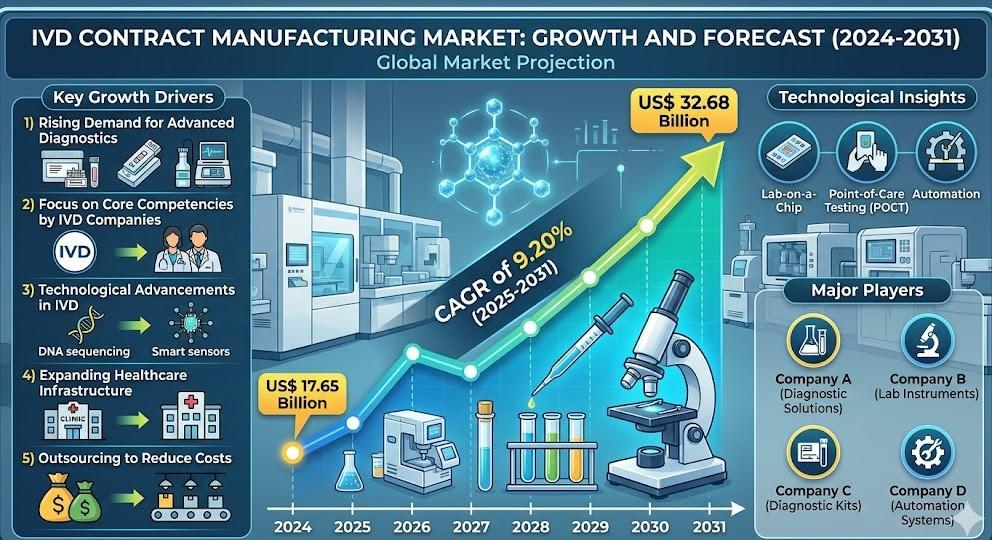
The United States diagnostic ecosystem is undergoing rapid transformation as healthcare providers and diagnostic companies increasingly rely on outsourced production models. Rising demand for advanced testing solutions, combined with the need for cost efficiency and faster product development cycles, is pushing manufacturers to collaborate with specialized contract service providers. This shift...
The global chemical industry is witnessing a significant pivot toward sustainable and "green" solvents, with Dimethyl Carbonate (DMC) emerging as a frontrunner in this transition. Dimethyl Carbonate is a versatile, colorless liquid classified as a carbonate ester. It has gained immense traction as an environmentally friendly alternative to toxic reagents like phosgene and dimethyl sulfate....
The November edition of the Netflix ISP Speed Index reveals notable performance shifts across global internet service providers during peak streaming hours. Leading the performance improvements, U.S.-based Hargray recorded the most dramatic acceleration, jumping from 2.32 mbps in October to 4.17 mbps—a remarkable 1.85 mbps surge. Latin American providers demonstrated strong momentum...
Live-Service Games Failures Developing a live-service game often appears to be a risky venture, yet many industry leaders persist in pursuing this model, eager to capitalize on its potential. Unfortunately, the reality is that only a few titles achieve sustained success, while the majority falter. In 2025, the gaming landscape was flooded with numerous live-service titles and games that...
